

Decentralized prediction markets have transformed from niche blockchain experiments into global sentiment barometers. At the center of this movement stands Polymarket, a protocol that captured international attention by allowing millions of participants worldwide to wager crypto on geopolitical events, macroeconomic indicators, and culture.
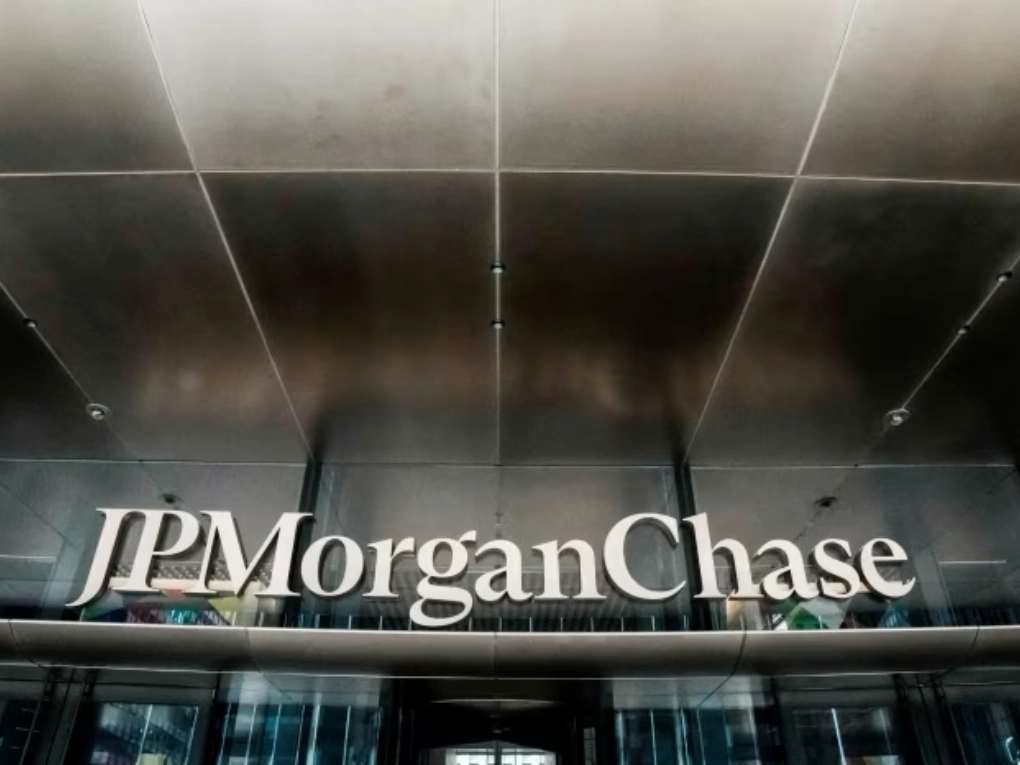
Recent reports from Reuters, The Wall Street Journal, and the Financial Times revealed that banking powerhouse JPMorgan Chase terminated its direct banking relationship with Polymarket in late 2025 due to regulatory concerns.
This development highlights the delicate balancing act between high-growth decentralized applications and the risk-averse compliance systems of Tier-1 global financial institutions.
In this comprehensive guide, we break down what Polymarket is, unpack the specifics of the JPMorgan debanking report, examine the shifting regulatory landscape, and explore what these developments mean for the future of event contracts and decentralized finance (DeFi).
What Is Polymarket?
Polymarket is the world’s largest decentralized information and prediction market platform. Founded in 2020 by Shayne Coplan, the platform allows users around the world to buy and sell outcome shares on real-world events ranging from presidential elections and Federal Reserve interest rate cuts to pop-culture milestones and sports.
+--------------------------------------------------------------------+
|                         HOW POLYMARKET WORKS                       |
|                                                                    |
|  1. Event Proposed  --> Binary contract created (e.g., YES / NO)   |
|  2. Order Matching  --> Peer-to-peer liquidity driven by traders   |
|  3. Real-Time Price --> Represents collective market probability   |
|  4. Settlement      --> Oracle resolves truth; winning shares = $1 |
+--------------------------------------------------------------------+
How Decentralized Event Contracts Work
Unlike traditional sportsbooks or centralized betting operations, Polymarket does not take the counterparty position against its users. Instead, it functions as an open exchange:
- Binary Outcome Shares: Every market revolves around a specific query (for example, “Will the Federal Reserve cut interest rates at the next FOMC meeting?”). Shares trade between $0.00 and $1.00.
- Pricing as Probability: If a “YES” share trades at $0.65, the market assigns a 65% probability to that outcome.
- Decentralized Settlement: When an event concludes, verifiable data oracles (such as UMA) resolve the market to an undisputed outcome. Winning shares redeem for $1.00 each, while losing shares expire at $0.00.
- Non-Custodial Infrastructure: Built on the Polygon PoS network, user deposits are denominated in stablecoins like USDC, allowing near-instant settlement and low transaction fees.
By aggregating financial stakes from participants across the globe, Polymarket leverages the “wisdom of the crowd” to generate highly accurate, real-time probability estimates that often outpace traditional opinion polling and media commentary.
Inside the JPMorgan Debanking Report: What Happened?
In mid-August 2026, investigative reports detailed how JPMorgan Chase—the largest bank in the United States—cut direct operational banking services for Polymarket.
Key Timeline of Events
- October 2025 (The Formal Notice): JPMorgan Chase issued a formal request asking Polymarket to wind down its primary deposit and operating accounts and secure a replacement banking partner.
- Transition to New Partner: Polymarket completed a transition to a new banking partner to handle its corporate and fiat operational needs without service interruptions to its users.
- December 2025 (U.S. Expansion): Polymarket rolled out regulated infrastructure aimed at broadening its compliance posture for onshore U.S. participants.
- August 2026 (Media Disclosure): Mainstream financial outlets published detailed accounts of the banking split, triggering discussions on fintech debanking, regulatory classification, and institutional appetite for crypto-adjacent firms.
Why Did JPMorgan Exit the Relationship?
Sources cited by Reuters and The Wall Street Journal pointed directly to regulatory ambiguity. Large, federally regulated depository institutions face strict anti-money laundering (AML), Know Your Customer (KYC), and Bank Secrecy Act (BSA) compliance mandates.
Because prediction markets occupy a gray area intersecting financial derivatives, digital assets, and state-by-state gaming laws, tier-1 institutions often elect to “de-risk” by dropping novel clients rather than risk supervisory enforcement or compliance penalties from federal regulators.
The Nuance: Why This Isn’t a Complete Breakup
While headlines used terms like “debanked,” the relationship between Polymarket and Wall Street’s largest institution remains multi-layered.
+--------------------------------------------------------------------------+
|                  JPMORGAN & POLYMARKET: DUAL REALITIES                  |
+--------------------------------------------------------------------------+
|  DIRECT DEPOSITORY SERVICES       |  COMMERCIAL & STRATEGIC ENGAGEMENT   |
|  - Checking & operating accounts  |  - Wealth Management client rounds   |
|  - Direct fiat rails              |  - Keynote executive invitations     |
|  STATUS: Severed (Oct 2025)       |  - Potential IPO underwriting eye    |
|                                   |  STATUS: Ongoing & Active            |
+--------------------------------------------------------------------------+
Multi-Entity Integrations
A Polymarket spokesperson noted that the platform maintains active commercial ties with JPMorgan across various corporate layers, operational integrations, and customer fund flows.
Private Client Access & Capital Raising
In April 2026, JPMorgan’s wealth management division invited select accredited and high-net-worth clients to participate in Polymarket’s Series E funding round, which valued the platform at $14.5 billion.
Executive Engagement and Future IPO Ambitions
Polymarket CEO Shayne Coplan spoke at multiple private investor conferences hosted by JPMorgan. Wall Street analysts have noted that JPMorgan remains interested in playing an underwriting role should Polymarket pursue an Initial Public Offering (IPO) in the future.
This dynamic illustrates the dual nature of modern banking: while compliance units mandate a low risk profile for direct daily cash accounts, investment banking divisions continue to court the high fees generated by multi-billion-dollar crypto unicorns.
The Broader Regulatory Landscape Facing Prediction Markets
To understand why traditional banks remain cautious around platforms like Polymarket, one must examine the regulatory scrutiny facing the event-contract industry.
                     +---------------------------------------+
                     |       REGULATORY SCRUTINY MAP         |
                     +---------------------------------------+
                                         |
         +-------------------------------+-------------------------------+
         |                               |                               |
+-----------------+             +-----------------+             +-----------------+
|   FEDERAL / CFTC|             | STATE REGULATORS|             | MUNICIPAL / NYC |
| - Derivatives vs|             | - Commercial    |             | - Consumer info |
|   Gaming        |             |   Gaming laws   |             | - Marketing to  |
| - DCM Compliance|             | - State-level AG|             |   Retail users  |
|   Mandates      |             |   Litigation    |             |   Inquiries     |
+-----------------+             +-----------------+             +-----------------+
CFTC Jurisdiction: Derivatives vs. Gambling
In 2022, the Commodity Futures Trading Commission (CFTC) reached a $1.4 million settlement with Polymarket, requiring the platform to block U.S. residents from its main platform and wind down non-compliant binary options.
Polymarket responded by acquiring and developing compliant infrastructure (such as QCX LLC, which secured a designated contract market status) to serve American participants through tailored, onshore products.
State-Level Gaming and Wagering Litigation
In the United States, state gaming commissions strictly govern sports betting and casino operations. Several state attorneys general and gaming boards have questioned whether event contracts on elections and sports constitute unregistered gambling.
Prediction market operators maintain a distinct legal defense:
- They are neutral exchanges connecting buyers and sellers at market-clearing rates.
- They do not act as the house or bookmaker.
- Their contracts are financial derivatives used for price discovery and risk hedging.
Municipal and Consumer Protection Inquiries
In mid-2026, the New York City Council launched inquiries into several prediction and retail crypto platforms—including Polymarket, Kalshi, Coinbase, and Gemini—requesting detailed documentation regarding their advertising practices, retail disclosures, and consumer protection safeguards.
Comparison: Polymarket vs. Traditional Financial & Betting Platforms
To understand why platforms like Polymarket challenge conventional regulatory frameworks, it is helpful to compare how they operate relative to traditional sportsbooks and regulated financial exchanges.
| Feature | Polymarket | Traditional Sportsbooks | Regulated Derivatives (CME, ICE) |
| Market Structure | Peer-to-peer order book | Bettor vs. The House (Bookmaker) | Peer-to-peer central limit order book |
| Asset Settlement | USDC / Smart Contracts | Fiat currency (Bank / Card rails) | Fiat currency / Clearinghouse |
| Underlying Assets | Binary event contracts | Odds-based sports/prop lines | Futures, options, swaps |
| Fee Architecture | Minimal taker/maker protocol fees | Built-in vig / sports margin | Clearing & exchange transaction fees |
| Global Access | Decentralized / Web3-based | Regionally licensed & restricted | Institutional / Brokerage accounts |
| Price Discovery | Real-time crowd probability | Bookmaker algorithm with bias | Institutional macro supply & demand |
The Debanking Controversy: A Growing Macro Trend
The termination of Polymarket’s direct account is not an isolated incident. “Debanking”—the practice where commercial financial institutions systematically close or refuse accounts to companies and individuals in specific industries—has become a central talking point across global finance and politics.
+-------------------------------------------------------------------------+
|                      THE FINTECH DEBANKING CYCLE                        |
|                                                                         |
|  [Emerging Sector]  -->  Crypto / Prediction / AI Innovators Launch     |
|         |                                                               |
|  [Regulatory Fog]   -->  Unclear Agency Classifications (CFTC / SEC)   |
|         |                                                               |
|  [Bank Compliance]  -->  Tier-1 Banks Elect to "De-Risk" & Drop Accounts|
|         |                                                               |
|  [Ecosystem Shift]  -->  Firms Migrate to Regional / Crypto-Native Banks|
+-------------------------------------------------------------------------+
Why Crypto and Fintech Firms Face Account Closures
- Regulatory Spillover Risk: Banks fear that servicing high-profile crypto platforms will invite unannounced supervisory audits and punitive regulatory penalties from agencies like the FDIC, OCC, and Federal Reserve.
- Compliance Overhead: The automated monitoring of complex on-chain transfers, fiat on-ramps, and cross-border stablecoin flows requires expensive compliance teams.
- Political Scrutiny: Lawmakers and judicial bodies have pushed for investigations into whether financial institutions engage in unfair or politically motivated account terminations.
Despite these hurdles, the broader fintech ecosystem has matured. Rather than relying on a single megabank, modern Web3 protocols routinely diversify their treasury management across multiple regional banks, specialized fintech custodians, and onshore regulated trust companies.
What Does This Mean for Polymarket Users and Web3 Investors?
If you trade on Polymarket or participate in the broader decentralized finance ecosystem, here are the practical takeaways:
- Platform Functionality Remains Intact: Polymarket’s core trading engine runs on decentralized smart contracts. Core trading, order execution, and stablecoin withdrawals are managed on-chain and do not rely on JPMorgan’s internal banking ledger.
- Seamless Banking Redundancy: Polymarket had already migrated its operational accounts to another banking partner months before this news became public, maintaining uninterrupted operations.
- Institutional Capital Keeps Flowing: The fact that JPMorgan’s wealth management arm continues to connect private clients with Polymarket’s equity rounds illustrates that institutional demand for prediction market exposure remains strong.
- Accelerated Push for Clear Regulation: Ongoing banking friction creates added pressure for lawmakers and federal agencies to establish clear, unified federal rules for binary event contracts and decentralized exchanges.
Frequently Asked Questions (FAQ)
Did JPMorgan completely cut ties with Polymarket?
No. While JPMorgan ended its direct depository and operational banking account relationship with Polymarket in late 2025, the firm still maintains commercial interactions, invited Polymarket’s leadership to private client events, and offered access to its funding rounds.
Is trading on Polymarket legal?
Polymarket operates globally with non-custodial smart contracts, while maintaining distinct compliance restrictions for jurisdictions with specialized licensing regimes. In the U.S., prediction market operators must coordinate with the CFTC and state regulators to offer compliant event contracts.
How does Polymarket ensure fair payouts?
Polymarket utilizes decentralized oracle systems (such as UMA). If a dispute arises regarding the true real-world outcome of an event, oracle token holders review the public record and vote on the final resolution, preventing any single entity from manipulating payouts.
Why are prediction markets considered better than traditional polls?
Prediction markets require participants to back their opinions with capital. Because market participants face real financial incentives, market prices react instantaneously to new information, reducing bias and often providing more accurate forecasts than static survey polls.
Conclusion
The news that JPMorgan Chase stepped back from direct banking services for Polymarket is a prime example of the friction between fast-moving Web3 innovation and traditional banking risk appetite.
Yet, far from signaling a crisis, Polymarket’s uninterrupted growth, strong institutional valuations, and diversified banking operations underscore the resilience of decentralized prediction markets. As regulatory frameworks clarify, event-driven trading platforms will continue to play an integral role in global price discovery and decentralized finance.
Stay ahead of the evolving digital asset and prediction market landscape. Explore our deep-dive analysis on DeFi protocols, monitor regulatory policy updates, and learn how to manage your decentralized portfolio securely.