

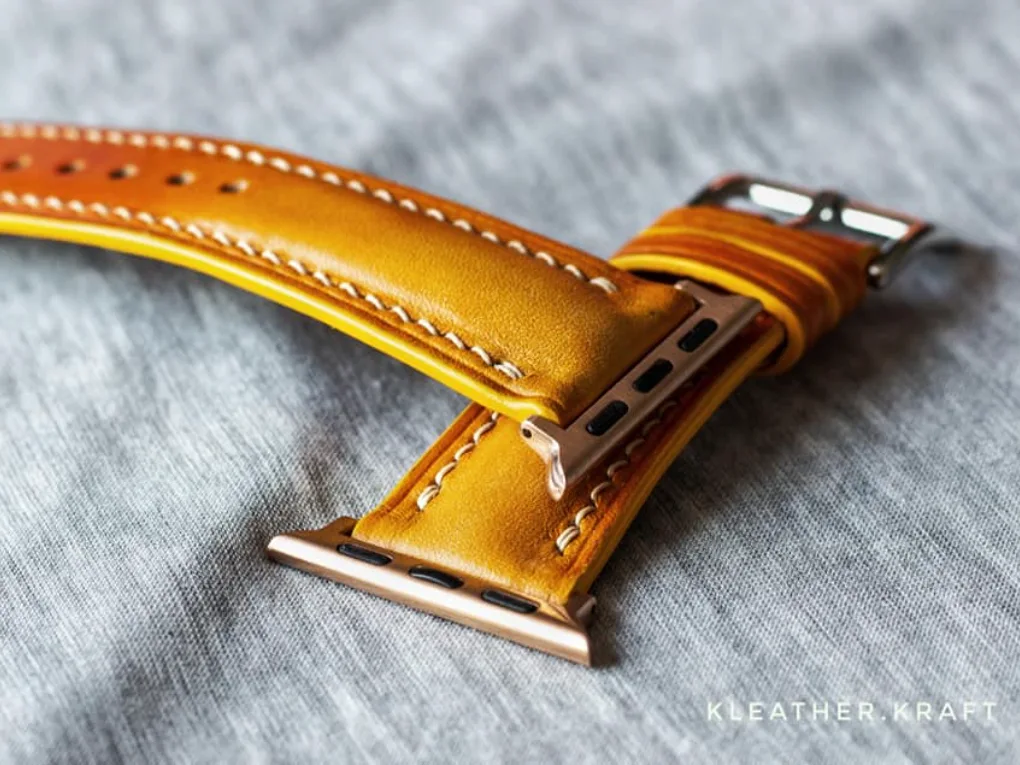
To change a watch strap, you compress the spring bar — the spring-loaded pin holding the strap between the lugs — slide the old strap out, then seat the new strap’s bar into one lug hole, compress the free end, and guide it into the second hole until it clicks. With a spring bar tool it takes about five minutes; the only real risk is a slipped tool scratching a lug.
In short
- Quick-release straps: no tool needed — slide the lever, pull the strap away.
- Standard spring bars: fork end of a spring bar tool, one end of the bar at a time.
- Fitted means both bar ends clicked into the lug holes and the strap survives a firm tug.
- Measure lug width before ordering: 20 mm lugs need a 20 mm strap and 20 mm bars.
Review basis: Standard spring-bar practice; sizing figures follow our watch strap size guide.
What you need
- Spring bar tool — forked end for compressing bars, pin end for drilled lugs. A few dollars at Australian watch suppliers.
- A soft cloth or microfibre towel — your work surface and a pad under the watch face.
- A small tray or bowl — spring bars are spring-loaded and like to launch across the room.
- Painter’s tape (optional, recommended) — a strip over each lug stops the tool marking the metal.
- Your new strap, plus spare spring bars in the right width if it does not include them.
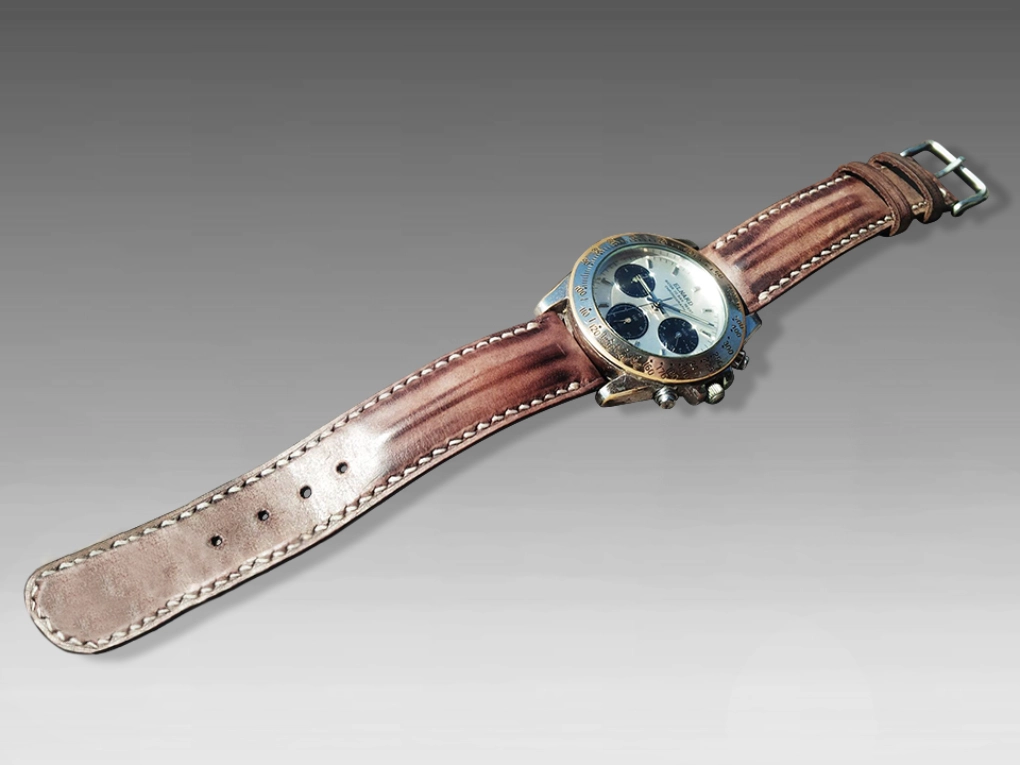
Quick-release vs traditional spring bars
Look at the underside of the strap where it meets the case. A small metal lever sticking through a slot in the strap means quick-release bars: slide the lever toward the centre with a fingernail, the bar end retracts, and the strap pulls away. Fitting is the reverse — one bar end into its lug hole, slide the lever, lower the other end in, release, listen for the click. No tool, thirty seconds.
No lever means traditional spring bars: plain pins with a flanged shoulder at each end, needing the tool and the steps below. Most leather straps in our guide to leather watch straps in Australia come in quick-release versions — change straps often, and that is the version to buy.
Before you start: check the size
A strap change is the wrong moment to discover the wrong width. Measure the gap between the inside faces of the lugs in millimetres — that number is both your strap width and your spring bar length. Our watch strap size guide covers three ways to measure, including the stamp (“20” or “20/16”) on your old strap.
Worked example. Your lugs measure 20 mm, so you order a 20 mm strap. If it is stamped 20/18, the 20 end goes between the lugs and 18 mm is the buckle width. The buckle half fits at the 12 o’clock side of the case; the holed half at 6 o’clock.
Step-by-step: removing the old strap
- Lay the watch face-down on the soft cloth, strap open flat, lugs taped if you are protecting the finish.
- Slide the fork end of the tool between strap edge and lug, onto the bar’s flanged shoulder.
- Push the fork toward the centre of the strap to compress the bar end — steady pressure, never lever against the lug.
- While compressed, ease that end of the strap down until the bar end clears the lug hole.
- Release the bar into the tray. Never let go of a compressed bar mid-air; that is how bars vanish into carpet.
- Repeat for the other end, then the second half — keeping each bar with its half if reusing.
Step-by-step: fitting the new strap
- Push a spring bar through the channel at the end of the new strap half, centred so both ends protrude evenly.
- Check orientation: buckle half to the 12 o’clock lugs, holed half to 6 o’clock, buckle facing up.
- Insert one end of the bar into its lug hole and rest the strap against that lug.
- Compress the free end with the fork tool and guide the strap down between the lugs.
- Slide the strap gently back and forth until the free end finds its hole — you will hear and feel a click.
- Repeat for the second half, then run the checks below before wearing the watch.
The click test
A strap is not fitted because it looks fitted. Give it a firm tug away from the case at each end — a seated bar does not move. If an end pulls free, that bar end never found its hole; refit it before wearing the watch. Flexing the strap should be silent: a rattle means a bar is short or bent.
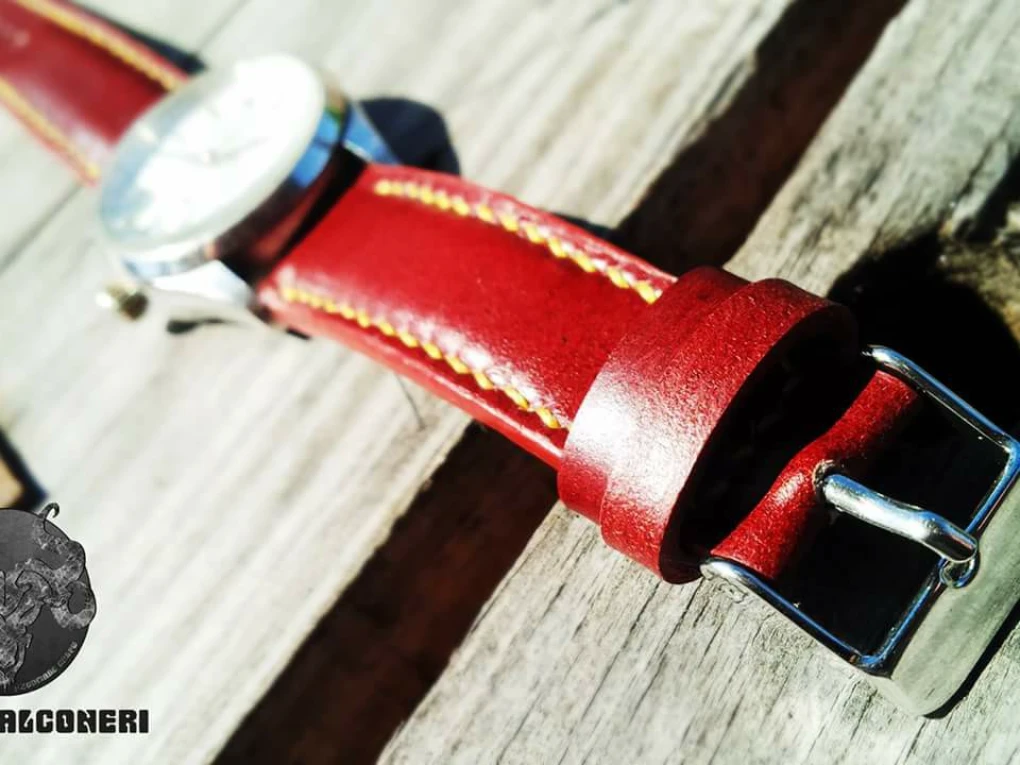
Common mistakes that scratch lugs
- Working on a bare table or glass. The watch slides, the tool slips, the lug pays. Fix: soft cloth under everything.
- Letting the tool bear on the lug. Prying against polished metal leaves the classic crescent scratch. Fix: tape the lugs; push only the bar’s shoulder.
- Improvising with a knife or screwdriver. These slip further and cut deeper. Fix: a spring bar tool costs less than the strap.
- Reusing a bent or corroded bar. A tired bar can let go on the wrist and drop the watch. Fix: bars cost cents — replace bent, rusty or sluggish ones.
- Fitting the halves backwards. Buckle half at 6 o’clock wears and looks wrong. Fix: buckle at 12, holed half at 6, checked before starting.
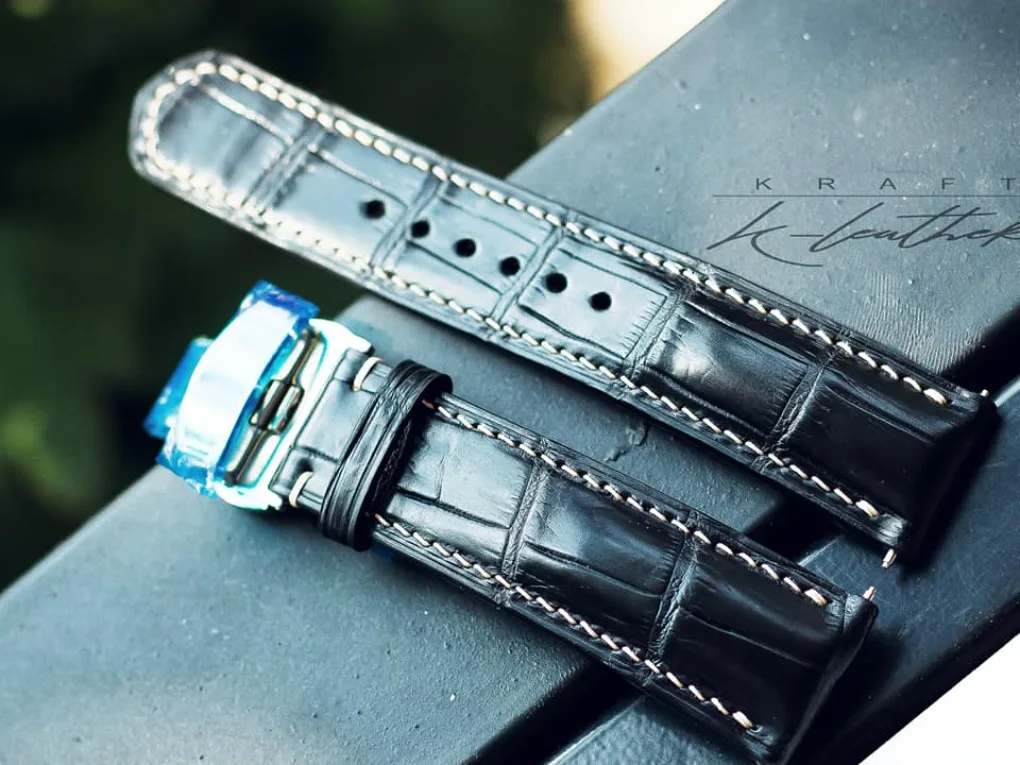
When to take it to a watchmaker
Take the watch in if the bars are seized or corroded solid, if it uses screws or a proprietary fitting instead of spring bars, if the strap is integrated into the case, or if it is a vintage or high-value piece where one slip costs real money. A watchmaker charges a small fee — cheap insurance on a watch worth thousands.
FAQ
Do I need a tool for a quick-release strap?
No. Slide the built-in lever on the strap’s underside and the bar end retracts so the strap lifts away; fitting is the same action in reverse.
Can I reuse my old spring bars?
Yes, if they are straight, spring back crisply and match the lug width. A bent, corroded or sluggish bar gets replaced — a failed bar drops the whole watch.
Which way around do the two strap halves go?
Buckle half at the 12 o’clock side of the case, longer holed half at 6 o’clock. The other way around, the strap wears awkwardly and the tail points the wrong way.
What size spring bar do I need?
The same number as your lug width: 20 mm lugs take 20 mm bars. Standard diameters are 1.5 mm and 1.8 mm; for a slim strap channel, match the bars that came out.
My new strap will not click in. What is wrong?
Usually one of three things: the bar is 1 mm too long, the strap end is too thick for the lugs, or the free end is missing the hole by a fraction. Re-check the lug width, then reseat with small back-and-forth movements, not more force.
Five minutes and a soft cloth stand between you and a new look for a watch you already own. Compress, slide, click, tug — after the second time, strap changes become the cheapest upgrade in watch ownership. For choosing the next strap, start with our leather watch straps guide.
