Every year from October 4 to October 10, the international community unites to celebrate World Space Week (WSW). Recognized by the United Nations General Assembly as the largest public space event on Earth, this global observance highlights the pivotal contributions of space science, exploration, and satellite technology to the betterment of the human condition.
In 2026, the spotlight falls squarely on the modern launch industry. Under the official theme “Rocket Revolution,” World Space Week 2026 examines how reusable boosters, private spaceflight, micro-launchers, and multi-nation participation are transforming access to low Earth orbit and deep space.
Whether you are an educator planning interactive STEM workshops, a student fascinated by aerospace engineering, or a stargazing enthusiast, this comprehensive guide covers everything you need to know about World Space Week 2026: its significance, its origin, and how you can take part.
What Is World Space Week 2026?
World Space Week 2026 is an international synchrony of science events, public lectures, planetarium exhibits, hands-on classroom activities, and agency announcements. Officially designated by the United Nations in 1999, the event is coordinated globally by the World Space Week Association (WSWA) in close cooperation with the UN Office for Outer Space Affairs (UNOOSA).
Unlike trade-only aerospace symposiums, World Space Week belongs to the public. It provides an open platform for thousands of independent organizations across more than 90 countries to stage grassroots events. The primary goal is simple yet profound: to ignite public interest in science, technology, engineering, and mathematics (STEM) and foster international collaboration in peaceful space exploration.
Key Facts at a Glance
| Detail | Information |
| Event Name | World Space Week 2026 |
| Official Dates | October 4 – October 10, 2026 |
| Governing Body | United Nations General Assembly & WSWA |
| 2026 Official Theme | “Rocket Revolution” |
| Global Reach | 90+ countries, thousands of synchronized events |
| Target Participants | Students, educators, aerospace engineers, public institutions |
The 2026 Official Theme: Explaining the “Rocket Revolution”
Each year, the World Space Week Association selects a focused theme to direct global discussions and educational initiatives. The World Space Week 2026 theme is “Rocket Revolution.”
For decades following the dawn of the Space Age, reaching orbit was an expensive, exclusive endeavor reserved strictly for a handful of government superpowers. Rockets were disposable monoliths: millions of dollars of precision hardware were engineered for a single journey, discarded into the ocean after mere minutes of thrust.
The “Rocket Revolution” highlights the structural paradigm shift reshaping that reality today.
Pillars of the Rocket Revolution
- Rapid Booster Reusability: Spearheaded by commercial heavy-lift vehicles and private aerospace firms, reusability has driven launch costs per kilogram down by an order of magnitude. Reusable first stages and full-stack reusability have turned launch cadence from an annual milestone into a weekly routine.
- Democratization of Launch Access: It is no longer just major space agencies deploying payloads. Dedicated small-satellite launch vehicles (SSLVs) and rideshare missions allow high schools, emerging nations, and small startups to place research hardware into orbit.
- Green Propellants and Advanced Propulsion: Modern launch vehicles are adopting cleaner, high-efficiency propellants such as liquid methane (methalox), alongside additive manufacturing (3D-printed rocket engines) that slashes manufacturing timelines from years to weeks.
- Deep-Space Megastructures: Heavy-lift architectures are setting the stage for permanent lunar infrastructure under the Artemis framework and long-duration expeditions to Mars.
As WSWA leadership noted during the theme announcement, lowering the financial and logistical barriers to orbit has fueled an explosion in down-to-Earth applications—ranging from hyperspectral climate tracking to resilient satellite communications.
The History and Significance of October 4–10
Why is World Space Week always held between October 4 and October 10? The United Nations chose these specific calendar boundaries to commemorate two landmark milestones in human aerospace history:
October 4, 1957: The Launch of Sputnik 1
On October 4, 1957, humanity entered the Space Age when the Soviet Union launched Sputnik 1, the world’s first artificial satellite. Emitting a steady radio pulse as it circled the planet, the beach-ball-sized satellite proved that human-made instruments could achieve orbit, setting off the scientific competition and exploration that defined the 20th century.
October 10, 1967: The Entry into Force of the Outer Space Treaty
Ten years and six days later, on October 10, 1967, the Treaty on Principles Governing the Activities of States in the Exploration and Use of Outer Space, including the Moon and Other Celestial Bodies (commonly known as the Outer Space Treaty) entered into force. This foundational document declared that:
- Outer space is free for exploration and use by all states.
- Celestial bodies cannot be claimed under national sovereignty.
- Space must be used exclusively for peaceful purposes, prohibiting the deployment of nuclear weapons in orbit.
By anchoring World Space Week between the launch of Sputnik 1 and the signing of the Outer Space Treaty, the UN reminds us to balance technological capability with responsible, peaceful stewardship.
Past vs. Present: How World Space Week Themes Have Evolved
To appreciate the trajectory of World Space Week, look at how themes over the past decade reflect the shifting frontiers of science, sustainability, and commercial enterprise:
| Year | Official Theme | Focus Area |
| 2021 | Women in Space | Elevating female leaders, researchers, and astronauts in aerospace |
| 2022 | Space and Sustainability | Managing orbital debris and using satellites for climate action |
| 2023 | Space and Entrepreneurship | The expansion of the NewSpace private enterprise ecosystem |
| 2024 | Space & Climate Change | Harnessing Earth observation data for environmental protection |
| 2025 | Living in Space | Life-support technologies, lunar habitats, and station logistics |
| 2026 | Rocket Revolution | Reusable launch architectures, propulsion tech, and lower orbital barriers |
Why World Space Week Matters for Modern Society
While rockets and astronauts capture headlines, the true impact of space exploration is felt everyday on the ground. World Space Week serves as an annual reminder that satellite technology underpins modern civilization:
- Climate Monitoring and Weather Forecasting: Over half of all Essential Climate Variables (ECVs) can only be accurately tracked from orbit. Low Earth orbit satellites monitor melting polar ice caps, sea-surface temperatures, deforestation, and extreme atmospheric shifts.
- Global Communications and Telemedicine: Satellite constellations deliver broadband connectivity to rural clinics, remote schools, and disaster-affected zones cut off from terrestrial fiber infrastructure.
- Global Positioning and Logistics: Modern commerce, aviation, maritime shipping, and urban transport systems depend entirely on precise positioning, navigation, and timing (PNT) signals supplied by satellites.
- Economic Value and Career Creation: The global space economy is projected to reach trillions of dollars over the coming decades, creating specialized careers in data science, mechanical engineering, orbital law, and material physics.
How to Celebrate and Participate in World Space Week 2026
Anyone can take part in World Space Week. Because the event relies on decentralized, community-led initiatives, participating can be as simple as an evening of backyard stargazing or as comprehensive as hosting a regional school science fair.
1. For Teachers and Schools
- Model Rocket Demonstrations: Tie your lesson plan directly into the “Rocket Revolution” theme by building compressed-air or water-propelled rockets to teach Newton’s third law of motion.
- Classroom Satellite Simulations: Have students research how CubeSats work by constructing functional sensor payloads using breadboards and microcontrollers.
- Virtual Astronaut Q&As: Many national space agencies (such as NASA, ESA, JAXA, and ISRO) host open live-streamed educational briefings and astronaut panels during the week.
2. For Amateur Astronomers and Clubs
- Public Star Parties: Host a telescope night at a local park, showing neighbors Jupiter’s Galilean moons, Saturn’s rings, and visible passes of the International Space Station.
- Debates on Orbital Stewardship: Organize roundtable conversations discussing orbital debris mitigation, rocket upper-stage deorbiting, and space traffic management.
3. For Individuals and Families
- Track Orbiting Satellites: Download open-source sky-tracking apps to spot active satellite constellations and the ISS flying overhead at twilight.
- Visit a Local Planetarium or Science Museum: Science centers routinely organize themed interactive exhibits, IMAX space screenings, and workshops during October 4–10.
Frequently Asked Questions (FAQ)
What are the official dates for World Space Week 2026?
World Space Week 2026 takes place from Sunday, October 4 to Saturday, October 10, 2026. These dates remain the same every year.
What is the theme of World Space Week 2026?
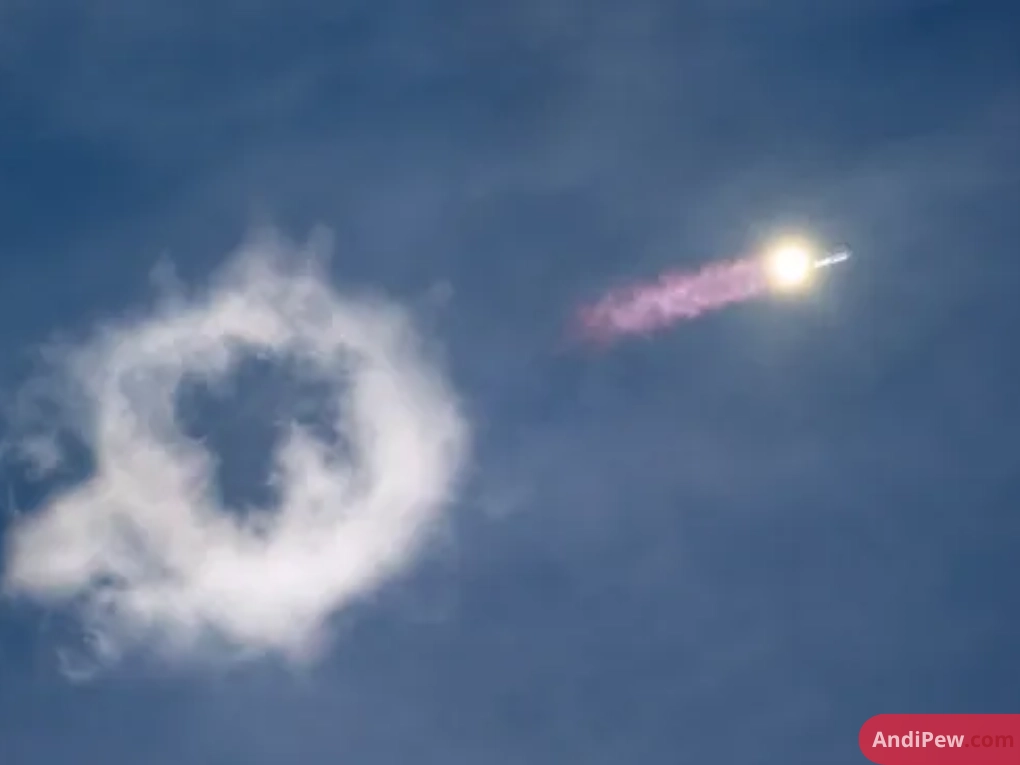
The official theme for 2026 is “Rocket Revolution.” It spotlights how advanced launch systems, booster reusability, and private spaceflight are lowering the cost and increasing the frequency of missions to space.
Who organizes World Space Week?
The event is officially recognized by the United Nations General Assembly and organized internationally by the non-profit World Space Week Association (WSWA) in coordination with the UN Office for Outer Space Affairs (UNOOSA).
Can anyone register an event for World Space Week?
Yes. Any individual, school, university, museum, business, or astronomy club can organize an event. You can register your activity on the official global World Space Week calendar (worldspaceweek.org) to appear on the worldwide interactive map.
Why are the dates October 4 and October 10 significant?
October 4 marks the launch of humanity’s first artificial satellite, Sputnik 1 (1957). October 10 marks the date when the United Nations Outer Space Treaty entered into force (1967), establishing the principles of peaceful space exploration.
Conclusion
World Space Week 2026 comes at an unprecedented inflection point in aerospace history. With the Rocket Revolution in full swing, the barrier between Earth and orbit is dissolving faster than ever before. What was once the exclusive domain of national defense ministries has grown into an inclusive ecosystem driven by students, researchers, entrepreneurs, and global partners.
From October 4 through October 10, join the global community in honoring how far we have journeyed—and preparing for the next giant leap.
Ready to participate? Find an authorized World Space Week event near you, register your classroom or community activity on the official global map, and share your discoveries online using #WorldSpaceWeek2026 and #RocketRevolution. Let’s explore the cosmos together!