

The bifold is the wallet most Australian men actually carry: it folds once, holds cards on one side and flat notes on the other, and still fits in a back pocket. The problem is that most bifolds are either too thick when full or too small for Australian notes — our $50 note is 151 mm long and our $100 is 158 mm, so a wallet that fits American dollars can still leave the corners of a $50 poking out. This guide compares the bifolds we would actually buy in Australia, with prices checked on 22 November 2026. Our top pick is the Bellroy Note Sleeve at A$96.75 on sale at THE ICONIC, down from A$129. If you only carry cards, read our guide to the best slim wallets in Australia instead — a bifold is the wrong shape for you.
In short
- Best overall: Bellroy Note Sleeve — A$96.75 (sale, was A$129) at THE ICONIC.
- Best classic bifold: Bellroy Hide & Seek — A$129 at THE ICONIC.
- Best for travel: Bellroy Travel Wallet — A$199 at Bellroy.
- Best card-first alternative: Secrid Miniwallet — A$119 at Dick Smith.
Disclosure: The “Where to buy” links in this guide are direct links to the retailers named. AndiPew does not receive a commission from them. Prices are in Australian dollars and were checked on 22 November 2026 unless a different date is stated — the Travel Wallet price below was last checked on 9 November 2026.
What makes a good bifold?
A bifold has one job that a card sleeve cannot do: carry flat notes. That sounds simple until you count what a normal day in Australia actually involves — a driver’s licence, two or three bank cards, a Medicare card, a transport card, some cash, and sometimes a loyalty card or two. A good bifold holds all of that without doubling in thickness, because its card slots are staggered and its note section is genuinely flat rather than a second stack of slots. The wallets in this guide hold between 6 and 12 cards, and the best of them stay under 11.5 cm wide so they sit flat in a back pocket instead of printing through a shirt.
Leather matters more in a bifold than in any other wallet shape, because the fold itself is the weak point. A bifold opens and closes at the same crease hundreds of times a year, so cheap corrected-grain leather cracks along that line while full-grain leather simply darkens and softens. Look for a named maker, a warranty of at least two years, and edges that are burnished or folded rather than raw-cut. Our explainer on full-grain vs top-grain vs genuine leather shows how to read those claims — “genuine leather” on a price tag is a grade, not a compliment.
The shortlist
| Wallet | Cards | Flat notes | Coin pocket | Size | Price (AUD) | Where to buy |
|---|---|---|---|---|---|---|
| Bellroy Note Sleeve | 4–11+ | Yes | Yes | 10.2 × 9.0 cm | A$96.75 (sale, was A$129) | THE ICONIC |
| Bellroy Hide & Seek | 5–12+ | Yes | No | 11.5 × 8.5 cm | A$129 | THE ICONIC |
| Bellroy Travel Wallet | 7 (about 8–10 stretched) | Yes | No | 9.7 × 15.0 cm | A$199 | Bellroy |
| Secrid Miniwallet (Vintage) | 6 in protector + up to 4 more | Folded only | No | 6.5 × 10.2 cm | A$119 | Dick Smith |
Prices checked 22 November 2026, except the Travel Wallet at A$199, checked 9 November 2026 — Bellroy’s site showed only the US price (US$145) when we re-checked on 22 November. The Secrid is not a true bifold, but it is included here as the card-first alternative many bifold buyers switch to.
1. Bellroy Note Sleeve — best overall
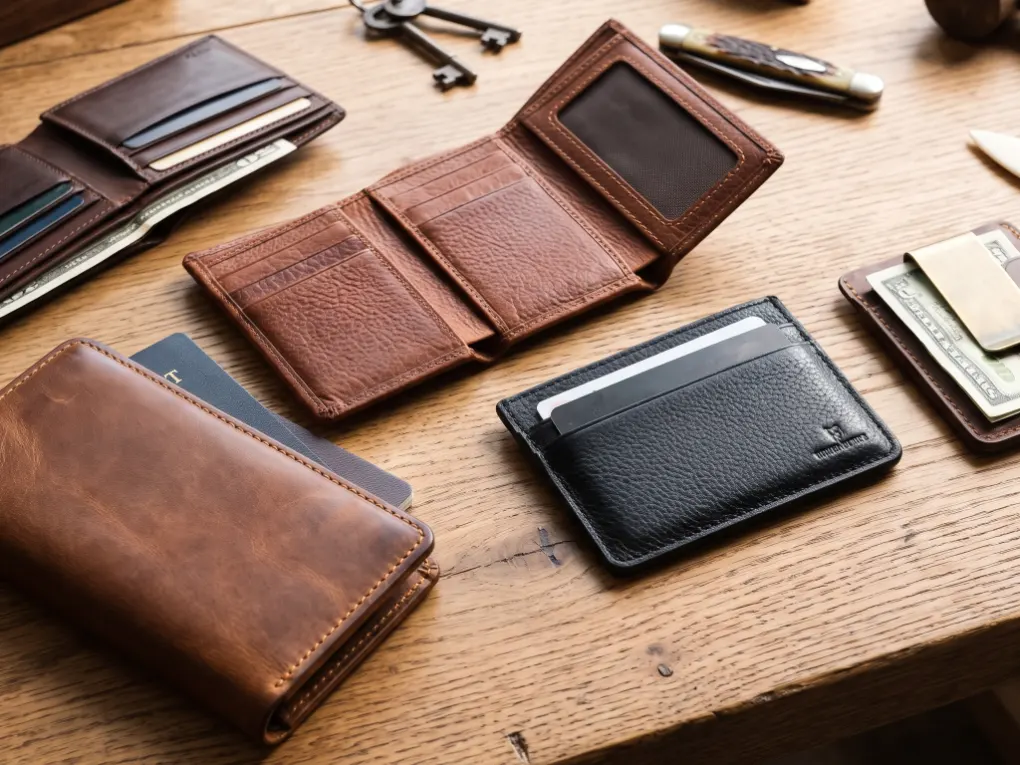
Verdict: 9/10 — the all-rounder most men should buy. Bellroy states the Note Sleeve holds 4–11+ cards, with three quick-access slots, a pull-tab section for the rest, flat notes and a coin pocket — at 10.2 × 9.0 cm. That coin pocket is the reason it wins this guide: it is the only bifold here that takes coins without a separate pouch, and in Australia coins still matter — a $2 coin is the highest-value coin in daily use and it has nowhere to go in most slim wallets. The leather is Bellroy’s premium, environmentally certified hide, with a 3-year warranty. Price checked: A$96.75 (sale, was A$129), THE ICONIC, 22 November 2026.
Pros: coins, flat notes and 11 cards in one slim wallet; 3-year warranty at a mid-range price. Cons: the coin pocket adds bulk if you feed it daily; Bellroy sells standard (unshielded) versions too, so check the listing. Who it’s for: men who carry cards, notes and coins and want one wallet for everything. Skip if: you carry cards only — the Apex is thinner.
2. Bellroy Hide & Seek — best classic bifold
Verdict: 8.5/10 — the traditional bifold, done properly. The Hide & Seek takes 5–12+ cards and flat bills, and hides a second pouch under a leather flap for spare notes — the feature behind the name. At 11.5 × 8.5 cm it is bigger than the Note Sleeve, with the same price and warranty as the Note Sleeve, and it comes in LO and HI heights (LO suits Australian notes). The hidden section is genuinely useful in Australia: it is where a $50 or $100 note can sit flat, out of sight, instead of bulging the main note section. Price checked: A$129, THE ICONIC, 22 November 2026.
Pros: the largest card capacity of the Bellroy bifolds here; the hidden section suits travel cash; same price and warranty as the Note Sleeve. Cons: loaded to 12 cards it stops being slim; no coin pocket, so coins compete with cards for space. Who it’s for: bifold traditionalists who still carry cash. Skip if: you want the slimmest front-pocket carry — that is the Apex.
3. Bellroy Travel Wallet — best for travel
Verdict: 8/10 — the one to buy if your wallet doubles as a passport holder. Built around a passport: 7 card slots (stretching to roughly 8–10 cards), a hidden note section, a SIM-card slot and a micro pen inside a 9.7 × 15.0 cm bifold. At 15 cm tall it is a jacket-pocket or bag wallet, not a front-pocket carry — but at the airport it replaces a passport holder, a card wallet and a document sleeve in one piece. Read our full Bellroy Travel Wallet review before deciding whether the size is worth it for the number of trips you actually take. Price checked: A$199, Bellroy (Australian store), 9 November 2026.
Pros: passport, cards, cash and documents in one place at the airport; 3-year warranty. Cons: 15 cm long; the micro pen is small and easy to lose. Who it’s for: frequent flyers who travel on one wallet. Skip if: you fly twice a year — a standard bifold does the job for A$102.25 less.
4. Secrid Miniwallet — the card-first alternative
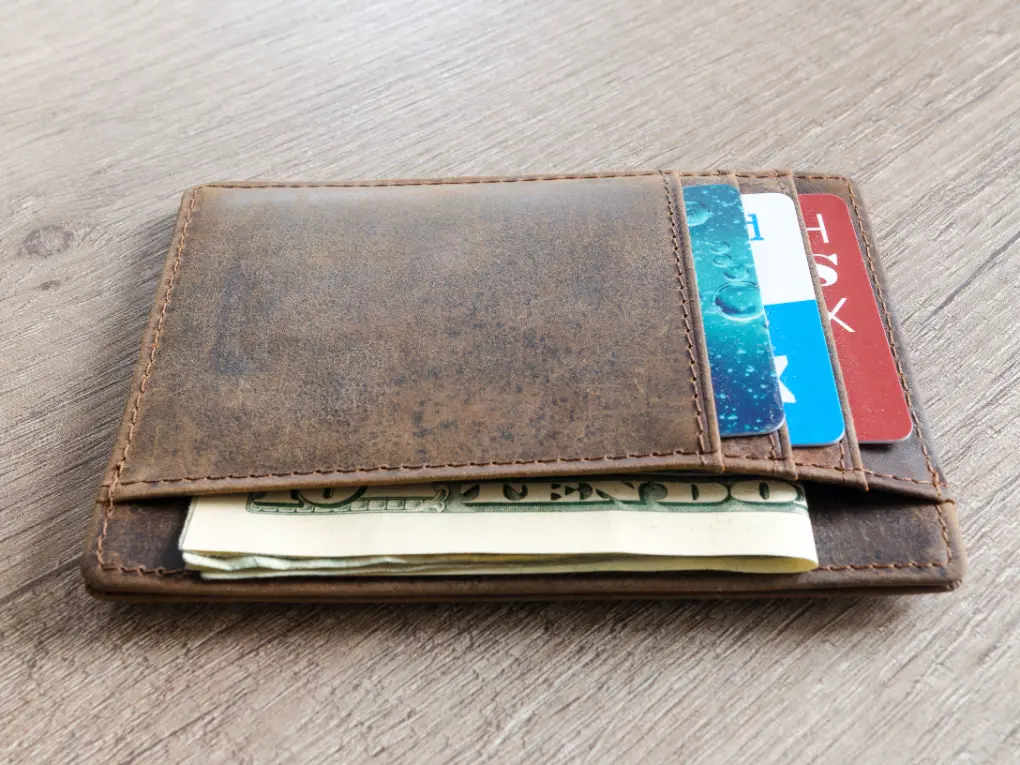
Verdict: 8/10 — a different answer to the same problem. Instead of a shielded lining, the Miniwallet’s aluminium Cardprotector is the shield: Secrid states it protects the 4 embossed or 6 flat cards inside against bending, breaking and unwanted RFID/NFC reading, and a lever fans them out for selection. The European-leather wrap adds room for 4 extra cards and banknotes, at 6.5 × 10.2 cm — the smallest footprint here. It is not a true bifold — there is no fold, and notes sit folded rather than flat — but it earns its place here because it is what many bifold buyers switch to once they stop carrying cash. Price checked: A$119, Dick Smith, 22 November 2026.
Pros: faster at the checkout than any slot wallet; aluminium protects cards from snapping as well as skimming. Cons: no home for coins; banknotes sit folded in the wrap; the warranty is 2 years (3 if you register). Who it’s for: card-first carriers who rarely touch cash. Skip if: you want a wallet that feels like a wallet, not a gadget. If RFID blocking matters to you, our guide to the best RFID wallets in Australia compares the shielding in each of these wallets in detail.
Bifold vs slim wallet: which shape suits you?
Choose a bifold if you carry flat notes or coins every day. A $50 note folded in half fits in a slim sleeve, but it creases, it is slow to get out at a market stall, and after a month the fold becomes permanent. Choose a slim wallet if your day is cards and phone only: our guide to the best slim wallets in Australia found the Bellroy Slim Sleeve at A$119 and the Card Sleeve at A$79, both thinner and lighter than any bifold here, and both easier to carry in a front pocket. The honest test is your last ten purchases. If more than two involved cash, buy the bifold. If none did, buy the slim wallet and stop carrying a fold you never use. Either way, buy for the carry you have, not the carry you imagine — a wallet that is empty half the time is the wrong wallet.
How to choose the right bifold
Start with your notes. Australian $50 and $100 notes are longer than American bills, so check the wallet’s internal length, not just its outside size — anything under 15 cm inside will fold a $100. Then count your cards honestly: most men carry six to eight daily, and a wallet rated for 12 will feel loose with six. Check the coin question next: if you pay for coffee in cash, the Note Sleeve’s coin pocket is worth more than any other feature here. Finally, check the warranty and the leather. A three-year warranty from a named maker is the cheapest insurance a wallet offers, and full-grain leather will look better in year three than corrected grain looks in year one. Our complete guide to men’s leather wallets in Australia covers sizing, leather grades and price tiers in full.
FAQ
Do bifold wallets damage Australian banknotes? No — a good bifold holds notes flat, which is kinder to polymer notes than folding them into a slim sleeve. The damage comes from overstuffing: a note section packed with receipts creases the notes at the edges. Empty the receipts weekly and the notes stay flat.
How many cards should a bifold hold? Six to eight daily cards is the sweet spot for the bifolds in this guide. The Note Sleeve is rated for 4–11+ cards and the Hide & Seek for 5–12+, but both are at their slimmest with eight or fewer. Past ten cards, any bifold becomes a brick — carry the extras in a separate card holder instead.
Are bifold wallets too big for a front pocket? A compact bifold like the Note Sleeve, at 10.2 × 9.0 cm, fits a front pocket when it holds eight cards or fewer. A full-size bifold like the Hide & Seek, at 11.5 × 8.5 cm, is a back-pocket or jacket-pocket wallet once it is loaded. If you always carry front-pocket, consider the slim wallets in our slim guide instead.
Is RFID blocking worth it in a bifold? As a free inclusion, yes; as the main reason to pay more, no. The Note Sleeve, Hide & Seek and Travel Wallet in this guide all have shielded linings, and our best RFID wallets in Australia guide explains what that shielding does — and what it cannot do — before you pay extra for it.
The short version: buy the Note Sleeve while it is on sale at A$96.75, buy the Hide & Seek if you carry more cash, and buy the Travel Wallet only if it will actually travel. Whichever you choose, empty it once a week, keep it out of a hot car, and condition the leather twice a year — a bifold that is cared for will outlast two cheap ones.
