

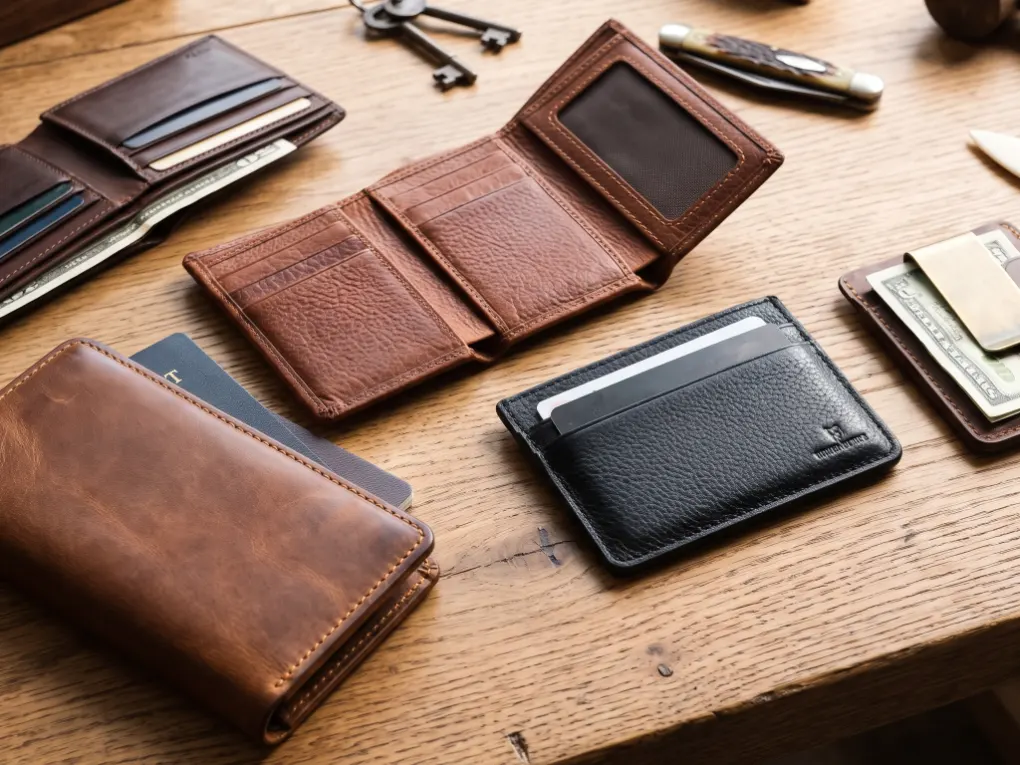
Finding the right men’s leather wallet in Australia comes down to three practical decisions: everyday card capacity, physical pocket dimensions, and genuine leather grade. A proper leather wallet must fit polymer Australian banknotes without awkward folding, sit flat in tailored trousers, and withstand years of friction without splitting at the seams. If you want a dependable bifold that balances traditional capacity with slim pocket geometry, the Bellroy Hide & Seek remains the benchmark.
Men’s leather wallets in Australia are personal pocket accessories crafted from animal hides—predominantly bovine—designed to organise Australian polymer currency, identity cards, and payment cards. Quality options utilise full-grain or top-grain vegetable-tanned or chrome-tanned leather, paired with durable perimeter stitching, offering slim pocket profiles and structural longevity under daily friction.
Based on manufacturer specifications and owner reports; not hands-on tested.
Tip In short
- Match your wallet to AUD notes: Australian fifty- and hundred-dollar notes measure 65 mm and 67 mm in height, requiring bifolds with at least 80 mm of vertical clearance to prevent top-edge creasing.
- Leather grade dictates lifespan: Full-grain leather develops a natural patina over 5 to 10 years; genuine leather uses bonded scrap layers and polyurethane that crack within 12 to 24 months.
- Audit your cards before buying: Carrying 4 to 6 cards allows for a slim sleeve (under 0.8 cm thick), while carrying 8 or more cards requires a structured bifold or zip wallet.
- RFID lining is situational: RFID shielding protects 13.56 MHz payment cards from skim attempts, but blocks tap-and-go public transit cards such as Opal, myki, and SmartRider.
- Expect realistic pricing: Reliable top-grain and full-grain wallets from verified Australian retailers start at $79 AUD and reach $250 AUD for artisan vegetable-tanned leather.
Disclosure: This guide contains affiliate links. If you buy through them, AndiPew may earn a commission at no extra cost to you. Rankings are never paid for.
Quick Picks: Men’s Leather Wallets at a Glance
| Category | Model | Leather Grade | Dimensions | Capacity | Retailer & Price |
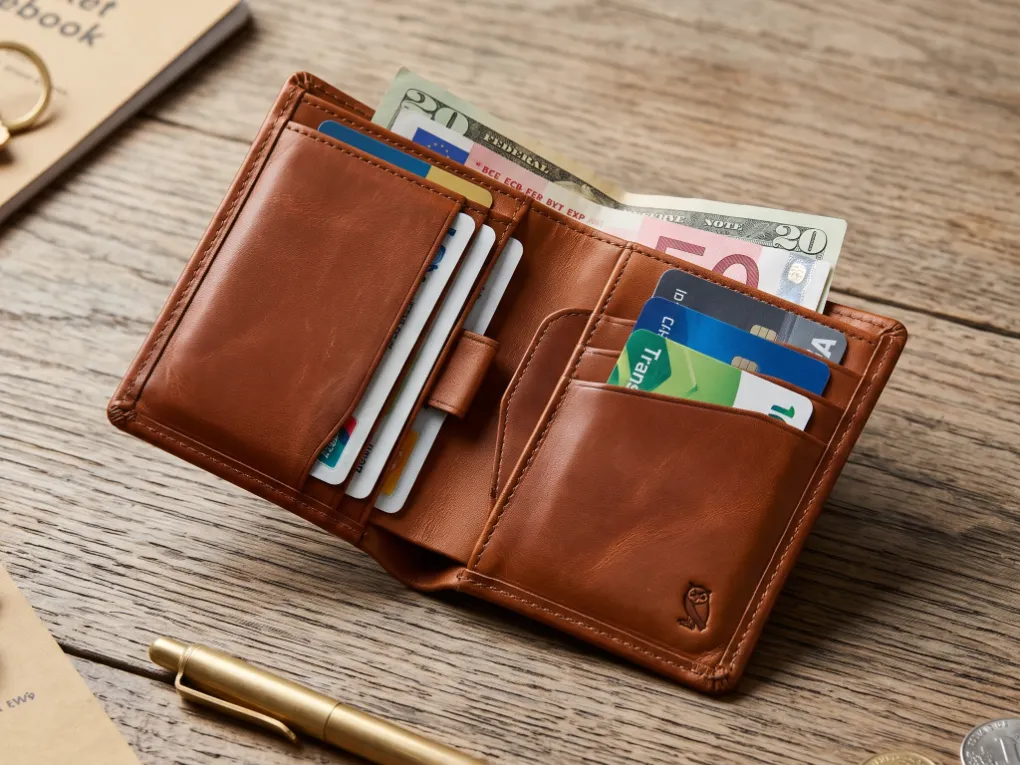
| Best Overall | Bellroy Hide & Seek | Top-grain environmentally certified cowhide | 11.5 cm x 8.5 cm x 1.0 cm | 5–12 cards, flat AUD notes | Bellroy: $129.00 AUD (Price checked: 08/11/2026) |
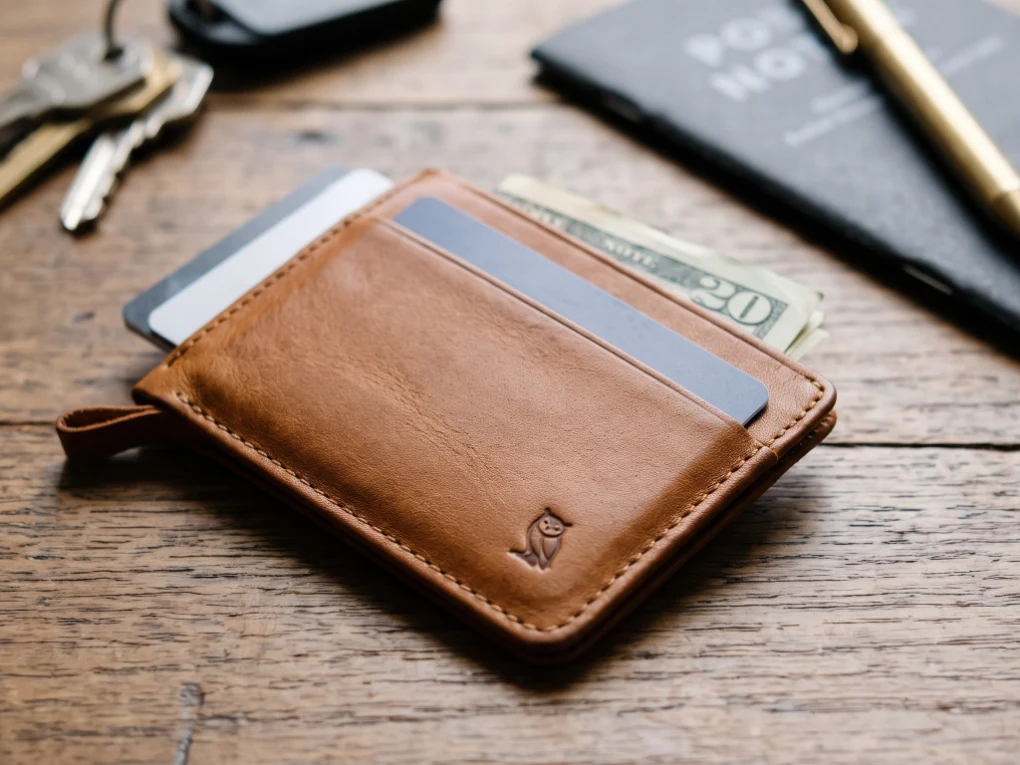
| Best Minimalist | Bellroy Card Sleeve | Top-grain environmentally certified cowhide | 10.3 cm x 7.0 cm x 0.5 cm | 2–8 cards, folded bills | Bellroy: $79.00 AUD (Price checked: 08/11/2026) |
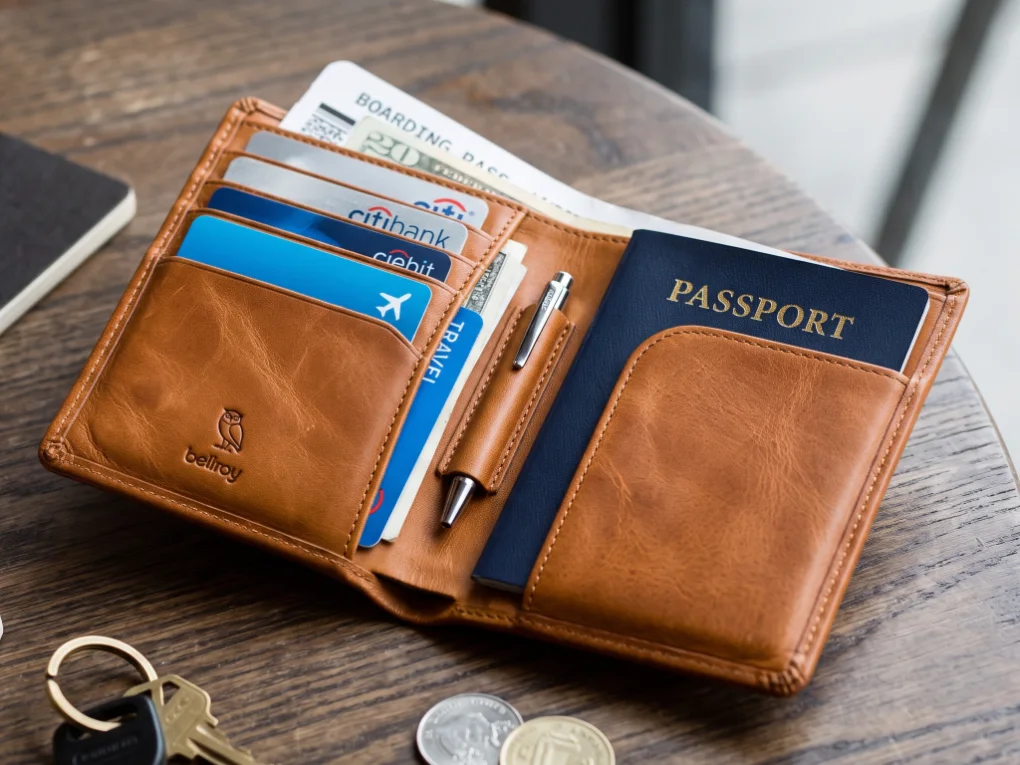
| Best for Travel | Bellroy Travel Wallet | Top-grain environmentally certified cowhide | 15.0 cm x 9.7 cm x 1.5 cm | 4–10 cards, passport, travel pen | Bellroy: $145.00 AUD (Price checked: 08/11/2026) |
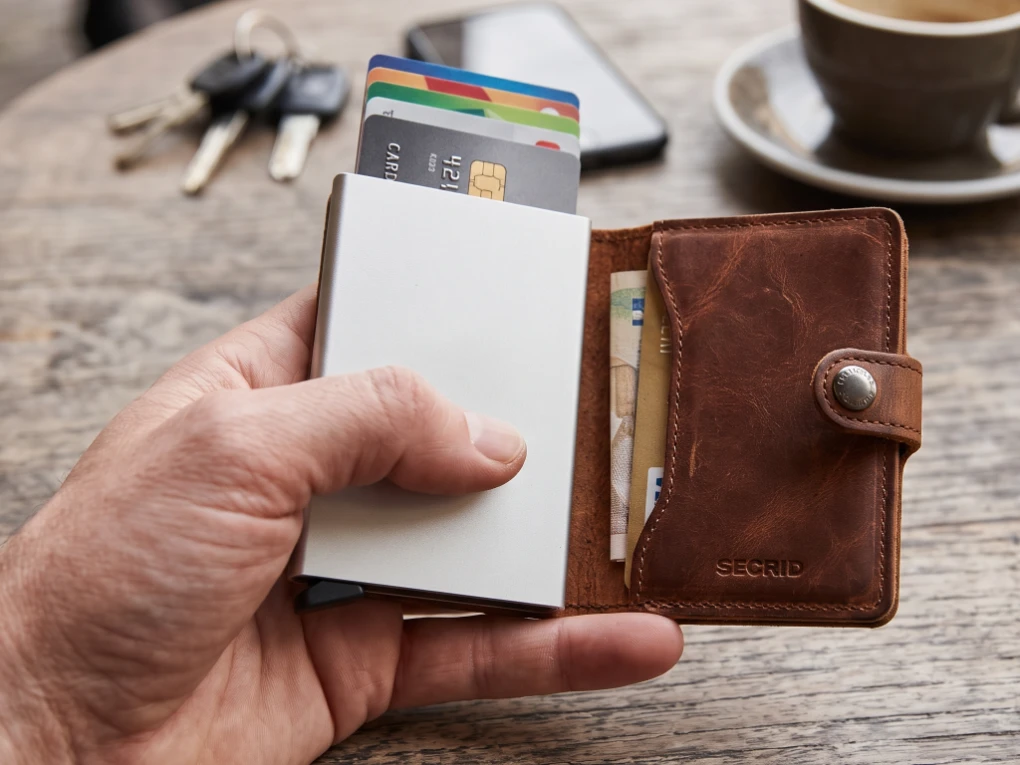
| Best Card Protector | Secrid Miniwallet | Corrected-grain / top-grain leather over aluminium | 10.2 cm x 6.5 cm x 2.1 cm | 4–6 cards in core, 4 extra cards, cash | Steel & Anchor: $135.00 AUD (Price checked: 08/11/2026) |
The 5 Wallet Types Australian Men Actually Carry
Choosing a wallet requires understanding how physical bulk interacts with your daily routine, wardrobe, and transit habits.
The Classic Bifold
The horizontal bifold remains the standard format in Australia. It folds once down the centre, separating cards into dedicated flanking slots while housing a long interior sleeve for cash.
A well-proportioned bifold measures roughly 11.0 cm to 11.5 cm in length and 8.5 cm in height when closed. This height provides ample clearance for Australian banknotes:
- $5 note: 65 mm x 130 mm
- $10 note: 65 mm x 137 mm
- $20 note: 65 mm x 144 mm
- $50 note: 65 mm x 151 mm
- $100 note: 67 mm x 158 mm
A depth under 80 mm causes the top rim of a fifty- or hundred-dollar note to protrude, creating frayed edges over time. Bifolds carry between 6 and 12 cards, making them the default choice if you carry secondary ID, trade licenses, and private health cover cards.
Slim Wallets and Card Sleeves
The card sleeve eliminates folding layers entirely. Built from two pieces of leather stitched on three sides—often with an exterior quick-draw slot on each face—a sleeve measures between 0.4 cm and 0.8 cm thick unloaded.
A dedicated sleeve holds between 2 and 6 cards alongside a couple of folded banknotes tucked into the central cavity. Because Australia’s retail landscape is heavily geared toward contactless payment terminals, card sleeves dominate urban corporate offices where men carry only a driver licence, a primary credit card, and an office pass.
Zip-Around Wallets
Zip-around wallets feature a continuous nylon or brass zipper track encircling three exterior edges. This design seals all internal contents securely.
Measuring between 10.0 cm and 12.0 cm tall, zip wallets feature accordion-style internal dividers. They excel if you work in active environments, commute on motorbikes, or regularly handle Australian coinage ($1 and $2 coins quickly push open unfastened bifolds). The zipper hardware adds 3 mm to 5 mm of mandatory perimeter bulk, making these better suited for jacket pockets or bags than slim chinos.
Travel Wallets
Travel wallets expand the traditional bifold chassis to accommodate an Australian standard passport (12.5 cm x 8.8 cm), foreign currencies, customs documentation, and a micro-pen.
Closed heights range between 14.5 cm and 16.0 cm. They stay flat in a suit jacket pocket or carry-on satchel. Quality travel wallets feature a dedicated passport sleeve that allows you to extract your document with one hand at border kiosks without disturbing your boarding pass or primary credit cards.
Money Clip Wallets
Money clip wallets combine an ultra-thin leather card carrier with an integrated spring-tension steel or brass clip. The clip mounts either along the exterior spine or inside the central hinge.
Measuring roughly 10.5 cm x 7.0 cm, this style eliminates the internal leather cash divider entirely, saving 3 mm to 4 mm of overall profile thickness. The mechanical arm holds 5 to 15 Australian polymer notes firmly in place. However, the rigid metal spine creates a focal wear point on the surrounding leather if jammed into tight denim pockets.
Go deeper: explore the most functional everyday silhouettes in our detailed guide to the best slim wallets Australia.
Full-Grain vs Top-Grain vs Genuine Leather — In 60 Seconds
The commercial term “genuine leather” is widely misunderstood by Australian retail shoppers. The structural integrity of any leather accessory depends on which slice of the hide was utilised during tanning.
Full-Grain Leather
Full-grain leather is the uppermost layer of the hide, left completely unbuffed and unsanded. The dense outer epidermis contains tightly woven collagen fibres that resist surface abrasions, moisture, and stretching. Because the grain layer remains intact, it retains the animal’s natural surface variations and absorbs atmospheric oils, darkening and developing a smooth patina over years of pocket friction. It represents the highest tier of durability.
Top-Grain Leather
Top-grain leather takes that same upper cut but sands away the very top millimetre to erase surface scars, insect bites, and natural blemishes. Manufacturers stamp a uniform grain texture onto the sanded surface and coat it with a protective acrylic finish. Top-grain leather is slightly thinner, softer out of the box, and more stain-resistant than raw full-grain hide, but it will never build the same deep, rich patina over a decade of use.
Genuine Leather (Split Hide)
Genuine leather does not mean “pure” or “high-grade.” It is an industry term for the fibrous bottom splits remaining after the premium top grain has been stripped away. Lacking structural collagen density, these lower splits are pressed together, coated with an artificial polyurethane film, and embossed with an artificial leather texture. Within 12 to 24 months, the polyurethane surface peels away from the loose underlying fibers, causing the edges to crack and delaminate under pocket warmth.
Go deeper: read our comprehensive breakdown of hide grades and tanning methods in full grain vs top grain vs genuine leather.
How to Choose: Cards, Size, RFID, and Australian Pricing
Navigating the market requires balancing your physical carry requirements against materials and build quality.
Count Your Daily Cards
Before shopping for men’s leather wallets in Australia, lay every card from your current wallet onto a desk:
- Core payment cards: Primary debit and credit card (2 cards).
- Identity cards: Australian driver licence or proof of age card, Medicare card (2 cards).
- Secondary transit or access: Opal/myki/SmartRider, building access fob (1–2 cards).
If your core loadout totals 4 to 6 cards, carrying a standard 12-slot bifold forces you into carrying redundant empty pockets and excess leather bulk. Digitize gym memberships, loyalty cards, and private insurance cards into your smartphone wallet app to drop your physical card count to 6 or fewer.
Physical Dimensions and AUD Note Compatibility
Measure the internal currency sleeve before buying an imported wallet. American and Japanese banknotes are narrower than Australian currency. A wallet designed strictly for USD (which measures 66 mm x 156 mm across all denominations) frequently features tight vertical bill slots with an overall height of only 72 mm.
Because an Australian $50 note is 65 mm tall and a $100 note is 67 mm tall, inserting them into a 72 mm pocket leaves almost zero margin. As the wallet folds closed, the inner cash sleeve bunches up, forcing the top edges of the polymer notes into the hinge where they get crushed and bent. Look for closed exterior dimensions of at least 11.0 cm in length and 8.0 cm to 8.5 cm in height.
The Realities of RFID Protection
Radio Frequency Identification (RFID) blocking wallets incorporate a micro-thin layer of woven metallic fabric—typically copper, nickel, or aluminium mesh—between the exterior leather and the interior liner. This barrier interrupts electromagnetic signals operating at the standard 13.56 MHz frequency used by contactless credit cards and biometric passports.
While RFID shielding stops rogue scanning devices from picking up payment card identifiers, it also prevents transit card readers from scanning cards through the wallet. If you tap on at train stations or tram gates using an Opal or myki card housed inside an RFID-shielded bifold, the gate reader will fail to detect it. You must pull the card out manually every time.
Real AUD Price Tiers at Australian Retailers
Authentic leather accessories fall into three distinct price brackets across Australian stockists:
- Under $60 AUD (Budget Utility): Found at major department stores. These wallets rely almost exclusively on corrected genuine leather splits or bonded scraps. They offer low upfront cost but generally require replacement within 18 months as the lining tears and edges peel.
- $70 to $140 AUD (Performance Production): Dominated by brands like Bellroy, Status Anxiety, and Secrid. These feature certified top-grain hides, vegetable retan treatments, precise nylon stitching, integrated RFID liners, and 3-year factory warranties.
- $150 to $250+ AUD (Artisan Vegetable-Tanned): Produced by independent Australian and international leather crafters. These pieces employ unbuffed full-grain hides, hand-waxed polyester or linen thread, burnished edges sealed with beeswax, and zero synthetic textile liners. They yield lifetimes measured in decades.
Go deeper: learn which security designs preserve convenience in our round-up of the best RFID wallets Australia.
Best Wallets by Use Case
Different routines demand distinct functional layouts. Here is how leading market options perform against specific carry profiles.
Best Overall Everyday Bifold: Bellroy Hide & Seek
The Bellroy Hide & Seek ($129.00 AUD at Bellroy) balances traditional bifold appearance with thoughtful volume reduction. Measuring 11.5 cm x 8.5 cm, it swallows Australian $50 and $100 notes with ease, housing 5 to 12 cards behind vegetable-tanned top-grain leather. A concealed secondary cash flap shields large-denomination banknotes from casual observation whenever the wallet is opened at a counter.
Best Front-Pocket Minimalist: Bellroy Card Sleeve
For men carrying 2 to 8 cards and minimal cash, the Bellroy Card Sleeve ($79.00 AUD at Bellroy) remains an exceptional exercise in pocket geometry. At just 0.5 cm thin unloaded, it features dual exterior quick-draw pockets paired with an interior storage slot accessed via an integrated pull-tab. It slips cleanly into lightweight summer shorts or tailored suit trousers without disrupting the garment’s visual drape.
Best International Commuter: Bellroy Travel Wallet
International itineraries require specialised storage, and the Bellroy Travel Wallet ($145.00 AUD at Bellroy) handles passports, boarding passes, and multi-currency bills in an organised 15.0 cm x 9.7 cm footprint. It features an integrated micro-pen tucked inside the central crease for completing incoming passenger cards on the plane, backed by full RFID shielding across all primary compartments.
Go deeper: read our in-depth specification breakdown and travel durability assessment in the Bellroy Travel Wallet review.
How to Care for a Leather Wallet
A quality leather wallet is exposed to body heat, humidity, friction, and pocket moisture every day. Without routine maintenance, the hide will dry out and crack along the primary fold.
Cleaning and Surface Prep
Every six months, completely empty your wallet and shake out accumulated dust and paper lint from the card pockets. Use a soft horsehair brush to clean dirt out of the perimeter stitching channels. Wipe exterior leather faces using a clean, lint-free microfibre cloth barely dampened with lukewarm water. Never submerge leather in water or scrub it with commercial household detergents, which strip away protective natural oils.
Conditioning and Moisture Restoration
Once the leather dries completely at room temperature, apply an Australian-made leather conditioner or wax balm (such as Oakwood or Joseph Lyddy). Place a pea-sized amount onto a clean cloth or work it gently using your fingertips in circular patterns. Focus primarily on the exterior spine and folding creases where stress concentrates. Allow the conditioner to absorb for 30 minutes, then buff the surface firmly with a dry horsehair brush to remove excess wax and restore a soft sheen.
Handling Moisture and Wet Pockets
If your wallet gets soaked by heavy rain or sweat, never dry it with an electric hair dryer or place it near a household heater. Intense heat shrinks hide fibres rapidly, warping card pockets and cracking the surface grain. Instead, remove all cards and cash immediately, prop the wallet open in an inverted “V” shape on a clean towel, and let it dry naturally in a well-ventilated, shaded room.
Go deeper: protect your investment with step-by-step instructions in how to condition leather wallet.
Who This Is For / Who Should Skip It
Who This Is For
- Men upgrading from nylon or faux leather: A genuine top-grain or full-grain leather wallet instantly cleans up your everyday carry while providing years of structural reliability.
- Office professionals and commuters: Upgrading to a slim bifold or card sleeve eliminates unsightly pocket bulges in tailored trousers and suits.
- Men who carry Australian cash: The right wallet format protects our larger polymer bank notes from crushed, tattered edges.
Who Should Skip It
- Heavy coin carriers: If you handle substantial pocket change every day, standard bifolds will quickly stretch out; opt instead for a dedicated coin pouch or zip-around wallet.
- Card hoarders: If you routinely carry 15+ plastic cards, physical store loyalty tags, and paper receipts, a slim leather wallet will stretch out and fail at the stitching. You need a dedicated card book or smartphone digital wallet.
- Harsh worksite conditions: Tradesmen working in constant contact with mud, grease, and direct water exposure are often better served by reinforced Cordura or hard-shell polymer cases.
Frequently Asked Questions
Do I really need an RFID-blocking wallet in Australia?
No, RFID blocking is not strictly mandatory for day-to-day safety, but it offers supplemental peace of mind against digital skim devices. Australian banking apps and credit card providers enforce robust fraud detection and zero-liability protections for unauthorized contactless transactions. Furthermore, RFID liners will block your Opal, myki, or SmartRider transit cards, forcing you to remove them manually whenever you tap through ticket barriers.
How much should I spend on a real leather wallet in Australia?
Expect to spend between $79 AUD and $145 AUD for a well-engineered top-grain leather wallet from established Australian brands like Bellroy or Status Anxiety. Artisan-crafted full-grain vegetable-tanned wallets made by independent workshops run between $150 AUD and $250 AUD. Anything advertised as genuine leather under $40 AUD is typically made from bonded split hide coated with polyurethane, which will peel within two years.
How often should you replace a leather wallet?
A high-grade full-grain leather wallet should last between 7 and 15 years with basic biannual cleaning and conditioning. Top-grain wallets from reputable brands generally deliver 3 to 7 years of daily pocket use before stitching rubs thin. Conversely, low-tier split genuine leather wallets usually crack at the hinge and tear along internal fabric linings within 12 to 24 months.
Will a slim wallet hold Australian polymer banknotes?
Yes, provided the interior or exterior bill compartment measures at least 80 mm in height. Australian fifty- and hundred-dollar polymer notes measure 65 mm and 67 mm high, meaning compact wallets designed strictly for smaller foreign banknotes will cause note edges to stick out or bunch up when closed. Always confirm currency pocket dimensions before purchasing an imported slim sleeve.
Selecting the right leather wallet comes down to assessing your true card carry, matching pocket dimensions to Australian polymer cash, and buying the highest leather grade your budget permits. Investing in certified top-grain or full-grain hides prevents the peeling, cracked folds, and broken seams that plague bargain genuine leather accessories within months of purchase.
