

Leather is skin, and a wallet is the piece of leather you handle most. Every time you sit, the wallet in your back pocket bends, warms up and absorbs a little sweat; every time you pay, your fingers add a little oil. Left alone, that is actually how leather ages well — it darkens, softens and picks up a patina. Left alone in Australian conditions, though, it is also how leather dries out, cracks along the fold and goes grey at the edges. This guide covers the cleaning and conditioning routine that keeps a good wallet looking good for five years instead of two, using the wallets in our guides as examples — including the Bellroy Note Sleeve at A$96.75 and the Hide & Seek at A$129, with prices checked on 22 November 2026.
Why leather wallets need care in Australia
Australia is hard on leather for three reasons, and none of them is the sun alone. First, heat: a wallet left on a car dashboard or in a glovebox can reach 60°C or more, and at that temperature the oils in the leather evaporate and the fibres stiffen. Second, humidity: Brisbane and Darwin summers keep leather damp, and damp leather grows mould in a closed pocket or drawer. Third, salt: sweat and sea air leave salt crystals in the grain, and salt pulls moisture out of the leather as it dries. None of this kills a wallet in a month — but over two years it is the difference between a wallet that looks broken-in and one that looks broken.
The good news is that the fix is small and infrequent. A full clean and condition takes about twenty minutes and you only need to do it two or three times a year — roughly as often as you would service anything else you use daily. The rest is habit: emptying receipts, keeping the wallet out of heat, and not overfilling it. This guide works for the full-grain and top-grain wallets in our complete guide to men’s leather wallets in Australia; if you are not sure what grade your wallet is, our explainer on full-grain vs top-grain vs genuine leather will help you check before you put any product on it.
Know your leather first
Conditioner is not one product for all leather. Full-grain leather — the top layer of the hide, with its natural grain intact — drinks conditioner slowly and rewards it with a deeper colour. Top-grain leather, which has been lightly sanded and finished, takes conditioner more evenly but shows over-conditioning sooner, as a dark, greasy patch. Genuine leather, the grade below top-grain, is often heavily coated; conditioner sits on the coating instead of soaking in, and the best care is simply a wipe with a damp cloth. Suede and nubuck are a different world again: never use a cream conditioner on them, only a suede brush and a protector spray. If your wallet is a Bellroy, check the maker’s own care page first — the Note Sleeve and Hide & Seek use premium environmentally certified leather, and Bellroy’s guidance is to keep them dry and clean rather than to load them with oils.
Before you condition any wallet, test the product on the inside of a card slot or on the back panel, wait a day, and check for darkening. If it darkens badly there, it will darken everywhere. That one test has saved more wallets than any product has.
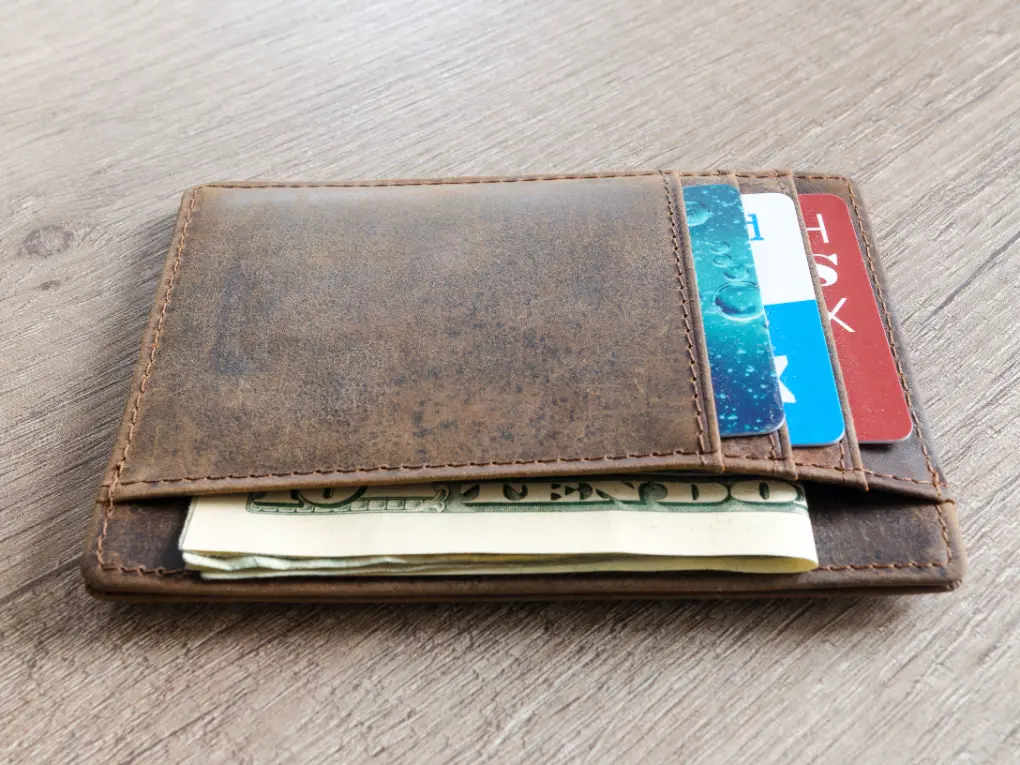
The basic cleaning routine, step by step
Do this every three to four months, or after the wallet has been wet, sweaty or dusty. You need a soft dry cloth, a second cloth slightly damp with lukewarm water, a mild saddle soap or leather cleaner, and a conditioner made for smooth leather. Do not use baby wipes, hand soap, washing-up liquid or anything with alcohol — they strip the oils out of the leather faster than any conditioner can put them back.
- Empty the wallet completely, including receipts and cards, and shake out the dust.
- Brush or wipe the outside with a dry cloth, then wipe the card slots with the damp cloth.
- Work a pea-sized amount of cleaner into a cloth, not onto the leather, and clean in small circles.
- Wipe off the cleaner with the damp cloth and let the wallet air-dry, open, away from heat — never a hair dryer.
- Once fully dry, rub in a thin layer of conditioner with your fingers, leave it overnight, and buff the next morning.
The overnight wait matters. Conditioner needs hours to soak into the fibres; buffing it off after five minutes just moves it onto your cloth. And the “thin layer” matters more: two thin coats a day apart beat one thick coat that never absorbs.
Conditioning: how often and how much
| Leather type | How often | How |
|---|---|---|
| Full-grain, daily use | Every 4–6 months | Thin coat, leave overnight |
| Top-grain, daily use | Every 6 months | Thin coat, buff next morning |
| Genuine / coated leather | Rarely — wipe only | Damp cloth, no cream |
| Wallet stored or rarely used | Once a year | Thin coat before storing |
Over-conditioning is the most common mistake we see, and it looks like darkening, a sticky surface and stitching that goes soft. If your wallet feels tacky a day after conditioning, you used too much — wipe it with a dry cloth and leave it alone for a month. Under-conditioning looks like the opposite: pale edges, a fold that turns white when you bend it, and a surface that feels papery. A wallet that is used every day in Queensland needs conditioning twice a year; the same wallet in a Melbourne office drawer needs it once.
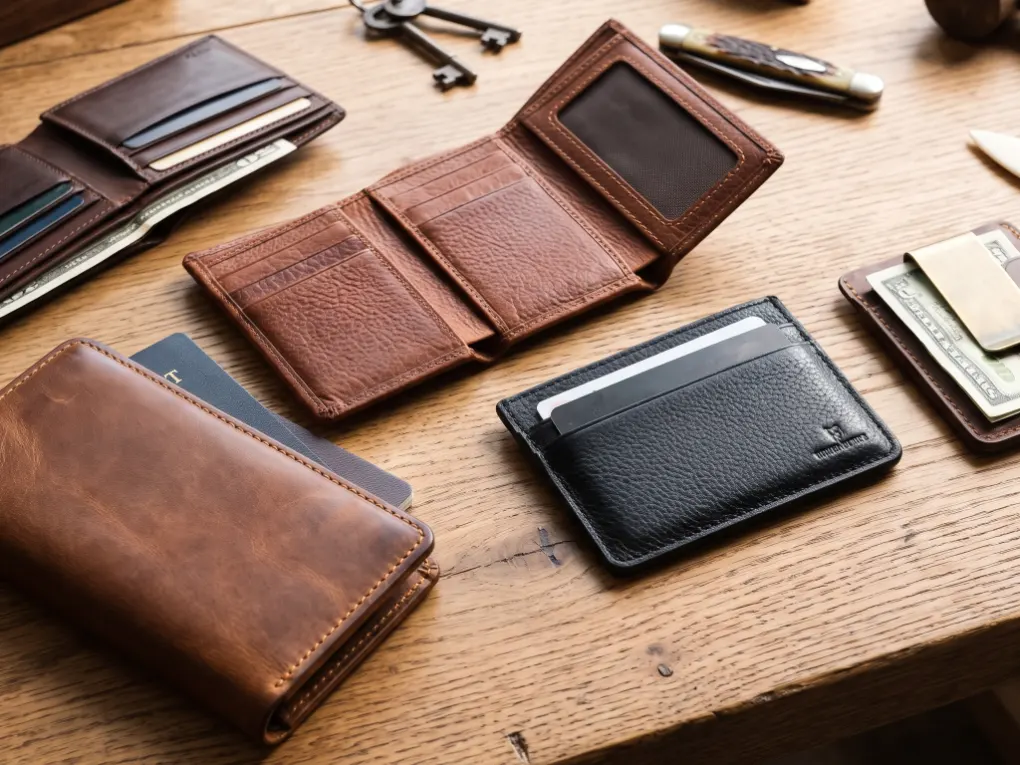
Australian climate: heat, humidity and rain
Heat is the biggest killer. Never leave a wallet in a car, on a windowsill or next to a heater — heat bakes the moisture out of leather and the damage does not reverse. If a wallet has been baked stiff, condition it lightly, twice, a week apart, and accept that some stiffness will stay. Humidity is the second problem: in a Brisbane or Darwin summer, take the wallet out of a damp pocket at night and let it air, and store a spare wallet with a silica gel packet rather than in a sealed plastic bag. Mould, if it appears, should be wiped off outdoors with a dry cloth first, then cleaned — and if it has eaten into the grain, the wallet is telling you it lived too long in the damp.
Rain is the least of the three. Australian polymer notes and modern leather finishes handle a shower well — pat the wallet dry, stuff it loosely with paper so it keeps its shape, and let it air-dry away from heat. Do not put it on a radiator or in front of a fan heater, and do not condition it while it is still damp. A wallet that gets wet once a year and is dried properly will outlast a wallet that is never wet but is baked in a car every summer.
Mistakes that ruin a leather wallet
The list is short: overfilling, over-conditioning, the wrong cleaner, and heat. Overfilling stretches the card slots until cards fall out — if you carry twelve cards, carry a card holder too, or accept the Secrid Miniwallet’s approach and let a lever do the work. The wrong cleaner is anything from the kitchen or bathroom — saddle soap or a dedicated leather cleaner, nothing else. And never use a coloured polish on a natural tan wallet: it dyes the stitching and the edges before it ever touches the panels. If you remember one rule, it is this: less product, more often, and never on a hot wallet.
A wallet that is too full is also a wallet that wears out faster — if your carry is mostly cards, our guide to the best slim wallets in Australia will show you a shape that does not need to be stretched.
What care protects: the wallets in our guides
Care is worth it when the wallet is worth keeping. The wallets in our guides are the ones where two hours of care a year pays for itself: the Bellroy Note Sleeve at A$96.75 (sale, was A$129) and the Bellroy Hide & Seek at A$129, both at THE ICONIC; the Secrid Miniwallet at A$119 at Dick Smith, and the Bellroy Travel Wallet at A$199 at Bellroy. Prices checked 22 November 2026, except the Travel Wallet, checked 9 November 2026. A $60 wallet that is cared for will outlast a $130 wallet that is not — but a $130 wallet that is cared for is the one you will still be carrying in five years. If RFID blocking matters to you as well, our guide to the best RFID wallets in Australia covers the same wallets with their shielding tested, and our best bifold wallets in Australia guide compares them as everyday carries.
FAQ
Can I use olive oil or coconut oil on my wallet? No. Kitchen oils go rancid in leather, darken it unevenly and attract dust. Use a conditioner made for smooth leather, in a thin coat, and test it first on a hidden panel.
How do I remove a water stain? Let the wallet dry completely, then dampen the whole panel evenly with a barely damp cloth and let it dry again — evening out the moisture evens out the mark. Conditioner after that, not before. A stain that is still there after two tries is usually permanent, and covering it with polish will only make it worse.
How often should I condition a wallet I use every day? Twice a year in most of Australia, and three times a year in the tropics or if the wallet lives in a back pocket in summer. The fold is the test: bend it gently, and if the crease turns pale or white, it is time to condition.
Does conditioning make a wallet waterproof? No — conditioner slows water down, it does not stop it. A wax-based protector helps in rain, but it changes the feel of the leather and needs reapplying. For most wallets, drying properly after rain matters more than any waterproofing product.
A leather wallet is one of the few things you touch every day that can genuinely get better with age — but only if the leather keeps its oils. Twenty minutes, twice a year, plus the habit of keeping it out of the heat, is the whole routine. Do that, and the wallet you buy this year will still be the wallet you reach for in 2031.
