
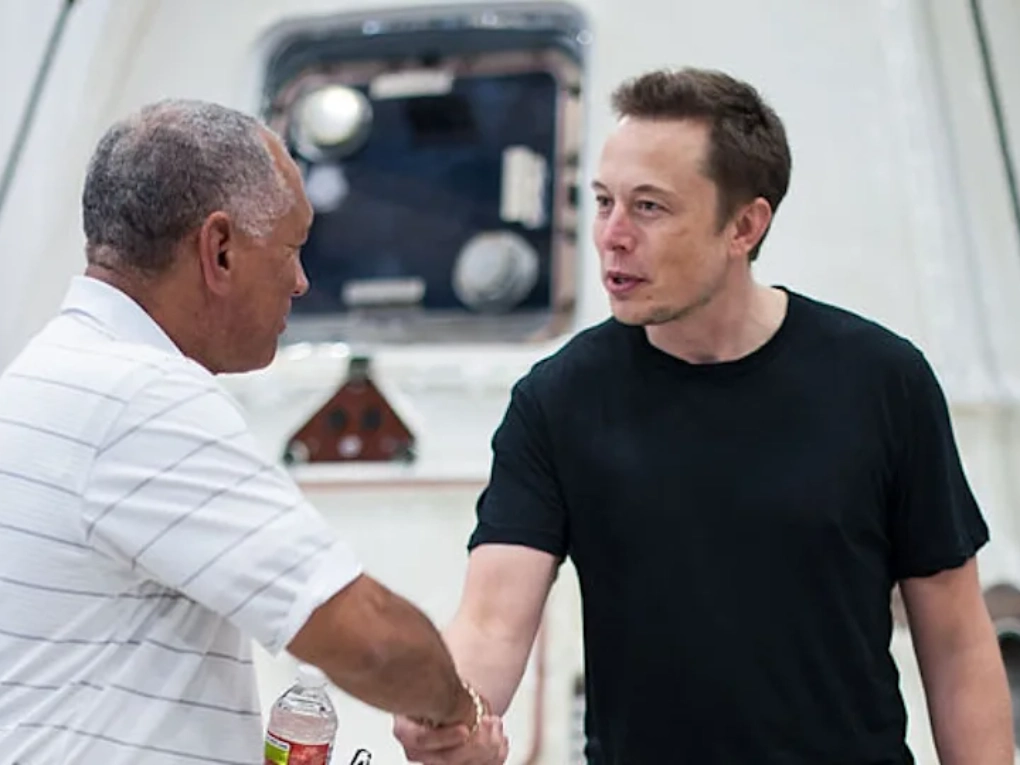
In an extraordinary shift that redefines the trajectory of commercial aerospace and cloud computing alike, SpaceX founder and CEO Elon Musk delivered a stunning forecast to employees during an all-hands address. Artificial intelligence (AI) is no longer just a side project or an internal utility at SpaceX—it is rapidly becoming the company’s largest and most lucrative business segment.
Addressing employees at SpaceX headquarters, Musk declared that revenue generated from the company’s AI operations is on track to surpass all other traditional space operations combined—including rocket launch services and Starlink broadband connectivity—as early as September.
This historic transition marks one of the fastest strategic pivots in corporate history. Within a matter of months, SpaceX has expanded from the world’s leading launch provider and satellite communications giant into a formidable AI hyperscaler.
Below is an in-depth, verified analysis of how SpaceX is reshaping its business model, the financial figures driving this transition, and why Musk believes rocket engineers hold a decisive competitive advantage in the race for global compute infrastructure.
The September Crossover: Musk’s Historic Announcement
During a 29-minute internal address to SpaceX employees—following the company’s historic first quarterly earnings report as a public enterprise—Elon Musk framed the future of the organization in unambiguous terms.
“Definitely our AI revenue will exceed all other space revenue probably in September, like next month, and will significantly exceed all other space revenue in the fourth quarter.”
— Elon Musk, CEO of SpaceX
Musk emphasized that AI success is not merely a revenue additive but a vital prerequisite for the company’s ultimate mission. Looking further down the horizon, Musk predicted that within four to five years, artificial intelligence will account for 99% of the total value of SpaceX.
       [ Traditional Space Operations ]          [ AI & Compute Operations ]
  (Rockets, Commercial Launch, Defense)      (xAI, Data Centers, Cloud Services)
                   │                                     │
                   │ Historical Dominance                │ Rapid Exponential Surge
                   ▼                                     ▼
     ┌───────────────────────────┐         ┌───────────────────────────┐
     │  Q2 2026: $962 Million    │         │  Q2 2026: $2.56 Billion   │
     └───────────────────────────┘         └───────────────────────────┘
                   │                                     │
                   └───────────────────┬─────────────────┘
                                       │
                                       ▼
                       September Crossover Horizon
               (AI Revenue Overtakes All Other Segments)
This pivot reflects a dramatic shift in market opportunities. While the global satellite connectivity market represents a massive $1.6 trillion potential addressable market, the global AI infrastructure and software opportunity is projected at an staggering $26.5 trillion. By embedding high-density AI compute directly into its ecosystem, SpaceX is opening revenue avenues that dwarfs traditional launch services.

Unpacking the Financials: Inside SpaceX’s Segment Revenue
SpaceX’s second-quarter earnings report provided concrete proof of this acceleration. Total quarterly revenue surged 92% year-over-year to $7.81 billion, beating Wall Street estimates while demonstrating a rapid change in revenue composition.
SpaceX currently operates across three major primary segments:
- Space Products & Launches: Falcon 9, Falcon Heavy, Starship, and government/commercial payloads.
- Connectivity: Starlink satellite internet services across global consumer, maritime, and enterprise sectors.
- AI & Compute: High-performance AI cluster rentals, cloud infrastructure, model licensing, and software integration.
Financial Breakdown (Q2 Quarterly Performance)
| Business Segment | Q2 Revenue | YoY Growth Rate | Strategic Highlights |
| Connectivity (Starlink) | $4.29 Billion | +48% | Reached 12 million active global subscribers. |
| AI & Compute Infrastructure | $2.56 Billion | +213% (Sequential) | Fueled by xAI integration and cloud contracts. |
| Space Products & Launch | $962 Million | +12% | Sustained high Falcon launch cadence and Starship tests. |
| Total Revenue | $7.81 Billion | +92% YoY | Net loss narrowed to $541 million. |
To fuel this explosive growth, SpaceX deployed $15.83 billion in AI-related capital expenditure (CapEx) in Q2 alone—a steep rise from $749 million during the same period in the previous year. While this massive investment led to short-term market volatility, SpaceX leadership highlighted that contracted cloud services agreements have already reached $14.1 billion, featuring major multi-year deals with tech leaders such as Anthropic and Google.
The Strategic Merger: How xAI Became the Engine of SpaceX
The foundation for this transformation was laid in early 2026 when SpaceX completed a landmark all-stock acquisition of xAI. The deal valued SpaceX at $1 trillion and xAI at $250 billion, bringing Musk’s AI startup directly into the SpaceX corporate umbrella as a core operating unit.
Following the acquisition, xAI was integrated into SpaceX’s operational structure, combining assets like:
- Grok: The flagship generative AI model integrated across consumer and enterprise applications.
- The Colossus Supercomputer: Located in Memphis, Tennessee, representing one of the densest GPU clusters in the world.
- X (Social Platform): Serving as a real-time data hose and user platform for AI models.
- Enterprise Software Acquisitions: Key pending and completed acquisitions, including AI coding tools, expanding SpaceX’s software ecosystem.
The Synergies of Merging Space and AI
By unifying AI development with rocket engineering and global satellite networks, SpaceX creates a multi-layered competitive moat:
- Direct Compute Deployment: SpaceX builds and powers terrestrial data centers to support immediate model training and cloud rental demands.
- Bandwidth & Connectivity Backhaul: Starlink’s 12-million-subscriber network provides global low-latency data transport for enterprise AI applications.
- Orbital Compute (Starmind Initiative): Leveraging Starship’s unprecedented payload capability to launch high-density AI compute constellations directly into low Earth orbit.
“A Trivial Problem”: The Rocket Engineering Advantage in Data Center Construction
One of the central themes of Musk’s speech was why an aerospace company can outperform established tech giants in building AI compute infrastructure.
Building modern AI data centers requires solving massive power distribution, cooling, and hardware optimization problems at gigawatt scale. Musk argued that compared to launching reusable orbital rockets, terrestrial infrastructure design is straightforward for SpaceX’s engineering talent.
“Data centers are a trivial problem compared with what SpaceX’s rocket engineers work on every day. We’re taking a small amount of the expertise that we use for rockets and satellites and applying that to scaling terrestrial data centers. Even a fraction of our aerospace experience produces an amazing outcome.”
— Elon Musk
┌────────────────────────────────────────────────────────────────────────┐
│                   THE SPACEX ENGINEERING TRANSITION                   │
├───────────────────────────────────┬────────────────────────────────────┤
│   Aerospace Hardware Challenge    │      Applied AI Infrastructure     │
├───────────────────────────────────┼────────────────────────────────────┤
│ Extreme Thermal Re-entry (3000°F) │ Liquid Cooling & Thermal Mgmt      │
│ High Vibration Launch Stresses    │ High-Density Server Racks          │
│ Orbital Power Systems (Solar)     │ Multi-Gigawatt Substation Builds   │
│ Autonomous Rocket Booster Recovery│ High-Speed Compute Interconnects   │
└───────────────────────────────────┴────────────────────────────────────┘
Musk bluntly likened SpaceX entering the terrestrial data center market to “the New York Yankees going in and playing a Little League team,” referencing the company’s ability to iterate hardware designs and deploy mega-projects at unmatched speed.
Compute Expansion Timeline
To support its aggressive AI projections, SpaceX is rapidly expanding its compute footprint:
- Current Installed Base: ~1.4 gigawatts (GW) of active compute capacity.
- Year-End 2026 Target: Surpass 2.0 GW of active nameplate capacity.
- 2027 Long-Term Target: Reach 15 to 20 GW of total capacity, anchored by commitments for NVIDIA’s next-generation Vera Rubin architecture.
From Terrestrial Clusters to Orbital Supercomputers
While terrestrial data centers drive immediate revenues in 2026, SpaceX is preparing for its next major frontier: Space-Based AI Compute.
As ground-based data centers face increasing power grid constraints, land acquisition hurdles, and cooling challenges, operating AI hardware in space offers unique structural benefits:
- Continuous Solar Power: Satellites in specific orbital planes can capture near-uninterrupted solar energy without terrestrial weather interference.
- Infinite Cold Heat Sink: Vacuum environment radiative cooling models optimized by SpaceX’s satellite teams.
- Global Low-Latency Mesh: Direct integration with Starlink laser interconnects, allowing zero-terrestrial-landfall data routing.
Through initiatives like Starmind, SpaceX aims to deploy AI compute constellations designed to process data directly in orbit, serving government, defense, and multinational enterprise clients. Powered by the payload capability of Starship, the cost per kilogram to orbit drops significantly, making orbital data centers economically viable for the first time in history.
Market Impact: SpaceX as a Global AI Hyperscaler
SpaceX’s rapid transition into AI compute fundamentally reshapes how Wall Street and the tech industry evaluate the company. Historically viewed as a aerospace defense contractor and telecom provider, SpaceX is now competing head-to-head with cloud hyperscalers like Microsoft Azure, Amazon Web Services (AWS), and Google Cloud.
┌─────────────────────────────────────────────────────────────────────────┐
│                    GLOBAL HYPERSCALER COMPETITIVE MATRIX                │
├───────────────────┬─────────────────────┬───────────────────────────────┤
│ Provider          │ Primary Power Source│ Core Differentiation          │
├───────────────────┼─────────────────────┼───────────────────────────────┤
│ Amazon (AWS)      │ Terrestrial Grid    │ Enterprise Software Ecosystem │
│ Microsoft Azure   │ Terrestrial Grid    │ Enterprise & OpenAI Partnership│
│ Google Cloud      │ Terrestrial Grid    │ Custom TPU & Search Infra     │
│ SpaceX AI         │ Hybrid Grid + Space │ Vertical Integration & Orbital│
└───────────────────┴─────────────────────┴───────────────────────────────┘
Key Drivers of SpaceX’s Hyperscaler Advantage
- Vertical Integration: SpaceX manufactures its own power management systems, custom enclosures, satellite transport layers, and specialized silicon components.
- Massive GPU Allocations: Close partnerships with chipmakers ensure SpaceX receives substantial portions of next-generation GPU shipments.
- Combined Connectivity & Compute: Clients can rent compute power while utilizing Starlink for secure, high-bandwidth output delivery anywhere on Earth.
Management projects that if the target of 10 to 15 gigawatts of compute capacity is achieved by 2027, annual revenue from the AI segment alone could reach $300 billion to $500 billion, putting SpaceX on track toward a $1 trillion annual revenue run-rate by 2030.
Frequently Asked Questions (FAQ)
What is driving SpaceX’s rapid AI revenue growth?
SpaceX’s AI revenue surge is driven by high enterprise demand for GPU compute power, data center infrastructure rentals, and cloud services following its acquisition of xAI. Multi-billion-dollar contracts with tech companies and third-party developers have turned compute infrastructure into SpaceX’s fastest-growing revenue stream.
How does xAI fit into SpaceX’s long-term business structure?
xAI operates as a wholly owned subsidiary within SpaceX, forming its core AI division. It develops generative AI models like Grok, operates supercomputing clusters like Colossus, and provides the software and model intelligence used across SpaceX’s space, satellite, and ground operations.
Will SpaceX stop focusing on rocket launches and Starlink?
No. Commercial launch operations (Falcon 9 and Starship) and Starlink internet connectivity remain essential pillars of SpaceX’s ecosystem. Launch capability allows SpaceX to build orbital data centers, while Starlink provides global communications infrastructure for AI data transport.
How does SpaceX plan to power its massive AI data centers?
SpaceX is expanding terrestrial power agreements (including multi-gigawatt facilities in Texas and Tennessee) while transitioning toward next-generation energy solutions. Longer term, SpaceX plans to utilize solar-powered orbital compute constellations deployed via Starship.
What is the long-term revenue forecast for SpaceX’s AI segment?
Elon Musk projects that AI revenue will surpass all core space revenues in September 2026. Over the next four to five years, Musk estimates that AI will generate 99% of SpaceX’s enterprise value, supporting a total company revenue target of $1 trillion by 2030.
Conclusion
Elon Musk’s announcement marks a watershed moment for both aerospace and artificial intelligence. By leveraging world-class aerospace engineering, rapid manufacturing capabilities, and global satellite communications, SpaceX is transforming itself into an infrastructure powerhouse for the AI age.
As September approaches, all eyes will be on SpaceX’s performance metrics to verify whether AI revenue officially takes the crown from rocket launches and Starlink. If Musk’s timeline holds true, SpaceX will have executed one of the most remarkable corporate evolutions in history—evolving from a scrappy rocket startup into the world’s most versatile compute and space platform.