Purchasing a vehicle is one of the most substantial financial investments most people make. Whether you are shopping for your daily commuter, purchasing a fleet work truck through a business entity, or picking up a weekend cruiser from a private seller, having a structured strategy protects your wallet and ensures you drive away with total peace of mind.
This comprehensive guide details the mechanics of purchasing a vehicle across various channels—covering financing structures, pre-purchase inspections, out-of-state logistics, and critical paperwork requirements.
Establishing Your Budget and Total Cost of Ownership (TCO)
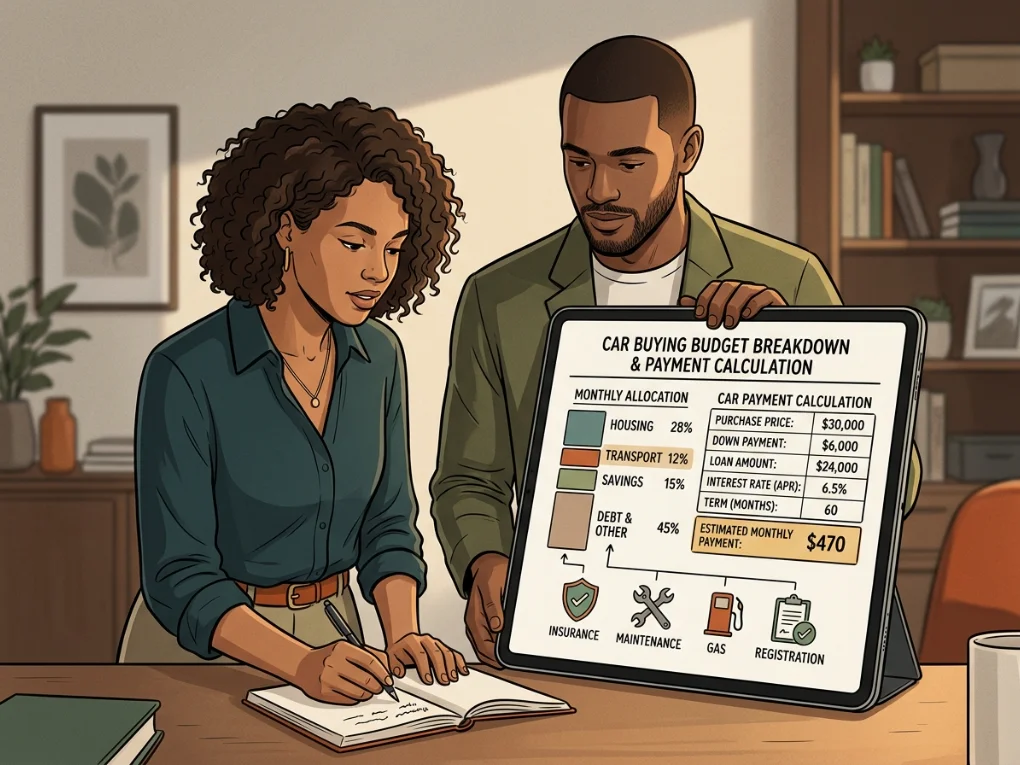
Before browsing online listings or walking onto a showroom floor, establish clear financial parameters. A common misstep is focusing solely on the monthly loan payment rather than the total cost of ownership.
The 20/4/10 Rule for Vehicle Affordability
Financial advisors frequently recommend the 20/4/10 guideline to keep vehicle expenses manageable:
- 20% Down Payment: Putting at least 20% down cushions against vehicle depreciation and prevents negative equity (owing more than the vehicle is worth).
- 4-Year Loan Term (48 Months): Limiting loan terms to 48 months minimizes total interest expenses. While 72- and 84-month loans lower monthly payments, they significantly increase total financing costs.
- 10% Gross Monthly Income: Total transportation costs—including loan payments, auto insurance, fuel, and routine maintenance—should not exceed 10% to 15% of your gross monthly income.
Calculating Total Cost of Ownership
To avoid surprises, factor in these recurring and one-time expenses:
- Depreciation: The single largest cost for newer vehicles over the first 3 to 5 years.
- Sales Tax and Registration: Varying by state and county, taxes and administrative fees typically add 5% to 10% to the purchase price.
- Insurance Premiums: Performance vehicles, luxury models, and newer sports utility vehicles carry higher premiums. Always request an insurance quote using a sample VIN before finalizing a deal.
- Fuel and Maintenance: Tires, brake pads, fluids, and scheduled manufacturer services.
Choosing Your Purchasing Channel
Where you buy directly impacts the price, buyer protections, and administrative steps involved.
| Channel | Pros | Cons | Best For |
| Franchised Dealership | Certified Pre-Owned (CPO) options, warranty coverage, trade-in convenience, in-house financing. | Higher overhead costs, dealer documentation fees, upsell pressure in the finance office. | Buyers seeking newer cars, manufacturer warranties, or integrated trade-ins. |
| Independent Dealership | Competitive pricing, diverse inventory across multiple brands. | Variable quality, limited return policies, higher loan APRs on subprime tiers. | Budget-conscious shoppers looking for reliable commuter vehicles. |
| Private Seller | Lowest purchase price, direct access to maintenance history, no dealer fees. | “As-is” purchase (no warranties), higher scam risk, buyer handles all DMV paperwork. | Cash buyers, bargain hunters, and enthusiasts seeking specific models. |
| Online Retailer (e.g., Carvana) | Fixed pricing (no haggle), 7-day return windows, direct home delivery. | Slightly higher baseline pricing, unable to physically inspect before delivery day. | Buyers prioritizing convenience, transparent pricing, and digital transactions. |
| Auto Auction | Wholesale pricing, wide selection of commercial or off-lease units. | High risk, limited inspection access, immediate cash settlement required, often salvage/as-is. | Experienced mechanics, dealers, and commercial fleet buyers. |
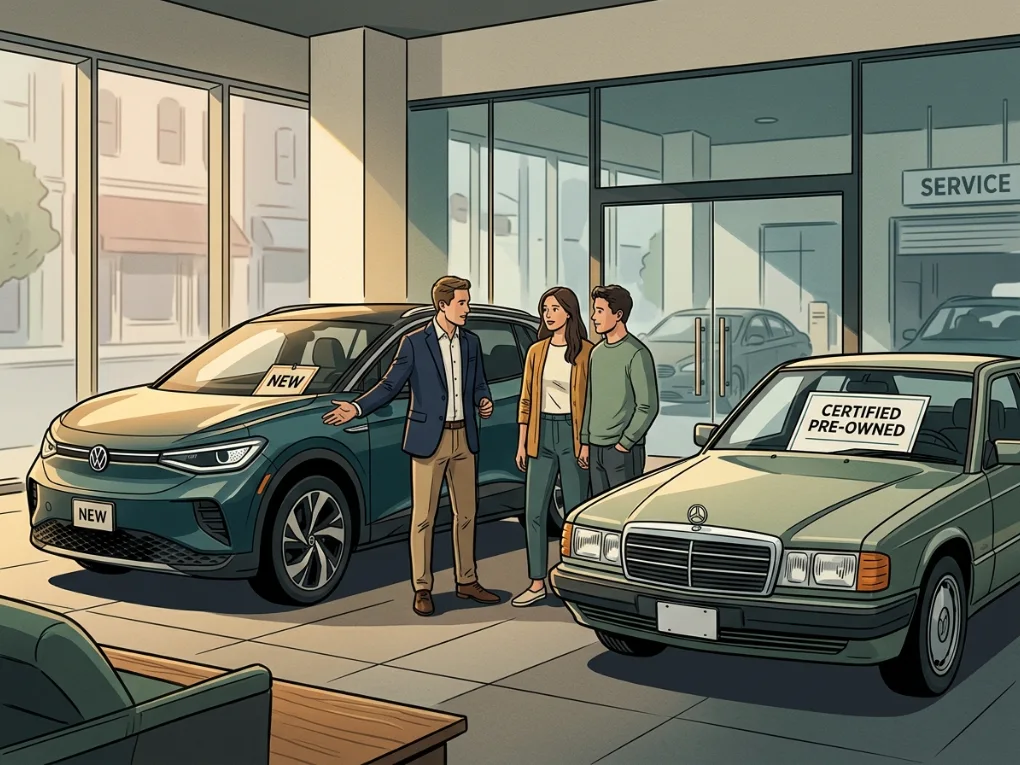
How to Buy a Car from a Dealership
Understanding the operational structure of a traditional dealership helps you navigate the transaction confidently and efficiently.
+-------------------------------------------------------------------------------+
|                        DEALERSHIP BUYING PROCESS                             |
+-------------------------------------------------------------------------------+
|  1. Pre-Approval    ->  2. Test Drive & PPI  ->  3. OTD Price Negotiation     |
|  (Credit Union/Bank)    (Check Mechanicals)     (Line-by-Line Item Review)    |
|                                                              |                |
|  5. Vehicle Delivery <-  4. F&I Office Review <---------------+                |
|  (Final Walkaround)     (Decline Add-ons / Sign)                              |
+-------------------------------------------------------------------------------+
Step 1: Secure Pre-Approved Financing
Always secure a loan pre-approval from a credit union or independent bank before visiting a showroom. A pre-approval gives you a baseline interest rate (APR) and caps your budget. When you enter the dealership’s Finance & Insurance (F&I) office, challenge them to beat your pre-approved rate.
Step 2: Request the “Out-the-Door” (OTD) Price
Negotiate strictly on the out-the-door price—the total final amount required to take ownership—rather than the monthly payment. Request an itemized invoice that breaks down:
- Agreed selling price of the vehicle
- State and local sales tax
- Title, registration, and license fees
- Documentation (Doc) fee (ensure it complies with state statutory limits)
- Line-item dealer add-ons (nitrogen tires, paint protection, anti-theft etching—request removal of non-mandatory add-ons)
Step 3: Navigating the F&I Office
The finance office is where dealerships present back-end products such as extended service contracts, Guaranteed Asset Protection (GAP) insurance, tire/wheel packages, and maintenance plans.
- GAP Insurance: Valuable if you made a down payment under 20%, but check with your personal auto insurance provider first, as they often offer identical coverage for a fraction of the cost.
- Extended Warranties: Evaluate the terms, exclusions, deductible structure, and whether claims require servicing exclusively at that dealership network.
How to Buy a Car with Cash
Many buyers wonder how to buy a car with cash and whether it gives them significant negotiating leverage.
How to Buy a Car with Cash at a Dealership
Contrary to popular belief, modern dealerships often make a meaningful portion of their profit through financing incentives, reserve kickbacks from lenders, and loan origination. Consequently, flashing cash does not automatically unlock massive discounts.
Follow these best practices:
- Negotiate the Purchase Price First: Finalize the vehicle’s cash selling price and OTD figure before revealing your intent to pay in full.
- Confirm Payment Methods: Dealerships rarely accept physical paper currency for the entire amount due to security and accounting requirements. Standard methods include cashier’s checks, bank wire transfers, or debit cards (up to daily merchant limits).
- IRS Form 8300 Compliance: If you pay more than $10,000 in physical cash or cash equivalents (such as money orders, bank drafts, or traveler’s checks), federal law requires the business to file IRS Form 8300 within 15 days to report the transaction.
How to Buy a Car from a Private Seller
Learning how to buy a car from a private seller allows you to bypass dealership documentation fees, dealer markups, and aggressive upselling. However, private party purchases carry the full burden of mechanical verification and legal due diligence.
Critical Verification Checklist
- Vehicle Identification Number (VIN) Check: Order a comprehensive vehicle history report (Carfax, AutoCheck, or the National Motor Vehicle Title Information System – NMVTIS). Look for salvage branding, flood damage records, structural accident histories, open safety recalls, and odometer discrepancies.
- Title Verification: Ensure the seller’s physical government-issued ID matches the exact name on the front of the certificate of title. Confirm there are no outstanding liens recorded. If a bank holds a lien, the transaction must be settled directly with the lienholder bank to release the title.
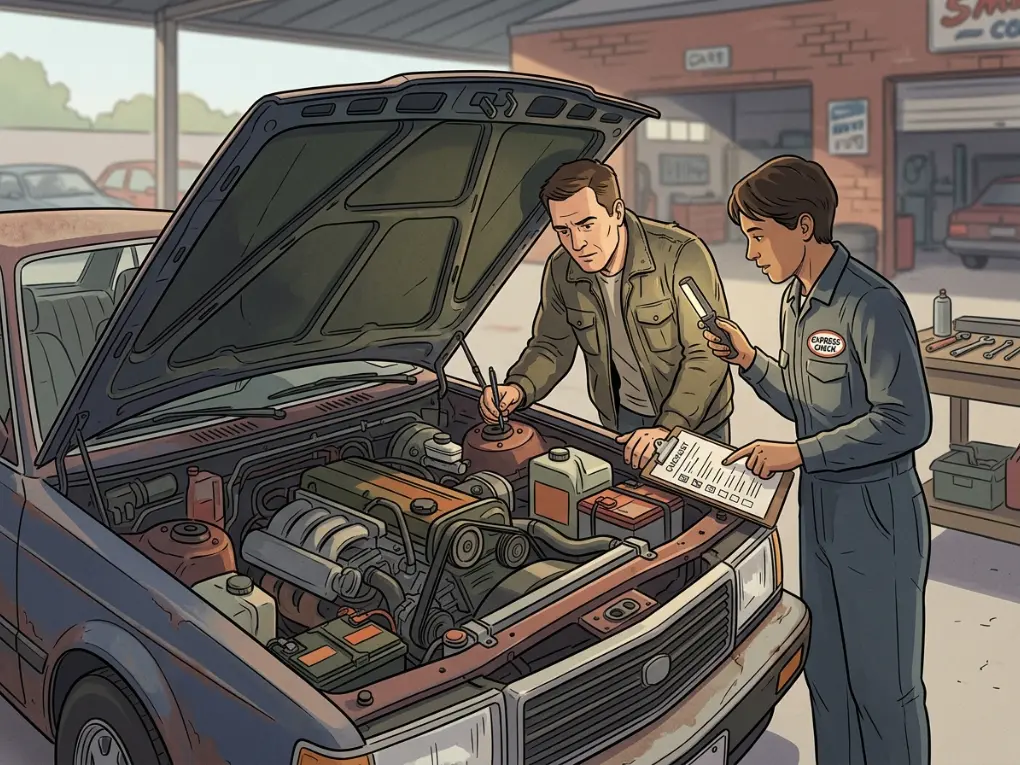
- Independent Pre-Purchase Inspection (PPI): Hire a certified independent mobile mechanic or schedule an appointment at a trusted repair facility. A $150 to $250 PPI often uncovers hidden suspension wear, oil leaks, failing head gaskets, or past frame repairs.
- Test Drive Protocol: Check cold-engine starting behavior, transmission shift smoothness under load, straight-line braking stability, heating/air conditioning performance, and onboard diagnostic (OBD-II) readiness monitor statuses.
How to Buy a Car off Facebook Marketplace
Platforms like Facebook Marketplace, Craigslist, and OfferUp host vast inventories of private sales, but they also require vigilance against online fraud.
Avoiding Scams on Digital Marketplaces
- Meet at Safe Exchange Zones: Conduct vehicle viewings and financial exchanges at designated police department parking lots or inside your local bank branch. Never meet in secluded areas or after dark.
- Beware of Escrow and Shipping Scams: Reject sellers who claim they are out of the country (military deployment, emergency relocation) and promise that a third-party shipping service will deliver the vehicle for an inspection period.
- Look for Title Clues: Avoid listings where the seller states “no title, bill of sale only” unless you are buying a parts vehicle or an antique eligible for bonded title procedures in your jurisdiction. Cars without clear titles risk being stolen or encumbered by unpaid debt.
- Verify Pricing Realism: Compare the asking price against market value benchmarks (Kelley Blue Book, Edmunds, or J.D. Power). Prices far below market rates usually signal curb-stoning (unlicensed dealers posing as private owners) or undisclosed mechanical/title defects.
How to Buy a Car Out of State
Expanding your search radius across state lines helps you locate rare configurations, rust-free undercarriages from southern climates, or better regional deals.
How to Buy a Car Out of State from a Private Seller
Executing an out-of-state private purchase involves extra logistics:
+--------------------------------------------------------------------------------+
|                   OUT-OF-STATE PRIVATE PURCHASE WORKFLOW                       |
+--------------------------------------------------------------------------------+
|  1. Title Check & VIN Match  ->  2. Bill of Sale & Transit Permit              |
|  (Verify No Liens / Clean)       (Secure Temp Tag from Origin DMV)             |
|                                                  |                             |
|  4. Home State DMV Finish   <-   3. Transport & Inspection                     |
|  (Pay Sales Tax / Register)      (Emissions / Physical VIN Verification)       |
+-------------------------------------------------------------------------------+
- Title Signing Requirements: Different states have distinct title transfer laws. Some states (such as Pennsylvania, Ohio, and North Carolina) mandate that both the buyer’s and seller’s signatures on the title certificate be notarized.
- Obtaining a Transit (Trip) Permit: You cannot legally drive an unregistered vehicle home on public roads without valid plates. Contact the seller’s state DMV to secure a temporary transit permit/trip tag, or verify if your home state allows the transfer of existing plates during transit.
- Paying Sales Tax: Sales tax is generally paid to your home state when you register the vehicle, not to the seller’s state. When buying from an out-of-state dealer, they will often calculate and collect your home state’s applicable sales tax on your behalf.
- Local VIN Verification and Emissions: Most states require a physical VIN verification check (performed by a state trooper, DMV technician, or licensed inspection station) and an emissions/safety test before issuing your new plates.
Specialized Purchasing Methods: Auctions, Carvana, and NTE
How to Buy a Car from an Auction
Auto auctions fall into two primary categories:
- Dealer-Only Auctions (e.g., Manheim, Adesa): Require a valid auto dealer’s license, commercial surety bond, and business tax registration.
- Public and Government/Police Auctions (e.g., GSA Auctions, GovDeals, Copart, IAAI): Accessible to everyday consumers.
Auction Buying Rules:
- Inspect the vehicle run-lists beforehand.
- Read the condition grade reports carefully (e.g., green light = ride and drive with limited mechanical guarantees; red light = sold strictly as-is with zero arbitration rights).
- Account for “buyer premiums” (auction fees), which typically add 5% to 15% on top of the winning hammer price.
How to Buy a Car from Carvana (and Online Platforms)
Digital car retailers streamline the search and delivery process:
- Prequalification: Check financing terms directly on their platform without impacting your credit score.
- 360-Degree Virtual Walkaround: Inspect digital high-resolution photography highlighting minor imperfections and exterior scratches.
- Delivery or Vending Machine Pickup: Choose touchless doorstep delivery or retrieve the car from a signature glass vending machine.
- The 7-Day Money-Back Guarantee: Use the 7-day test-ownership window to take the car directly to a certified mechanic for a thorough inspection. If defects are found, you can return or exchange the car within the 7-day policy window.
How to Buy a Car in NTE (Not-to-Exceed) Contracts
In commercial procurement and specialized corporate fleet acquisitions, buyers often structure transactions using Not-to-Exceed (NTE) price limits. Under an NTE agreement, the procurement specialist or fleet management company acts on behalf of the principal to acquire vehicles up to a hard budgetary ceiling, returning any realized savings back to the company ledger.
How to Buy a Car Under an LLC and Business Entities
Purchasing a vehicle through a business structure offers asset separation, liability protection, and potential tax write-offs (such as Section 179 depreciation deductions for qualified vehicles with a gross vehicle weight rating over 6,000 lbs).
How to Buy a Car with Business EIN (No Credit Check / Commercial Financing)
To finance a vehicle strictly under your business EIN without a personal guarantee or personal credit check:
- Establish Business Credit: The LLC must maintain an active D-U-N-S Number via Dun & Bradstreet, an established Paydex score (80+), and reporting trade lines across Experian Business and Equifax Commercial.
- Demonstrate Financial Strength: Lenders typically require 2 years of corporate tax returns showing consistent net profits and 3 to 6 months of healthy business bank statements.
- Lender Selection: Apply through commercial lending divisions (e.g., Ford Commercial Credit, Ally Business, or specialized commercial banks) that offer true commercial credit lines.
How to Buy a Car Under LLC with No Money Down
Securing 100% commercial financing with zero down payment requires:
-
Tier-1 corporate credit profile (or an owner willing to sign a personal guarantee).
-
Proof of debt service coverage ratio (DSCR) showing the entity generates sufficient operating cash flow to support monthly liabilities.
-
Selecting vehicles with high residual value stability to satisfy lender loan-to-value (LTV) limits.
Navigating Paperwork and Closing the Deal
To complete any car purchase legally and securely, keep these critical documents organized:
+--------------------------------------------------------------------------------+
|                         ESSENTIAL CLOSING DOCUMENTS                            |
+--------------------------------------------------------------------------------+
| [ ] Clean Certificate of Title (Signed & Notarized as required)               |
| [ ] Bill of Sale (Date, Buyer/Seller Info, Vehicle Description, OTD Price)    |
| [ ] Federal / State Odometer Disclosure Statement                             |
| [ ] Proof of Active Auto Insurance (VIN-specific binder)                       |
| [ ] State Emissions / Safety Inspection Certificates (if applicable)          |
| [ ] Release of Lien Form (if previous owner had an active loan)               |
+--------------------------------------------------------------------------------+
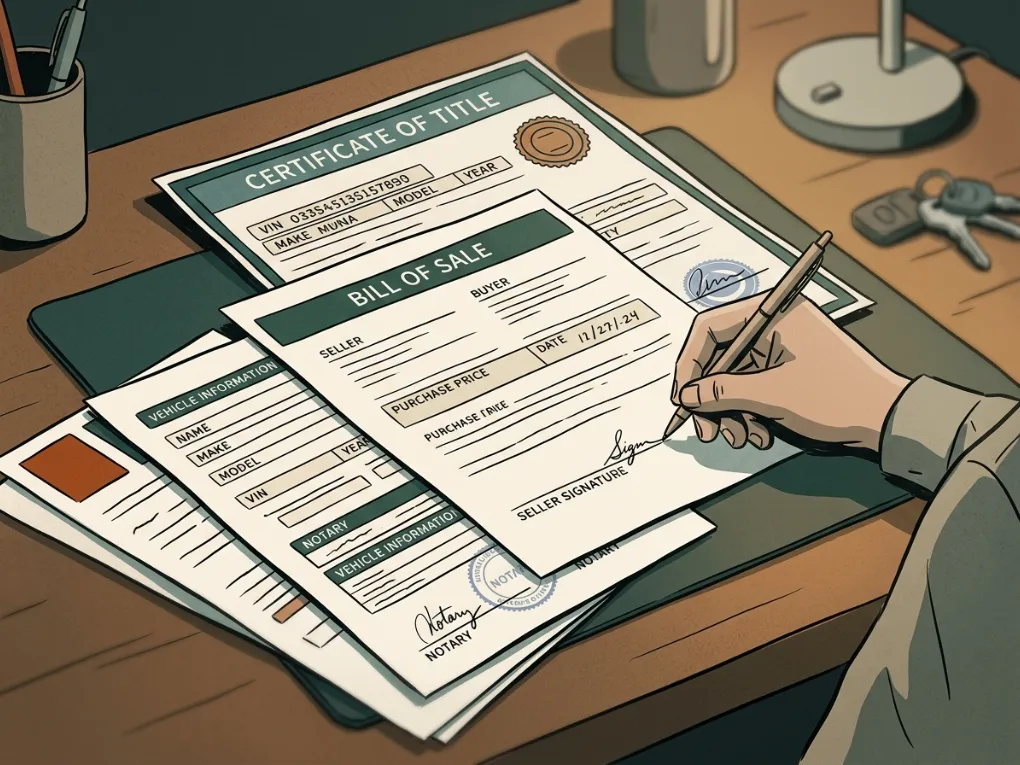
- Bill of Sale: Clearly state the date of sale, full legal names and addresses of both buyer and seller, vehicle make, model, year, VIN, purchase amount, and odometer reading.
- Title Transfer: Sign the seller and buyer fields in the exact spaces indicated. Ensure there are no white-out corrections or crossed-out text on the certificate of title, as this invalidates the document at the DMV and requires an application for a duplicate title.
- Insurance Activation: Add the newly acquired vehicle’s VIN to your auto insurance policy before driving it away. Most insurers provide a short grace period (e.g., 7 to 30 days) to add a replacement vehicle, but an explicit insurance binder provides immediate protection.
- DMV Registration: Submit your signed title, bill of sale, proof of insurance, and tax payment to your local vehicle licensing office to obtain updated license plates and the official registration certificate in your name.
Gaming Tip: Buying a Car Wash in GTA 5 Online
Note: If you searched for purchasing vehicle service real estate in the virtual world of Los Santos, here is how the mechanic works in-game:
While players frequently search for how to buy a car wash in GTA 5 online, the standard stand-alone car wash businesses (such as the Hands On Car Wash in Strawberry) cannot be purchased as income-generating personal properties in GTA Online. However, you can purchase the Auto Shop Property via the Foreclosures Maze Bank website (introduced in the Los Santos Tuners update) to modify customer cars, run legitimate automotive repair jobs, and unlock contract heist missions.
Frequently Asked Questions (FAQ)
What is the best day of the week to buy a car at a dealership?
Tuesdays and Wednesdays are typically the best days to visit a dealership. Showrooms are less crowded than on weekends, giving sales representatives and finance managers more time to negotiate. Shopping toward the end of the month or calendar quarter also aligns with dealership sales quotas and manufacturer volume incentives.
How much can you negotiate off a used car’s price?
Negotiation margins vary widely based on inventory supply, market demand, and pricing transparency. Typically, there is between 2% and 5% room for negotiation on late-model used cars at volume dealerships, whereas private sellers may negotiate between 5% and 15% depending on how motivated they are to sell.
Can I return a car after purchasing it from a dealership?
Unless the dealership provides a specific written return policy (such as a 3-day or 7-day money-back guarantee), there is generally no statutory federal “cooling-off” period for vehicle sales. Once you sign the purchase contract and drive off the lot, the sale is legally binding.
What should I do if a private seller does not have the title?
Do not hand over funds if the seller cannot provide the title certificate or demonstrate a clear payoff procedure with a reputable bank lienholder. If the title is lost, require the seller to apply for and receive a duplicate title from their state DMV before completing the transaction.
Conclusion
Buying a car does not have to be an overwhelming experience. By locking in a strict budget based on total ownership costs, securing pre-approved financing, performing independent mechanical inspections, and maintaining clear paperwork standards, you remain in complete control of the transaction from start to finish.
Ready to start your search? Begin by calculating your maximum out-the-door budget, pulling your latest credit reports, and getting pre-approved through your local bank or credit union before testing the market.