
Buying a car is one of the most significant financial commitments most people ever make. Yet when budgeting for a new or pre-owned vehicle, buyers routinely fixate on just one number: the dealership sticker price or the monthly loan installment. The initial purchase price represents only a fraction of what you will actually spend.
From rapid depreciation and escalating insurance premiums to routine maintenance, tire replacements, local road taxes, tolls, and volatile fuel prices, the ongoing cost of owning a car adds up quickly. Over a standard five-year ownership cycle, secondary operating expenses frequently surpass the original purchase price of the vehicle.
Whether you are navigating car ownership in a sprawling suburban commuter belt or evaluating the strict regulatory regimes of global megacities like Singapore, London, or New York City, this comprehensive guide delivers a complete, transparent breakdown of what keeping a car on the road actually costs.
What Determines the Total Cost of Car Ownership?
Car ownership expenses fall into two primary categories: Fixed Costs (expenses you must pay regardless of whether the vehicle leaves your driveway) and Variable Operating Costs (expenses that scale with mileage and driving habits).
                        Total Cost of Car Ownership
                                    │
         ┌──────────────────────────┴──────────────────────────┐
         ▼                                                     ▼
   Fixed Costs                                          Variable Costs
   • Vehicle Depreciation                                • Fuel / Electricity
   • Financing & Loan Interest                           • Routine Maintenance & Wear
   • Comprehensive Insurance                             • Tires & Unscheduled Repairs
   • Registration, Taxes & Licensing                     • Parking Fees, Tolls & Congestion Charges
Fixed Ownership Costs
Vehicle Depreciation
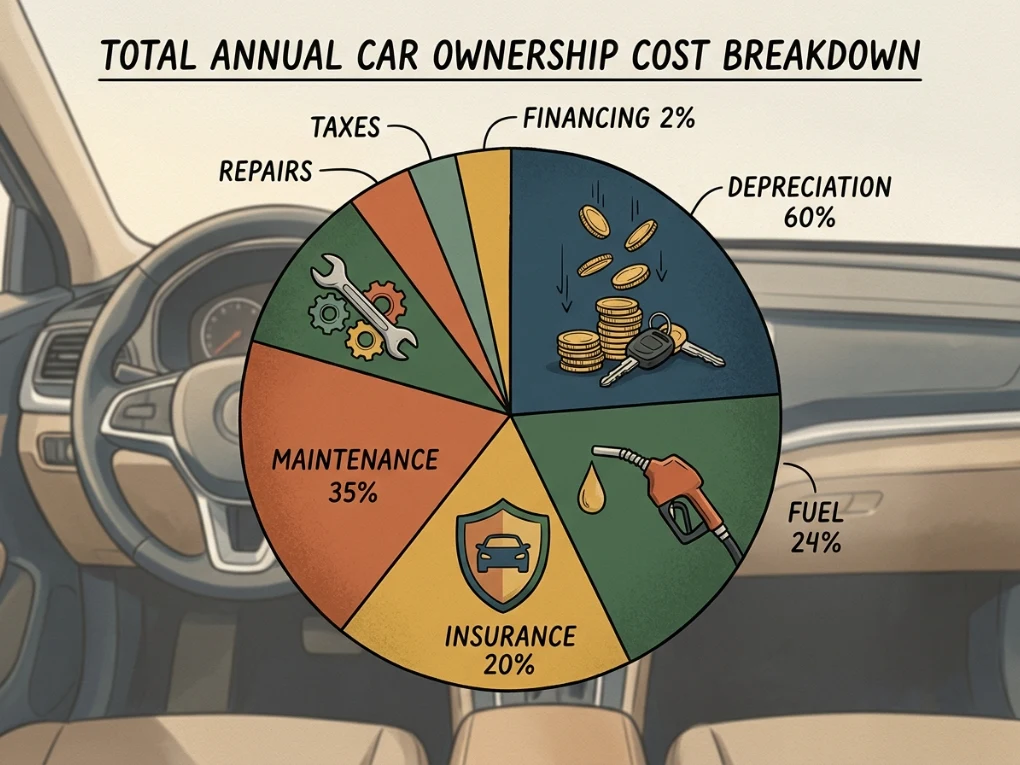
Depreciation is the silent financial leak in automobile ownership. The moment a brand-new vehicle leaves the dealership lot, it suffers an immediate drop in market valuation—typically 10% to 15% on day one, and up to 20% to 25% by the end of year one. Over five years, a standard passenger vehicle loses roughly 40% to 60% of its initial value.
While depreciation does not pull cash directly from your checking account every month, it represents a substantial loss in equity that directly determines your vehicle’s trade-in or resale value down the line.
Finance Charges and Interest Rates
Unless you purchase your vehicle entirely with cash, auto financing adds thousands of dollars to the principal cost of the vehicle. Auto loan interest rates heavily depend on central bank benchmarks, loan duration (ranging from 36 to 84 months), and your personal credit rating. Over a 60-month loan at a 6% to 9% APR, loan interest quietly inflates the purchase price by 15% to 25%.
Auto Insurance Premiums
Insurance is a mandatory legal expense across virtually all developed jurisdictions. Annual premiums fluctuate based on:
- Driver Profile: Age, driving record, credit history, and annual mileage.
- Vehicle Characteristics: Safety ratings, repair complexity, theft frequency, and performance bracket.
- Location: Urban centers with higher rates of collision, vandalism, and theft demand substantially higher premiums than rural or suburban postcodes.
Vehicle Registration, Licensing, and Road Taxes
Every jurisdiction levies administrative and environmental fees to license a vehicle for public roads. These range from modest annual state registration renewal stickers to emissions-based road tax brackets (such as the UK’s Vehicle Excise Duty) or heavy displacement-based ownership levies.
Variable Operating Costs
Fuel and Energy Costs
Fuel is typically the most visible ongoing monthly expense for internal combustion engine (ICE) vehicles. Your annual fuel expenditure is dictated by:
- Annual distance traveled.
- Real-world miles per gallon (MPG) or liters per 100 km (L/100km).
- Local pump pricing, refinery supply balances, and fossil fuel excise taxes.
For electric vehicle (EV) drivers, home electricity tariffs (cost per kWh) provide substantial operating savings compared to petroleum, though high public DC fast-charging rates can narrow the gap during highway travel.
Routine Servicing, Maintenance, and Wear Items
Vehicles are intricate mechanical systems requiring continuous preventive maintenance. Key recurring expenses include:
- Engine Oil and Filter Changes: Every 5,000 to 10,000 miles (8,000 to 16,000 km).
- Braking Systems: Brake pads and rotors every 30,000 to 60,000 miles.
- Tires: A fresh set of four tires every 30,000 to 50,000 miles, plus periodic wheel alignments and seasonal tire swaps in cold climates.
- Fluid Flushes & Transmission Services: Coolant, brake fluid, and transmission fluid changes every 2 to 4 years.
Unscheduled Mechanical Repairs
Once factory bumper-to-bumper warranties expire (typically after 3 to 5 years), unexpected mechanical breakdowns—such as failed alternators, suspension component wear, water pump leaks, or complex electronic sensor failures—require dedicated emergency maintenance budgeting.
Parking, Road Tolls, and Congestion Schemes
For urban drivers, daily parking spot rentals, residential permit parking, automated highway toll tags, and municipal low-emission zone fees can easily outpace routine maintenance costs over an annual cycle.
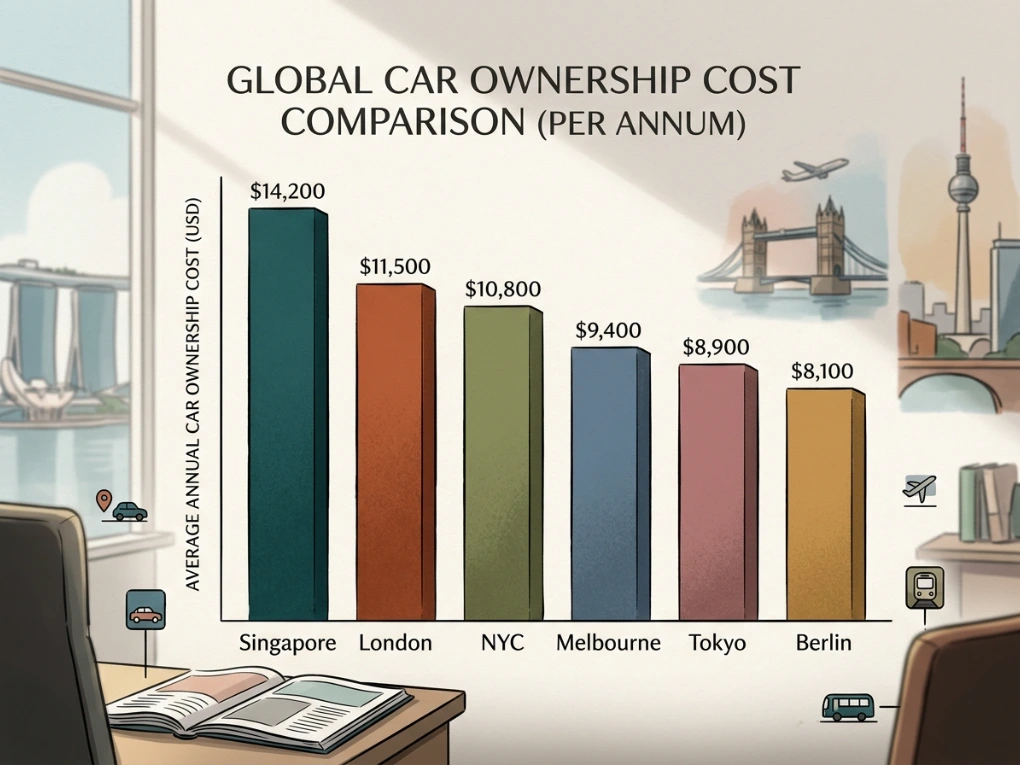
Global Breakdown: What Does Owning a Car Cost by Country & City?
Automotive regulations, import tariffs, fuel taxes, and urban congestion frameworks create massive disparities in car ownership costs worldwide. Here is an in-depth look at major global markets.
┌─────────────────────────────────────────────────────────────────────────────────────────┐
│                    Average Annual Cost of Car Ownership by Region                      │
├──────────────────────────┬───────────────────────────────┬──────────────────────────────┤
│ Region / City            │ Primary Cost Driver           │ Average Estimated Annual Cost│
├──────────────────────────┼───────────────────────────────┼──────────────────────────────┤
│ United States (National) │ Depreciation & Finance Rates  │ $11,577 USD                  │
│ New York City (NYC), US  │ Dedicated Parking & Insurance │ $16,000 – $22,000 USD        │
│ United Kingdom (UK)      │ Fuel Duty & Urban Insurance   │ £3,500 – £4,800 GBP          │
│ Central London, UK       │ ULEZ, Congestion & Parking    │ £6,000 – £9,500 GBP          │
│ Singapore                │ COE & Additional Reg. Fees    │ S$22,000 – S$32,000+ SGD     │
│ Australia (National)     │ Comprehensive Rego & Fuel     │ A$10,500 – A$14,000 AUD      │
│ Melbourne, Australia     │ Tollways & City Parking       │ A$12,000 – A$16,500 AUD      │
│ Germany                  │ Mandatory TÜV & High Fuel Tax │ €4,800 – €7,200 EUR          │
│ Japan (Tokyo)            │ Shaken Inspection & Parking   │ ¥550,000 – ¥850,000 JPY      │
│ Hong Kong                │ First Reg. Tax & Parking Rents│ HK$65,000 – HK$110,000+ HKD  │
│ Ireland (Dublin)         │ High Motor Tax & Premiums     │ €4,500 – €6,800 EUR          │
└──────────────────────────┴───────────────────────────────┴──────────────────────────────┘
The United States & New York City (NYC)
According to comprehensive data from the American Automobile Association (AAA), the average cost of owning a car per year in the United States stands at $11,577, or approximately $965 per month for a new vehicle driven 15,000 miles annually.
                     Typical U.S. Annual Ownership Cost Breakdown
  ┌─────────────────────────────────┬───────────────────────────────────────────────┐
  │ Expense Category                │ Average Annual Expenditure (USD)              │
  ├─────────────────────────────────┼───────────────────────────────────────────────┤
  │ Depreciation                    │ $4,334                                        │
  │ Auto Loan Finance Charges       │ $1,131                                        │
  │ Fuel (15,000 miles/yr)          │ $1,950 – $2,300                               │
  │ Auto Insurance                  │ $1,800 – $2,400                               │
  │ Maintenance, Tires & Repairs    │ $1,400 – $1,700                               │
  │ License, Registration & Taxes   │ $850                                          │
  │ Total                           │ ~$11,577                                      │
  └─────────────────────────────────┴───────────────────────────────────────────────┘
(Source: AAA Your Driving Costs Benchmark Analysis)
However, evaluating the cost of owning a car in nyc reveals a starkly different financial reality:
- Garaged Parking: Dedicated parking spaces in Manhattan, Brooklyn, or Queens range from $400 to $900+ per month ($4,800 to $10,800 annually).
- Insurance Rates: Higher accident frequency and dense traffic push NYC auto insurance premiums past $3,200 to $4,500 per year.
- City Tolls: Crossing Port Authority and MTA bridges and tunnels (MTA bridges, Lincoln/Holland Tunnels) adds thousands per year for daily commuters.
In New York City, total annual ownership costs routinely range between $16,000 and $22,000.
The United Kingdom & London
The average cost of owning a car in uk ranges between £3,500 and £4,800 per year for a standard hatchback or compact SUV driving 8,000 miles annually.
- Fuel Duty: UK petrol and diesel prices carry substantial excise duties, averaging £1.45 to £1.70 per liter.
- Vehicle Tax (VED): Standard rate Vehicle Excise Duty for post-2017 registered petrol/diesel models is £190 annually, with a luxury vehicle supplement for cars with a list price exceeding £40,000.
- MOT & Servicing: Vehicles over three years old must pass an annual MOT test (statutory maximum £54.85) plus annual interim/major servicing (£200–£450).
Driving in London
The cost of owning a car in london escalates sharply due to local environmental zones and parking constraints:
- Ultra Low Emission Zone (ULEZ): Non-compliant older vehicles face a daily charge of £12.50.
- Congestion Charge: Driving into Central London between designated operating hours costs £15.00 daily.
- Controlled Parking Zones (CPZ): Borough residential parking permits range from £100 to over £450 annually, with high-demand borough parking meters costing upwards of £4 to £8 per hour.
Driving a car in Greater London easily pushes overall annual expenditures above £6,000 to £9,500.
Singapore: The World’s Most Expensive Market
The cost of owning a car in singapore is unparalleled globally. Due to Singapore’s land constraints, the government strictly regulates vehicle population growth via the Vehicle Quota System (VQS).
┌─────────────────────────────────────────────────────────────────────────────┐
│                 Upfront Cost Structure of a Standard Sedan in Singapore     │
│                 (Example: Standard Category A Compact Sedan)                │
├───────────────────────────────────────────────┬─────────────────────────────┤
│ Cost Component                                │ Approximate Cost (SGD)      │
├───────────────────────────────────────────────┼─────────────────────────────┤
│ Vehicle Open Market Value (OMV)               │ S$22,000                    │
│ Certificate of Entitlement (COE - Cat A)      │ S$105,000 – S$120,000+      │
│ Additional Registration Fee (ARF - Tiered)    │ S$22,000 – S$26,000         │
│ Excise Duty (20%) + Goods & Services Tax (9%) │ S$6,380                     │
│ Registration Fee & Dealer Margin              │ S$15,000 – S$25,000         │
│ Total Initial On-the-Road Purchase Price      │ S$170,380 – S$199,380+      │
└───────────────────────────────────────────────┴─────────────────────────────┘
(Data based on Land Transport Authority (LTA) bidding ranges and vehicle valuation standards)
Key Elements of Singapore Vehicle Expenses:
- Certificate of Entitlement (COE): A mandatory 10-year license to own and operate a vehicle on public roads. COE premiums consistently trade between S$95,000 and S$125,000+ for Category A and Category B vehicles.
- Additional Registration Fee (ARF): A progressive tax calculated as a percentage of the vehicle’s Open Market Value, ranging from 100% up to 320% for high-end luxury models.
- Electronic Road Pricing (ERP): Automated gantry tolls charged for passing high-density arterial roads and the Central Business District during peak hours (S$50–S$200 monthly).
- HDB Season Parking: Public housing season parking fees range between S$80 and S$120 per month, while commercial office parking can exceed S$300 to S$500 per month.
Amortizing the vehicle price over 10 years and factoring in running costs, Singapore motorists spend S$22,000 to S$32,000+ per year to run a standard family car.
Australia & Melbourne
Across Australia, national vehicle data indicates that the cost of owning a car in australia ranges from A$10,500 to A$14,000 per year.
Key national expenditure categories include:
- State Registration and CTP: Compulsory Third Party (CTP) insurance bundled into annual registration (“Rego”) averages A$800 to A$1,200 annually depending on the state.
- Depreciation & Finance: High interest rates and initial vehicle transport charges impact new buyers.
- Fuel & Vast Driving Distances: Australians travel an average of 12,000 to 14,000 km per year, resulting in substantial annual fuel consumption.
Looking specifically at the cost of owning a car in melbourne:
- Toll Networks: Daily use of CityLink and EastLink electronic toll motorways can add A$1,500 to A$3,000 annually for regular commuters.
- CBD Parking: Daily commercial parking rates in Melbourne’s central business district range from A$25 to A$75 per day without early-bird booking discounts.
Total annual vehicle expenses in urban Melbourne typically range from A$12,000 to A$16,500.
Japan, Germany, Hong Kong, and Ireland
Japan (Focus: Tokyo)
The cost of owning a car in japan is shaped by strict regulatory certifications and parking laws:
- Garage Certificate (Shako Shomeisho): You cannot legally purchase or register a standard car without proving access to a dedicated off-street parking space within 2 km of your home. In central Tokyo, parking rents range from ¥35,000 to ¥65,000 monthly.
- Shaken Inspection: Japan’s mandatory periodic vehicle inspection occurs every two years for older vehicles, costing between ¥100,000 and ¥180,000 per cycle.
- Weight Tax and Automobile Tax: Annual road levies scaled by engine displacement and curb weight.
Germany
Calculating the cost of owning a car in germany requires factoring in:
- Mandatory TÜV/DEKRA Inspections: Strict technical safety and emissions checks every 24 months.
- Kraftfahrzeugsteuer (Car Tax): Emissions-linked annual road taxes based on engine size and CO2 output per gram.
- Comprehensive Insurance (Vollkasko): Rigorous tiered coverage systems.
- High German motor fuel prices due to energy taxes and European emissions trading surcharges.
Hong Kong
The cost of owning a car in hong kong mirrors Singapore’s urban pressure points:
- First Registration Tax (FRT): Steep progressive tax rates ranging from 46% to 132% of vehicle value.
- Extreme Parking Costs: Monthly residential parking space leases regularly command HK$3,500 to HK$7,000+ per month, often exceeding the monthly finance payments of the car itself.
- Tunnel Tolls: Cross-Harbour Tunnel, Western Harbour Crossing, and Eastern Harbour Crossing tolls add notable daily transit costs.
Ireland (Focus: Dublin)
The cost of owning a car in ireland is driven by:
- Vehicle Registration Tax (VRT): An upfront tax based on CO2 and nitrogen oxide (NOx) emissions tiers.
- Motor Tax: Annual road tax determined either by engine displacement (pre-2008) or WLTP CO2 emissions.
- National Car Test (NCT): Mandatory testing every two years for vehicles over 4 years old, becoming annual for vehicles over 10 years old.
- Rising private auto insurance premiums for urban drivers in Dublin.

Step-by-Step: How to Use a Cost of Owning a Car Calculator
To accurately evaluate your personal vehicle finances, use this practical framework before finalizing an auto purchase or lease agreement.
┌─────────────────────────────────────────────────────────────────────────────┐
│                    True Monthly Car Budget Formula                          │
│                                                                             │
│   Total Monthly Cost = [Monthly Auto Loan / Lease Payment]                  │
│                      + [Monthly Insurance Premium]                          │
│                      + [(Annual Mileage ÷ MPG) × Fuel Price ÷ 12]           │
│                      + [Monthly Maintenance / Tire Sinking Fund]            │
│                      + [Monthly Pro-Rated Road Tax & Registration]          │
│                      + [Monthly Estimated Parking, Tolls & Fees]            │
│                      + [Monthly Estimated Amortized Depreciation]           │
└─────────────────────────────────────────────────────────────────────────────┘
┌──────────────────────────────────────────────────────────────────────────────────────────────┐
│                            Car Cost Calculation Worksheet                                    │
├───────────────────────────────────┬──────────────────────────┬───────────────────────────────┤
│ Expense Component                 │ How to Calculate         │ Example Estimate (Monthly)    │
├───────────────────────────────────┼──────────────────────────┼───────────────────────────────┤
│ 1. Loan / Lease Installment       │ Loan principal + APR     │ $450                          │
│ 2. Insurance Premium              │ Annual quote ÷ 12        │ $160                          │
│ 3. Fuel or Electricity            │ (Monthly miles / MPG) × $│ $175                          │
│ 4. Preventive Maintenance & Tires │ Sinking fund for repairs │ $100                          │
│ 5. Registration, Taxes & MOT/TÜV  │ Annual fees ÷ 12         │ $35                           │
│ 6. Parking & Highway Tolls        │ Commuter budget          │ $120                          │
│ 7. Hidden Depreciation Loss       │ Estimated annual drop ÷12│ $350                          │
├───────────────────────────────────┼──────────────────────────┼───────────────────────────────┤
│ Total True Monthly Cost           │ Sum of items 1 through 7 │ $1,390 / month                │
└───────────────────────────────────┴──────────────────────────┴───────────────────────────────┘
The 20/4/10 Rule for Vehicle Affordability
To ensure a car purchase does not compromise your broader financial goals, many financial planners recommend the 20/4/10 rule:
- 20% Down Payment: Put down at least 20% in cash to avoid becoming immediately “upside down” (negative equity) on your auto loan.
- 4-Year Loan Term: Cap your loan duration at a maximum of 48 months to keep total interest expenses low.
- 10% of Gross Income: Keep your total monthly transportation expenses (loan payment, insurance, fuel, and maintenance) under 10% of your gross monthly income.
Electric Vehicles (EVs) vs. Internal Combustion Engines (ICE): Cost Comparison
Electric vehicles change the long-term ownership formula by replacing internal combustion engine maintenance with higher upfront acquisition costs and unique depreciation patterns.
┌─────────────────────────────────────────────────────────────────────────────────────────────┐
│                         5-Year Ownership Comparison: EV vs. ICE                             │
├───────────────────────────────┬──────────────────────────────┬──────────────────────────────┤
│ Expense Category              │ Internal Combustion (Gasoline│ Battery Electric (EV)        │
├───────────────────────────────┼──────────────────────────────┼──────────────────────────────┤
│ Purchase Price                │ Lower initial baseline       │ Typically 10%–25% higher     │
│ Fuel / Energy Cost            │ Higher per mile              │ 40%–70% cheaper (home charge)│
│ Routine Servicing             │ Oil, filters, spark plugs,   │ No engine oil; reduced brake │
│                               │ exhaust systems, belts       │ wear via regenerative braking│
│ Tire Replacement Frequency    │ Standard wear rate           │ 20%–30% faster wear (torque/ │
│                               │                              │ heavier battery curb weight) │
│ Insurance Costs               │ Standard market rates        │ Often 10%–20% higher due to  │
│                               │                              │ specialized repair costs     │
│ Government Taxes & Incentives │ Standard road & carbon taxes │ Tax rebates, zero-emissions  │
│                               │                              │ road tax exemptions          │
└───────────────────────────────┴──────────────────────────────┴──────────────────────────────┘
7 Proven Strategies to Lower Your Car Ownership Costs
If your current or forecasted car costs are stretching your household budget, apply these tactical strategies:
- Buy 3-to-4-Year-Old Certified Pre-Owned (CPO) Vehicles: Allow the first owner to absorb the steep initial 40% depreciation curve while you secure a reliable, inspected vehicle with remaining warranty coverage.
- Shop Auto Insurance Annually: Insurance carriers adjust pricing algorithms continuously. Compare quotes across at least three competing providers every 12 months, or bundle auto insurance with your home/renters policy for multiline discounts.
- Maintain Strict Tire Pressure Hygiene: Under-inflated tires increase rolling resistance, reducing fuel efficiency by 2% to 4% and accelerating expensive tread wear.
- Learn Basic DIY Maintenance: Performing simple air filter changes, wiper blade replacements, and cabin filter swaps yourself saves substantial labor markups at repair shops.
- Optimize Driving Dynamics: Aggressive acceleration and harsh braking increase fuel consumption by up to 15% to 30% on highway corridors and shorten brake pad lifespan.
- Refinance High-Interest Auto Loans: If your credit score has improved or market interest rates have decreased since you purchased your car, look into refinancing your loan balance to lower your monthly interest burden.
- Re-evaluate True Vehicle Necessity: In transit-rich urban centers with high parking and registration costs, mixing public mass transit, cycling, and car-sharing services can save thousands of dollars every year.
Frequently Asked Questions (FAQ)
What is the average cost of owning a car per year?
In the United States, running a new car costs an average of $11,577 per year ($965/month) according to AAA. In the United Kingdom, annual expenses average £3,500 to £4,800. In high-cost markets like Singapore, total annual costs routinely reach S$22,000 to S$32,000+ when accounting for COE amortization and local fees.
Is it cheaper to own a used car than a new car?
Yes. Although older used cars may incur higher annual repair and servicing costs, they have far lower depreciation and financing costs. Because depreciation is the largest overall vehicle expense, a reliable used vehicle almost always provides a lower total cost of ownership.
How much should I set aside monthly for unexpected car repairs?
For vehicles outside their factory warranty period, setting aside $75 to $125 (or £60 to £100) per month into a dedicated maintenance sinking fund helps cover unexpected mechanical faults, brake servicing, and periodic tire replacements without disrupting your budget.
Does an electric car always cost less to own than a petrol car?
Not always. While EVs provide significant fuel and routine powertrain servicing savings, they often come with higher initial purchase prices, steeper insurance premiums, and faster tire wear due to battery weight. The overall cost advantage depends heavily on your annual mileage, local electricity rates, and whether you can charge at home rather than using public fast chargers.
Conclusion
Understanding the true cost of owning a car means looking past the showroom price tag and evaluating every fixed and variable operating expense: depreciation, interest charges, insurance, fuel, routine servicing, parking, and administrative fees.
Whether you drive in the United States, the UK, Australia, Singapore, or mainland Europe, treating your car as an ongoing investment in mobility—rather than a single fixed purchase—ensures you choose a vehicle that fits your personal lifestyle and long-term financial goals.