
Driving in sweltering heat with a broken air conditioner is more than just uncomfortable—it can quickly become dangerous. Whether your compressor just died, you are driving a vintage classic, or you simply want to avoid a massive mechanic bill, knowing how to cool yourself in a car without air conditioning is an essential survival skill for summer driving.
While nothing completely replaces a fully functioning climate control system, strategic airflow tricks, low-cost accessories, and personal cooling techniques can make your cabin surprisingly manageable.
In this comprehensive guide, we will break down the science of vehicle heat, explore practical car with no AC hacks, review whether portable units are worth your money, and outline critical safety steps for driving in extreme heat.
Is It Safe? Can You Drive a Car Without Air Conditioning?
Before diving into cooling hacks, let’s address a common concern: Can you drive a car without air conditioner systems working properly?
The short answer is yes, absolutely. Your car’s mechanical performance—engine, brakes, steering, and transmission—does not depend on the air conditioning system. In fact, running without AC actually reduces the load on your engine and improves fuel efficiency slightly.
However, while the car will run fine, the driver faces real health risks. Inside a parked or slow-moving vehicle, temperatures can spike dramatically:
- Outside Temp: 90°F (32°C)
- Inside Temp (10 mins): ~109°F (43°C)
- Inside Temp (30 mins): ~124°F (51°C)
High cabin temperatures lead to slowed reaction times, fatigue, heat exhaustion, and heatstroke. So while your car is safe to drive, you must take active steps to keep your body cool behind the wheel.
Quick Physics: How Heat Accumulates in Your Vehicle
To beat the heat, you need to understand how your car traps it in two ways:
- Solar Radiation (The Greenhouse Effect): Sunlight passes through glass windows and heats dark dashboards, seats, and steering wheels. Thermal energy gets trapped inside, raising interior temperatures far above the ambient outside air.
- Convection & Engine Heat: Heat from the engine bay and exhaust system radiates through the firewall and floorboards, especially during slow-moving city traffic.
Your goal without AC is twofold: block radiant solar heat from entering and maximize convective airflow to pull heat away from your skin.
Phase 1: Pre-Drive Cooling Strategies (Before You Start the Engine)
The best solution for car without AC issues begins before you even put the key in the ignition. Keeping the baseline temperature down saves you from baking the moment you step inside.
1. The “Japanese Door Fan” Method
When you approach a heat-soaked car, do not just climb in and suffer. Use this physics-backed trick:
- Roll down the front passenger window completely.
- Go to the driver’s side door and open/close it briskly 5 to 6 times.
- This acts as a giant piston, pumping hot, trapped air out through the passenger window and pulling cooler ambient air inside, dropping interior temps by up to 10–15°F in under 30 seconds.
2. Strategic Shade Parking
Always park in the shade, even if it means walking a bit farther. If natural shade from trees or buildings isn’t available:
-
Park facing away from the sun so the rear windshield takes the brunt of the heat rather than your dashboard and steering wheel.
3. Use Reflective Windshield Sunshades
A high-quality, custom-fit accordion or metallic bubble sunshade reflects incoming solar radiation back out through the glass. This simple barrier can keep your dashboard up to 40°F cooler and prevent ambient air inside from reaching extreme levels.
4. Cover Seats and Steering Wheel
Dark leather or vinyl seats absorb massive heat. Cover your seat with a light-colored cotton towel or natural bead cushion. Keep a small towel over your steering wheel while parked so you can hold it comfortably when it’s time to drive.
Phase 2: Airflow Management While Driving
Once moving, your primary cooling mechanism is moving air. How you open your windows determines whether you create a cross-breeze or a noisy, inefficient turbulence pocket.
       FRONT OF CAR
   [   ]         [   ]
 (Closed)       (Open 2")
   [   ]         [   ]
 (Open 3")      (Closed)
       REAR OF CAR
5. The Diagonal Window Trick
Rolling down all four windows completely creates high-drag, buffeting wind noise that gets exhausting on highway drives. Instead, try the diagonal cross-ventilation method:
- Open the front passenger window about 2 inches.
- Open the rear driver’s side window about 3 to 4 inches.
- This difference in opening size creates a low-pressure vacuum that pulls fresh outside air diagonally across the driver, creating a steady, low-noise cooling breeze.
6. Set Blower Vents to Fresh Air (Not Recirculate)
Even without AC, your car’s built-in fan system can move outside air through the vents.
- Set the temperature control knob all the way to Cold/Blue.
- Ensure the air source button is set to Fresh Air (outside air icon), NOT Recirculate.
- If set to recirculate, the blower will simply blast the hot air trapped inside the cabin back into your face.
Phase 3: Hardware Upgrades & Accessories
When natural wind isn’t enough—especially in traffic—low-cost aftermarket gear can keep air moving directly over your skin.
7. Portable Dashboard Fans
Finding the best fan for car without AC setups is one of the highest-yield investments you can make.
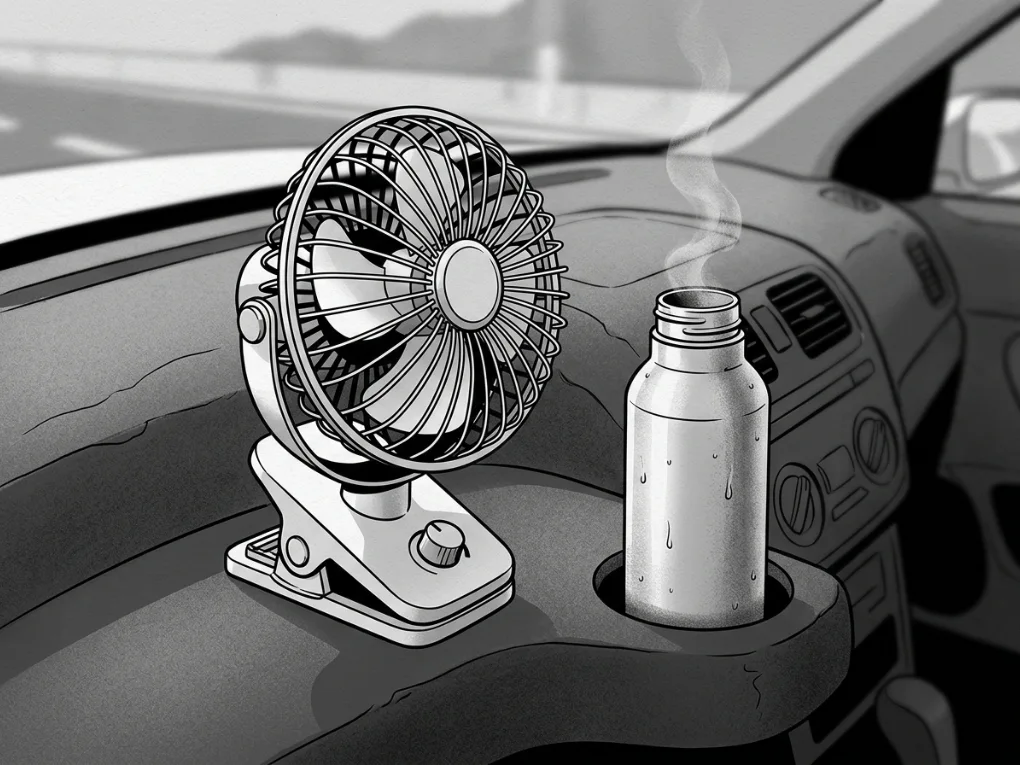
Unlike built-in vents, dedicated 12V or USB-rechargeable car fans can be angled directly at your torso and face. Look for dual-head adjustable fans that mount via suction cups to your windshield or clip onto your sun visor.
8. Cooling Seat Cushions
Your back and thighs sit flushed against seat upholstery, trapping sweat and heat. A 12V ventilated seat cushion uses micro-fans to blow air through porous mesh fabric directly against your body. They plug right into your cigarette lighter and prevent sweat-drenched shirts.
9. What About a Portable AC for Car Without AC?
If you search online or scroll through no AC in car hacks reddit threads, you will see endless ads for small “portable car air conditioners.”
Here is the truth: Most of these devices are mini-evaporative coolers (swamp coolers) that use water or ice cubes.
| Cooler Type | Dry/Arid Climates (e.g., Arizona) | Humid Climates (e.g., Florida) |
| 12V Evaporative Cooler | Moderate relief (drops air temp 5-10°F) | Ineffective (adds muggy humidity) |
| Ice-Chest / DIY Coolers | Temporary relief while ice lasts | Creates interior condensation quickly |
| Real 12V Compressor AC | Effective cooling | High cost ($300–$1,000+), heavy power draw |
Expert Takeaway: Do not waste money on tiny $30 USB “car air conditioners” if you live in a humid region. They simply pump moisture into a closed space, making you feel stickier. Stick to high-velocity 12V fans instead.

Phase 4: Personal Body Cooling Hacks
Cooling the ambient air in a car without AC is tough, but cooling your body directly is easy when you target your physiology.
10. The Wet Cloth & Vent Trick
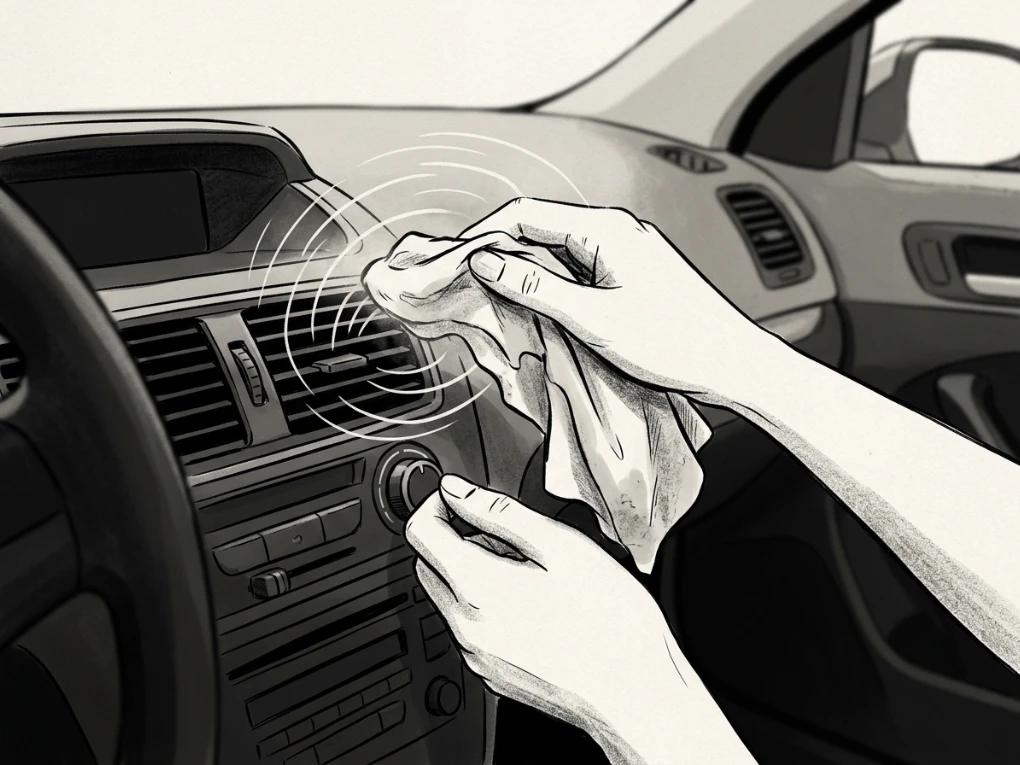
Place a damp microfiber cloth over your dashboard vents, or drape a moist cooling towel around the back of your neck. As air flows across the damp fabric, water evaporates and rapidly cools the passing air.
11. Target Pulse Points
To lower your core body temperature quickly, focus on areas where blood vessels run close to the surface of your skin:
- Wrists
- Sides of the neck
- Inside of elbows
- Behind knees
Keep a spray bottle filled with ice water on your passenger seat. Spritzing your face, arms, and neck while driving past an open window creates an immediate wind-chill effect.
12. Dress for the Heat
Wear loose-fitting, light-colored clothing made from breathable fabrics like cotton, linen, or moisture-wicking synthetic athletic wear. Avoid dark synthetic fabrics that trap heat and sweat against your body.
13. Stay Hydrated with Ice-Cold Water
Internal hydration regulates your body’s ability to sweat and cool itself. Keep an insulated double-wall tumbler filled with ice water in your cup holder. Sip constantly—don’t wait until you feel thirsty.
Comparing Your Cooling Options
To help you decide which how to cool a car without air conditioning methods fit your commute and budget, here is a quick breakdown:
| Method | Cost | Setup Time | Cooling Effectiveness | Best Used For |
| Japanese Door Fan | $0 | 30 Seconds | High (Initial cabin dump) | Right when entering a hot car |
| Diagonal Windowing | $0 | Instant | Moderate to High | Driving above 25 mph |
| Reflective Sunshade | $10 – $25 | 1 Minute | High (Prevention) | Parked vehicles |
| 12V High-Velocity Fan | $15 – $30 | 5 Minutes | High (Direct airflow) | City driving & stop-and-go traffic |
| 12V Ventilated Seat Mesh | $30 – $60 | 5 Minutes | High (Prevents back sweat) | Long commutes |
| Ice Spray Bottle + Towel | $5 | 2 Minutes | Very High (Immediate relief) | Emergency heat relief |
Safety First: Signs of Heat-Related Illness While Driving
When driving without AC in high temperatures, monitor how you feel. Heat-related illness can sneak up on you and impair your reaction times behind the wheel.
Heat Exhaustion Symptoms:
- Heavy sweating and pale, cool, or clammy skin
- Dizziness, lightheadedness, or confusion
- Muscle cramps
- Nausea or headache
What to do: Pull over immediately in a safe, shaded area. Turn off the car, step out into open air, sip cold water, and apply cold compress towels to your neck and wrists. Do not attempt to keep driving if you feel dizzy or lightheaded.
Frequently Asked Questions (FAQ)
How can I cool my car down fast without AC?
The fastest way is to open the front passenger window and swing the driver’s door open and closed 5 to 6 times to dump trapped hot air. Once driving, use the diagonal window method (front passenger window and rear driver’s window open) to pull cool air through the cabin.
Where can I find fans for cars without AC near me?
You can find 12V auxiliary car fans locally at auto parts retailers (such as AutoZone, O’Reilly Auto Parts, or Advance Auto Parts), large department stores like Walmart or Target in the automotive aisle, or order them online with quick delivery.
Do 12V portable AC units actually work in cars?
12V evaporative “swamp” coolers work reasonably well in dry, arid climates like deserts. However, in humid regions, they do little to drop cabin temperatures and simply make the air inside your vehicle feel muggier.
Why does my car blow hot air when the AC is turned off?
If your blower vents are blowing warm air with the system turned off, your temperature dial may still be set to hot, or heat from the engine bay is radiating through the fresh-air intake ducts. Turn the temp dial all the way to cold and switch off recirculate to draw in ambient outside air.
Lacking air conditioning during the summer is frustrating, but it doesn’t have to keep you off the road. By combining smart pre-drive heat prevention (sunshades and shaded parking) with optimized wind-dynamics and targeted personal cooling accessories like 12V fans and spray bottles, you can comfortably survive even the hottest commutes.
Take control of your cabin climate today—grab a high-quality sunshade, mount a reliable 12V fan on your dash, and keep an insulated bottle of ice water nearby before heading out on your next drive!