
Modern vehicles are complex engineering marvels built to last hundreds of thousands of miles, but only when given regular, systematic care. Skipping basic preventative maintenance leads directly to premature engine wear, transmission failure, poor fuel economy, and expensive breakdowns.
Whether you are a new driver searching for a car maintenance guide for beginners or an experienced commuter seeking a definitive vehicle maintenance guide, staying on top of routine service saves thousands of dollars over the lifetime of your car.
Why Preventative Car Maintenance Matters
Preventative vehicle maintenance is the systematic inspection, servicing, and replacement of vehicle components before they cause operational failure. Modern internal combustion engines and hybrid systems operate under extreme heat, pressure, and friction. Routine upkeep delivers four primary benefits:
- Lower Total Cost of Ownership: Replacing a $20 air filter or a $50 batch of synthetic engine oil prevents thousands of dollars in catalytic converter or valvetrain failure.
- Maximized Resale Value: A documented vehicle service record with stamped service intervals signals to private buyers and dealerships that the vehicle was conscientiously maintained, securing top-tier trade-in values.
- Enhanced Safety and Reliability: Regular checks prevent catastrophic failures such as brake line ruptures, highway tire blowouts, or engine overheating in traffic.
- Optimized Fuel Economy: Proper tire inflation, clean filters, and fresh spark plugs ensure the engine runs at optimal thermal efficiency, preserving peak miles per gallon (MPG).
Critical Vehicle Systems Every Driver Should Know
To properly care for your vehicle, you do not need to be a certified mechanic, but you should understand the core systems that keep your car running safely.
The Powertrain (Engine and Transmission)
The engine generates power through internal combustion, while the transmission transfers that power to the wheels. Both rely heavily on specialized fluids to lubricate moving metal components, cool internal parts, and prevent friction wear.
The Braking System
Modern vehicles utilize hydraulic braking systems consisting of a master cylinder, brake lines, calipers, rotors (discs), and friction pads. Routine brake care ensures the friction material does not wear down to bare metal, which damages rotors and increases stopping distances dangerously.
Suspension and Steering
Composed of shock absorbers, struts, ball joints, control arms, and tie rods, this system keeps your tires firmly planted on the road and provides stable directional control. Worn suspension components cause uneven tire wear and unpredictable handling during emergency maneuvers.
Electrical and Ignition System
The 12-volt automotive battery powers starter motors, computers, sensors, lighting, and interior accessories. The alternator recharges the battery while the engine runs, and spark plugs ignite the compressed fuel-air mixture inside gasoline cylinders.
Car Maintenance Schedule by Mileage
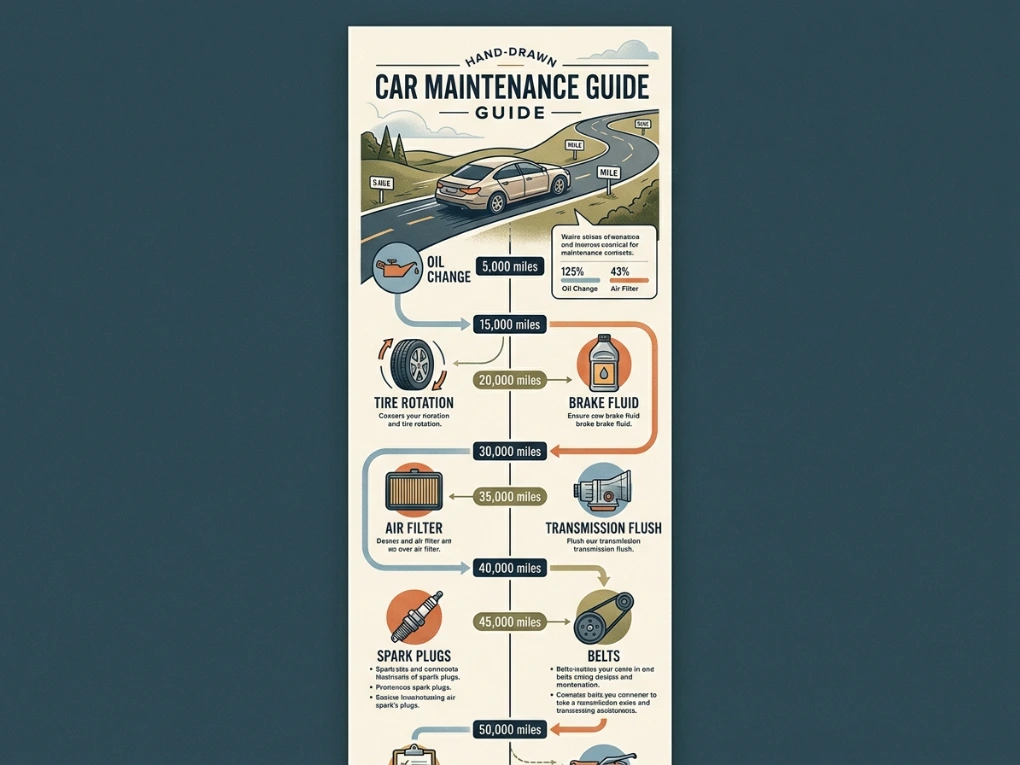
Following a dedicated car maintenance guide by mileage is the most effective way to prevent missed service intervals. While you should always consult your specific vehicle’s owner manual, the breakdown below outlines standard industry car service guidelines across key intervals.
| Mileage Interval | Essential Inspection & Service Items | Service Type |
| Every 5,000 – 7,500 Miles | Engine oil & filter change, tire rotation, tire pressure check, brake pad visual inspection, washer fluid top-up | DIY / Minor Service |
| Every 15,000 – 30,000 Miles | Engine air filter, cabin air filter, battery terminal cleaning, suspension check, coolant level inspection | Minor Service |
| Every 30,000 – 60,000 Miles | Brake fluid flush, transmission fluid service, radiator coolant flush, drive belt inspection, fuel filter | Major Service |
| Every 60,000 – 100,000 Miles | Spark plug replacement, timing belt / chain inspection, serpentine belt replacement, shock absorber test | Major Overhaul |
The Ultimate DIY Car Maintenance Checklist
Many routine checks take less than ten minutes and require no specialized tools. Learning basic car care guidelines keeps you proactive and alerts you to potential leaks before they turn into major repairs.
Checking and Topping Off Critical Fluids
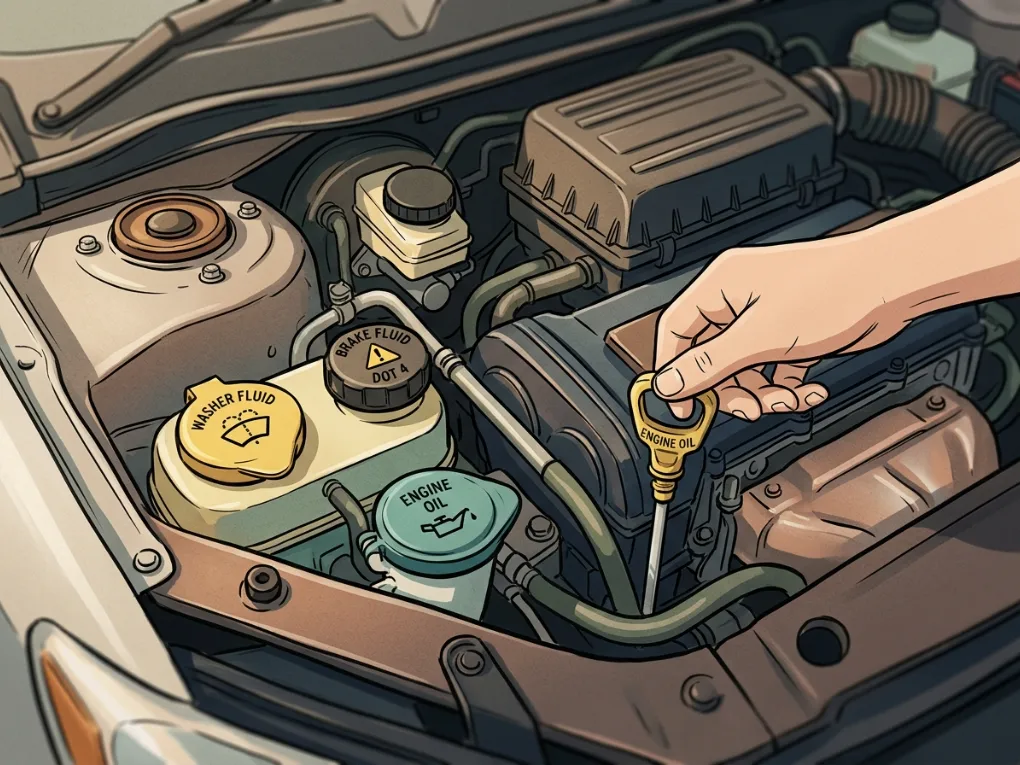
Before checking any fluid, park your vehicle on level ground, engage the parking brake, and ensure the engine is turned off and cooled down (unless your vehicle manual specifies checking transmission fluid while idling).
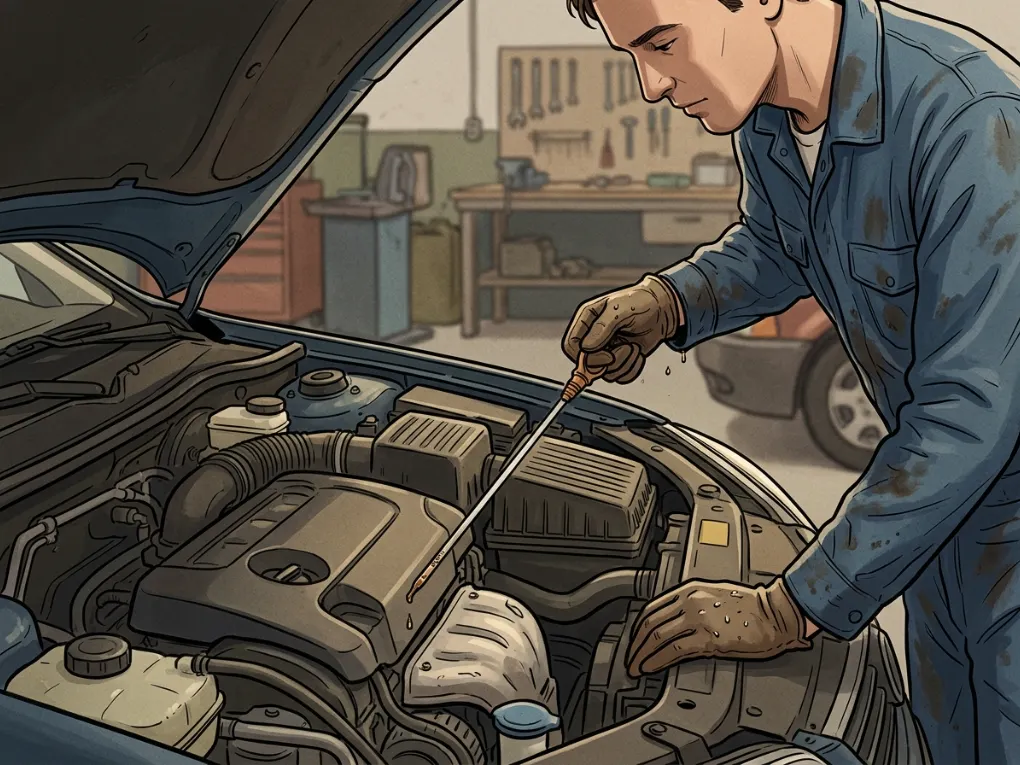
- Engine Oil: Pull the dipstick out, wipe it clean with a lint-free rag, reinsert it fully, and pull it out again. Ensure the oil film sits between the minimum and maximum indicator marks. Check oil color: amber to light brown is healthy; gritty black indicates an overdue change; milky or frothy brown indicates serious coolant contamination requiring immediate mechanical repair.
- Engine Coolant / Antifreeze: Inspect the translucent expansion reservoir. Never open the radiator cap on a hot engine—pressurized boiling coolant can cause severe burns. Ensure fluid rests between the “Min” and “Max” indicators.
- Brake Fluid: Check the transparent reservoir on top of the master cylinder. The fluid should be translucent and light golden. Dark, murky brake fluid indicates moisture contamination, which lowers boiling points and causes brake fade.
- Windshield Washer Fluid: Top off regularly with dedicated washer fluid rather than plain tap water, which lacks cleaning detergents and freezes in cold climates.
Inspecting and Maintaining Tires
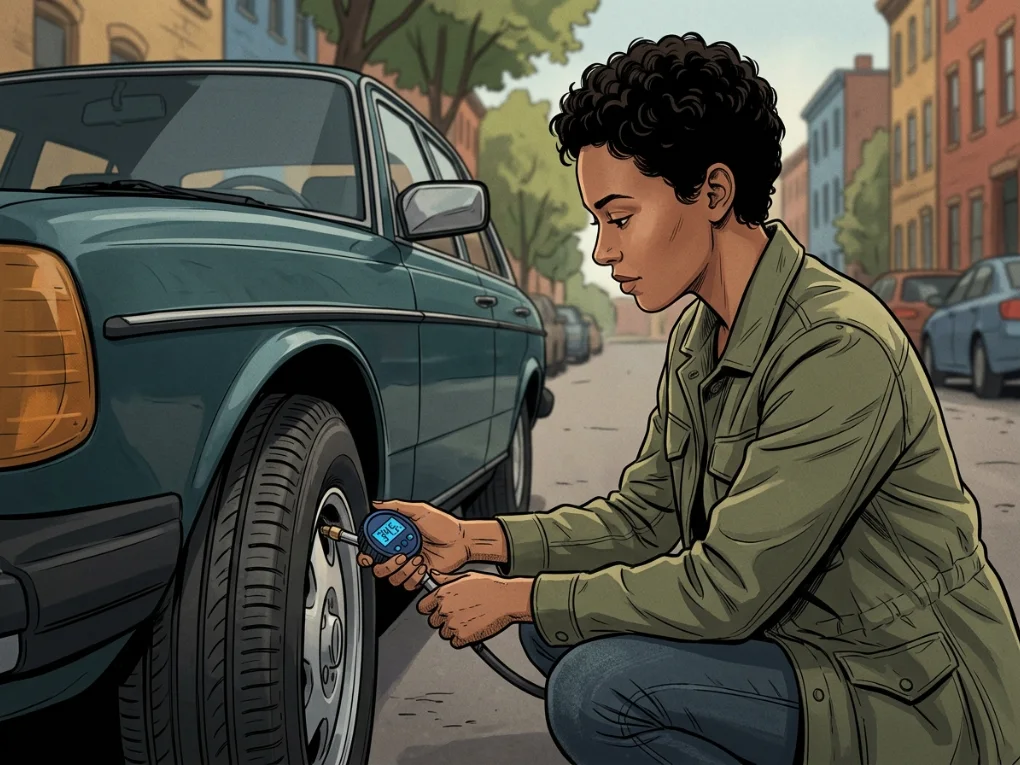
Tires are the only point of contact between your vehicle and the road. Proper maintenance directly impacts braking distance, wet-weather grip, and fuel efficiency.
- Pressure (PSI): Check cold tire pressure at least once a month using an accurate digital gauge. Compare the reading to the specification sticker inside the driver’s side door jamb—never use the “Max PSI” printed on the tire sidewall.
- Tread Depth (The Penny Test): Insert a US penny into your tire grooves with Lincoln’s head upside down and facing you. If you can see the top of Lincoln’s head, your tread has worn down past 2/32 of an inch and the tire must be replaced immediately.
- Uneven Wear Patterns: Wear along the outer edges suggests under-inflation. Center tread wear indicates over-inflation. Cupping or scalloping indicates worn shock absorbers or misaligned wheels.
Filter Maintenance
- Engine Air Filter: Prevents airborne dust, debris, and sand from entering the combustion chamber. Replace every 15,000 to 30,000 miles, or sooner if driving in dusty environments.
- Cabin Air Filter: Cleans the air entering your vehicle’s heating and air conditioning system. A clogged cabin filter causes weak airflow and musty interior odors.
Major Milestones: Deep-Dive Maintenance Intervals
30,000-Mile Service
At 30,000 miles, your vehicle transitions out of its early break-in phase. Inspect the brake pads, change the engine and cabin air filters, and perform a full suspension and exhaust inspection.
60,000-Mile Service
This milestone marks the first comprehensive service check. Replace the brake fluid, as hygroscopic brake fluid naturally absorbs atmospheric moisture over 2–3 years. Inspect the accessory drive belts (serpentine belts) for cracks, glazing, or fraying. If your vehicle utilizes standard copper spark plugs, replace them at this juncture.
90,000 to 100,000-Mile Service
Modern platinum and iridium spark plugs require replacement between 80,000 and 100,000 miles to maintain smooth combustion and prevent engine misfires. For vehicles equipped with an internal rubber timing belt (as opposed to a lifetime metal timing chain), replace the timing belt and water pump together to avoid catastrophic internal engine valve damage.
DIY vs. Professional Car Repair Guide
Understanding where your skills end and professional expertise begins is essential for safety and vehicle reliability.
+-----------------------------------------------------------------------------------+
|                            TASK DIFFICULTY SPECTRUM                               |
|                                                                                   |
|  [ DIY - Beginner Friendly ]         [ Intermediate DIY ]      [ Professional ]   |
|  - Engine air filter replacement     - Brake pad replacement   - Transmission job |
|  - Wiper blade changes               - Battery replacement     - Timing belt      |
|  - Tire pressure & visual checks     - Spark plug changes      - Alignment        |
|  - Bulb replacements                 - Oil & filter change     - A/C evacuation   |
+-----------------------------------------------------------------------------------+
Tasks Safe for Beginners
- Replacing windshield wiper blades.
- Swapping engine and cabin air filters.
- Inspecting and adjusting tire pressures.
- Checking and topping off fluids.
- Replacing blown electrical fuses.
When to Seek a Certified Mechanic
- Check Engine Light Diagnostics: While an OBD-II scanner can pull trouble codes, identifying root causes requires professional diagnostic software and mechanical testing.
- Wheel Alignment: Aligning steering geometry requires precision laser racks and specialized calibration tools.
- Internal Transmission or Drivetrain Repairs: Automatic transmissions and differential rebuilds demand strict torque tolerances and hydraulic knowledge.
- HVAC Refrigerant Handling: Servicing air conditioning systems involves handling pressurized refrigerants governed by environmental regulations.
Seasonal Vehicle Care Guidelines
Winter Preparation
- Test battery cold-cranking amps (CCA); freezing temperatures drastically reduce battery output.
- Verify antifreeze concentration to protect engine blocks from internal freezing.
- Switch to winter-grade windshield wiper fluid containing de-icer additives.
- Inspect tire tread depth or install dedicated snow tires for sub-45°F (7°C) driving.
Summer Preparation
- Inspect engine cooling fans and radiator fins for debris blockage.
- Test air conditioning system output temperatures.
- Monitor tire pressure regularly, as ambient summer heat increases tire PSI.
- Check battery terminals for corrosion, which accelerates in high heat.
Frequently Asked Questions (FAQ)
How often should I change my synthetic engine oil?
Most modern vehicles using full synthetic oil require changes every 7,500 to 10,000 miles (or every 12 months). Vehicles driven under severe conditions (frequent short trips, heavy towing, extreme temperatures) benefit from 5,000-mile intervals. Always follow your manufacturer’s specific guidelines.
What is the most overlooked maintenance item on modern cars?
Brake fluid flushes and cabin air filters are the two most commonly neglected items. Brake fluid absorbs water over time, causing internal corrosion and spongy pedal feel, while a dirty cabin filter degrades interior air quality and strains blower motors.
Can I follow a generic car service guide instead of my owner’s manual?
A general car care guide provides reliable baseline rules, but your vehicle’s factory owner’s manual is the definitive authority for exact fluid specifications, capacities, torque specs, and unique maintenance schedules.
How do I know when my brake pads need replacement?
Most brake pads include built-in metal wear indicators that emit a high-pitched squealing sound when the friction material wears down to approximately 2mm–3mm. If you feel steering wheel vibrations or hear a grinding metal-on-metal sound, service your brakes immediately.
Adhering to a structured car maintenance guide protects your financial investment, ensures everyday driving safety, and keeps your vehicle running reliably for years to come. By performing monthly fluid and tire inspections and adhering to key mileage milestones, you eliminate the stress of unexpected breakdowns.