
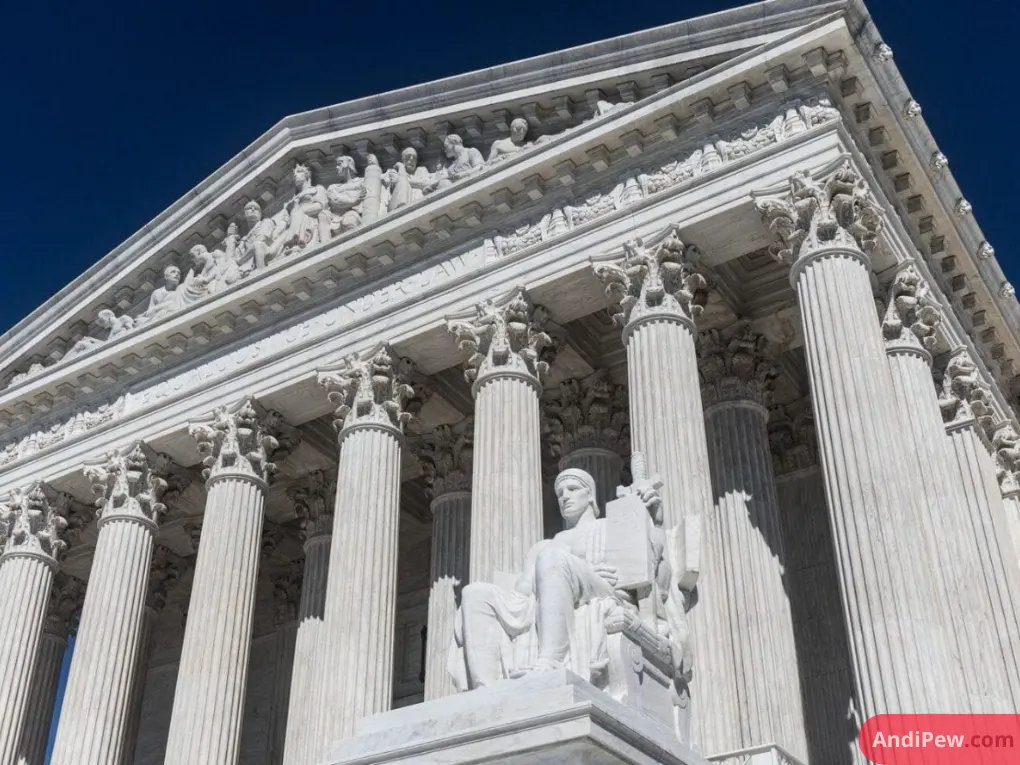
The United States Supreme Court stands as the ultimate arbiter of constitutional law, yet its modern docket reflects some of the deepest legal and societal questions facing the country. Over recent terms, the Court’s conservative supermajority has re-examined decades-old precedents, reshaping how the nation interprets religious liberty, civil rights, executive authority, and the separation of powers.
From disputes over public dollars flowing into religious education to complex tests between anti-discrimination statutes and personal liberties, the high court’s docket continues to define everyday American life.
Understanding the direction of the Supreme Court requires examining the core constitutional friction points currently before the justices.
The Evolving Landscape of Religious Freedoms and the Establishment Clause
One of the most consequential jurisprudential trends in recent years is the high court’s expansion of protections under the First Amendment’s Free Exercise Clause, paired with a narrowing view of the Establishment Clause.
Traditionally, judicial doctrine maintained a strict boundary preventing public taxpayer money from directly advancing religious instruction or organizations. However, recent precedent has steadily dismantled those boundaries:
- Non-Discrimination vs. Separation: The Court has increasingly held that excluding religious entities from generally available public benefit programs solely because of their faith-based nature amounts to unconstitutional religious discrimination.
- The Death of the Lemon Test: By largely abandoning the three-pronged Lemon v. Kurtzman test in cases like Kennedy v. Bremerton School District, the Court now assesses church-state disputes through the lens of historical practices and original constitutional understanding.
- Impact on Voucher Programs: In decisions like Espinoza v. Montana Department of Revenue and Carson v. Makin, the justices determined that if states choose to subsidize private education through vouchers or tuition assistance, they cannot bar religious schools from participating simply because they provide religious training.
This evolving doctrine has paved the way for unprecedented debates, such as whether states must—or even can—authorize publicly funded, faith-based charter schools without violating state and federal constitutions.
Public Funds and Religious Schools: Where Does the Court Draw the Line?
The intersection of state educational funding and religious exemptions has moved from school vouchers into public charter schools and specialized institutions. A central legal battleground involves whether charter schools operate as “state actors” or private educational partners.
When private and charter schools apply for state subsidies or educational grants, questions arise regarding compliance with state non-discrimination mandates. Many religious institutions seek exemptions to adhere strictly to doctrinal hiring, curriculum standards, and student codes of conduct while maintaining eligibility for public aid.
Key Constitutional Tests in Play
| Legal Principle | Traditional Standard | Current Supreme Court Direction |
| Establishment Clause | Strict separation to prevent state entanglement (Lemon test). | Interpreted through historical traditions; government neutrality favored over strict separation. |
| Free Exercise Clause | Neutral laws of general applicability applied uniformly (Employment Division v. Smith). | Heightened scrutiny against policies that treat secular programs more favorably than religious ones. |
| Public School Funding | Direct taxpayer dollars barred from sectarian instruction. | Exclusion of religious schools from broad public voucher or aid programs is viewed as discriminatory. |
Lower courts remain divided over how far this logic extends. When high-profile challenges reach the Supreme Court, the outcomes create national precedents that impact state budgets, public education frameworks, and private school admission policies nationwide.
Civil Liberties and LGBTQ+ Rights Before the Justices
Parallel to religious freedom arguments is the Court’s shifting docket on civil rights, gender, and sexual orientation. Over the past decade, landmark opinions like Obergefell v. Hodges (affirming marriage equality) and Bostock v. Clayton County (protecting LGBTQ+ employees under Title VII of the Civil Rights Act of 1964) set significant federal baselines.
Today, the docket features conflicts where statutory civil rights protections intersect with:
- First Amendment Speech and Expression: Whether creative professionals and private business owners can be compelled under public accommodation laws to express messages that contradict their personal beliefs (building on 303 Creative LLC v. Elenis).
- State Regulatory Authority: Whether states retain the police power to regulate adolescent healthcare, sports participation, and classroom instruction without running afoul of the Fourteenth Amendment’s Equal Protection Clause.
- Statutory Interpretation vs. Administrative Power: How federal agencies define biological sex and gender identity across Title IX sports eligibility, education funding, and federal civil rights protections.
These cases highlight how the Court’s interpretive methods—principally textualism and originalism—produce rulings that do not always align neatly with political stereotypes, keeping legal scholars and the public watching closely.
Why the Supreme Court’s Modern Precedents Matter to Every Citizen
Supreme Court decisions are rarely just theoretical debates. They set binding rules that directly influence how states draft legislation, how schools operate, and how individuals assert their rights.
- State Legislatures: Rulings dictate how far states can go in passing protective civil rights statutes or drafting conscience-clause exceptions for religious entities.
- Local School Boards: Decisions shape voucher allocations, anti-bullying protections, and the permissible bounds of religious expression on campus.
- The Legal System: Lower federal judges must interpret narrow majorities and concurring opinions, dictating how civil lawsuits unfold across all 50 states.
Frequently Asked Questions (FAQ)
What is the role of the Supreme Court of the United States?
The Supreme Court is the highest judicial tribunal in the United States. Under Article III of the U.S. Constitution, it holds ultimate appellate jurisdiction over constitutional matters, federal statutes, treaties, and select disputes between states, acting as the final authority on constitutional interpretation.
How does the Supreme Court decide which cases to hear?
The Court typically receives 7,000 to 8,000 petitions for a writ of certiorari each year, but grants review to only 60 to 80 cases. At least four of the nine justices must vote to grant certiorari (the “Rule of Four”), prioritizing circuit splits where different federal appeals courts reached conflicting conclusions on federal law.
How have recent rulings affected the separation of church and state?
Recent jurisprudence has moved away from strict separationism toward an interpretation centered on neutrality and non-discrimination. The Court has ruled that excluding religious organizations from public benefit programs—such as school voucher funds—solely based on their religious status violates the Free Exercise Clause.
What is the difference between originalism and textualism?
Textualism focuses on the ordinary public meaning of a legal text at the time it was enacted, without relying on legislative history or intent. Originalism applies this concept specifically to constitutional provisions, seeking to interpret the Constitution based on the understanding of the public or framers at the time of ratification.
The United States Supreme Court continues to reshape the boundaries between state power, individual civil liberties, and religious conscience. As new cases challenge long-standing conventions surrounding public funding, educational standards, and civil rights, the Court’s opinions will govern the legal architecture of the nation for decades to come. Staying informed about key arguments, dockets, and constitutional doctrines is vital to understanding the legal decisions that define the modern American experience.