
The term indians refers primarily to citizens or descendants of India, historically to Indigenous peoples of the Americas, and athletically to the former name of Major League Baseball’s Cleveland franchise. Because this single word bridges global diaspora demographics, colonial naming origins, and professional sports branding, its precise meaning depends entirely on geographic and historical context. Understanding these differences resolves persistent terminology confusion and clarifies modern naming standards across civic, legal, and athletic landscapes.
Quick Summary
- Three Distinct Meanings: Represents citizens of the Republic of India, federally recognized Indigenous nations of the Americas, and the legacy Cleveland baseball franchise.
- Colonial Cartographic Origin: Christopher Columbus coined the American application in 1492 after mistakenly assuming he landed in the East Indies.
- Legal Entrenchment: Federal statutory frameworks like the Bureau of Indian Affairs preserve the phrase in United States law despite evolving cultural etiquette.
- Athletic Transformation: The Cleveland franchise retired Chief Wahoo in 2018 and rebranded as the Cleveland Guardians after the 2021 season.
What Are the Three Primary Meanings of the Word “Indians”?
The word “indians” functions as an umbrella term spanning three completely separate entities: the demographic population of India, the Indigenous tribal nations of North and South America, and the historical identity of Cleveland’s Major League Baseball team. Disambiguating these categories eliminates common historical misunderstandings and indexing confusion.
The term indians is defined as either sovereign citizens of the Republic of India, historical and legal classifications for Indigenous American tribal members, or the legacy moniker of Cleveland’s American League baseball club from 1915 through 2021.
In 1492, European cartographic limitations conflated two distinct global populations under one label. Today, global systems, academic stylebooks, and demographic databases manage this lexical overlap through standardized entity disambiguation.
| Entity Category | Geographical Focus | Legal / Cultural Status | Primary Modern Usage |
| South Asian Citizens / Diaspora | India and global diaspora hubs | Sovereign nationality; distinct ethnic identity | Standard worldwide civic demographic descriptor |
| American Indians (Indigenous Peoples) | North, Central, and South America | Federally recognized tribal sovereignty | Legal statutes, federal records, historical studies |
| Cleveland Baseball Franchise | Cleveland, Ohio, United States | Major League Baseball sports trademark | Archival baseball analysis, historical team rosters |
Why Are Native Americans Called Indians?
Native Americans were labeled Indians because Christopher Columbus mistakenly believed his 1492 transatlantic voyage had landed in the East Indies archipelago of Asia. This geographical error was codified by European colonial powers and permanently embedded into international maritime law and American federal jurisprudence.
The continuity of this colonial nomenclature follows a documented legal and historical trajectory:
- 1492 (Maritime Miscalculation): Christopher Columbus landed in the Caribbean Bahamas and addressed the local Taíno people as “Indios,” operating under the erroneous calculation that he reached maritime trade routes near the Asian subcontinent.
- 1787 (Constitutional Codification): The United States Constitution formally integrated the phrase “Indians not taxed” into Article I, anchoring the colonial term directly within American supreme statutory law.
- 1824 (Bureaucratic Formalization): The federal government established the Bureau of Indian Affairs (BIA) under the Department of War, legally codifying the label across all treaties, land patents, and sovereign compacts.
- Present Day (Sovereign Self-Determination): Today, 574 federally recognized tribes operate as domestic sovereign nations, retaining self-governing authority while actively encouraging the use of specific tribal nation names—such as Diné, Cherokee, or Lakota—over generic labels.
Terminology Etiquette: Should You Say Native American, American Indian, or Indigenous?
The most accurate terminology depends on personal preference and geographic context, but identifying specific tribal affiliations is always the preferred standard. While “American Indian” remains prevalent in federal legal statutes, “Indigenous” serves as the global standard, and “Native American” functions as common civic shorthand.
Nuanced identification requires balancing institutional standards with respect for tribal sovereignty. The U.S. Census Bureau specifically uses “Asian Indian” as a distinct demographic category to avoid conflation with domestic Indigenous populations.
| Context | Recommended Terminology | Editorial Rationale |
| Specific Individual or Nation | Tribal Nation Name (e.g., Navajo, Muscogee) | Respects sovereign independence and historical specificity over colonial terms. |
| United States Legal / Treaty Texts | American Indian / Alaska Native | Matches official federal statutory definitions and institutional legal records. |
| International Human Rights | Indigenous Peoples | Standardized by the United Nations Declaration on the Rights of Indigenous Peoples (UNDRIP). |
| Canadian Legal Framework | First Nations, Inuit, or Métis | Reflects distinct Canadian constitutional distinctions under Section 35. |
| U.S. Demographic Data | Asian Indian vs. American Indian | Prevents statistical conflation in census documentation and civil surveys. |
Who Are Asian Indians and What Defines the Modern Global Diaspora?
Asian Indians are citizens of the Republic of India and individuals of Indian ancestral descent living across the worldwide diaspora. They represent the world’s largest national population and maintain extensive cultural, intellectual, and economic networks across North America, Europe, Africa, and the Middle East.
India’s demographic profile and diaspora footprints encompass significant global milestones:
- Population Scale: India’s domestic population stands at over 1.43 billion people, making it the most populous sovereign nation on Earth.
- Major Diaspora Hubs: Significant overseas concentrations include the United States (over 4.5 million individuals of Indian descent), the United Arab Emirates (over 3.5 million), Saudi Arabia (over 2.5 million), and Canada (over 1.8 million).
- Economic and Intellectual Footprint: Members of the Indian diaspora lead major global Fortune 500 enterprises, academic institutions, cutting-edge medical research centers, and global technology corridors [citation needed].
- Linguistic Diversity: Rather than a monolithic identity, the population spans 22 officially scheduled languages, led by Hindi, Bengali, Marathi, Telugu, and Tamil.
- Pluralistic Heritage: Modern citizens and expatriates practice multiple global religions, including Hinduism, Islam, Sikhism, Christianity, Buddhism, and Jainism.
Why Did the Cleveland Indians Change Their Name to the Guardians?
The Cleveland baseball franchise changed its name to eliminate harmful Native American caricatures and address decades of documented cultural appropriation concerns. Sustained advocacy from Indigenous organizations led to the retirement of offensive visual branding and the eventual adoption of the Cleveland Guardians identity.
The institutional transition moved through three distinct phases:
The name change directly addressed the “Chief Wahoo” mascot, a red-faced caricature introduced during the 1940s that drew intense criticism from the National Congress of American Indians (NCAI). The new moniker honors the monumental “Guardians of Traffic” stone sculptures flanking the Hope Memorial Bridge adjacent to Progressive Field, preserving local civic architecture while modernizing the athletic franchise.
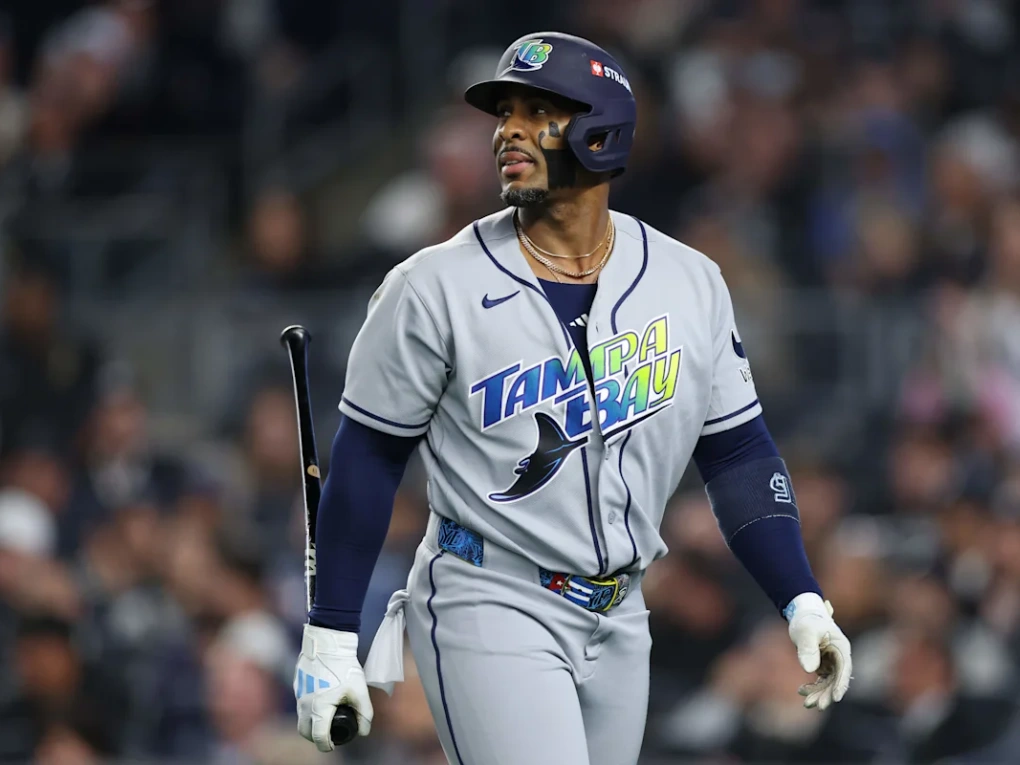
What Was Yandy Díaz’s Impact During His Cleveland Indians Tenure?
Cuban infielder Yandy Díaz established his Major League Baseball foundation with Cleveland, showcasing elite plate discipline and exit velocity metrics from 2017 to 2018. Cleveland’s player development system refined his offensive profile before a December 2018 trade sent him to the Tampa Bay Rays.
Signed as an international free agent in 2013, Yandy Díaz progressed through Cleveland’s minor-league affiliates by maintaining walk rates nearly equal to his strikeout rates. Known alternatively in box scores as Yandy Diaz, the infielder emerged as an advanced analytical standout, even as limited defensive versatility capped his early playing time in Cleveland.
On December 13, 2018, the front office traded Díaz to Tampa Bay in a three-team swap involving the Seattle Mariners. That move allowed Díaz to secure everyday at-bats, culminating in his 2023 American League batting title with a .330 batting average.
| Player Metric / Milestone | Cleveland Tenure (2017–2018) | Tampa Bay Rays Tenure (2019–2024 Peak) |
| Games Played | 88 | 600+ [citation needed] |
| Batting Average (AVG) | .283 | .330 (AL Batting Title, 2023) |
| On-Base Percentage (OBP) | .361 | .410 (2023 Single-Season High) |
| Hard-Hit Rate (Statcast) | Top 10% MLB percentile rankings | Sustained elite exit velocity > 95 mph |
| Major Awards / Honors | International League Rookie of the Year (AAA) | Silver Slugger Award (2023), AL All-Star |
Frequently Asked Questions
Is it offensive to say “Indian” instead of “Native American”?
Context dictates appropriateness. While many tribal citizens comfortably self-identify as American Indian, others consider it an outdated colonial remnant. Whenever possible, using the specific name of an individual’s sovereign tribal nation remains the most respectful and accurate approach.
Why do legal documents still use the term “American Indian”?
Federal statutes, historic treaties, and executive departments—such as the Bureau of Indian Affairs—codified the term “American Indian” into nineteenth-century law. Updating this terminology requires formal legislative amendments by the United States Congress, leaving the original phrasing embedded within active federal jurisprudence.
What is the difference between an East Indian and an American Indian?
“East Indian” is an archaic identifier used during the colonial era to distinguish individuals from the Indian subcontinent or East Indies from Indigenous Americans. Contemporary demographic frameworks replace this label with “Asian Indian” for people of Indian descent and “American Indian” for Indigenous North Americans.
When did the Cleveland Indians officially become the Cleveland Guardians?
The franchise announced its decision to rebrand in July 2021 and officially adopted the Cleveland Guardians name following the conclusion of the 2021 Major League Baseball season. The team played its first regular-season game under the new identity in April 2022.
Which MLB team did Yandy Díaz play for before the Tampa Bay Rays?
Yandy Díaz played for the Cleveland Indians from 2017 through 2018 before joining the Tampa Bay Rays. Cleveland initially signed the Cuban infielder as an international free agent in 2013 and later traded him in a multi-team deal in December 2018.
How do people from India identify themselves globally?
Citizens of India and overseas diaspora members identify nationally as Indian. On a regional or cultural level, individuals frequently self-identify using their ancestral language or home state, such as Punjabi, Gujarati, Tamil, Telugu, or Bengali.
The word indians bridges three distinct entities: sovereign citizens of India, Indigenous tribal nations across the Americas, and archival baseball history in Cleveland. Language carries legal, cultural, and historical consequences, making it critical to prioritize specific tribal names for Indigenous populations and standardized demographic terms for global diaspora communities. Ensure clear and precise communication across professional, academic, and everyday writing by bookmarking this reference guide.